

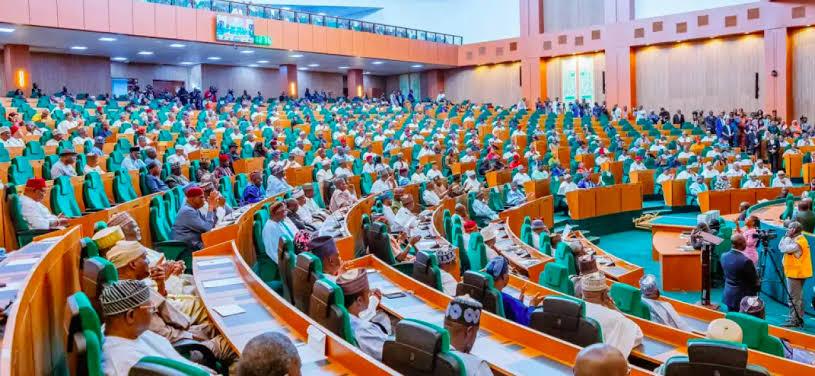
The House of Representatives Ad hoc Committee investigating Nigeria’s power sector reforms and expenditure from 2007 to 2024 has accused electricity distribution companies of crippling Nigeria’s power supply system through years of poor investment, inadequate expansion, and failure to meet obligations outlined in their original business plans.
The Chairman of the committee, Mr. Ibrahim Almustapha Aliyu, made the accusation during the committees hearing in Abuja.
He said that most distribution companies had misled the government at the point of acquisition, presenting impressive business plans but failing to deploy the required resources to upgrade substations, transformers, and distribution networks more than a decade after privatization.
He expressed shock that despite claims by the Transmission Company of Nigeria (TCN) that it can wheel up to 8,000 megawatts, the DisCos continue to take only about 4,000 megawatts due to limited infrastructure, a problem he said is self-inflicted.
According to him, the power distribution firms have “refused to invest, refused to expand, and refused franchising options,” thereby creating the conditions for energy theft, meter bypassing, and consumer apathy across the country.
“You have caused this problem because you could not expand from what you inherited,” he said. “For 13 to 14 years now, if you had made the necessary investments, substations, up-to-date transformers, proper network expansion, there would be no issue. You would uptake more energy, the cost would be lower, and Nigerians would be happy.”
He noted that many consumers resort to illegal connections because they are billed monthly for electricity that is either not supplied or grossly inadequate.
“How do you expect someone whose monthly bill equals his salary to keep paying? People will look for alternatives. And your refusal to invest has contributed to this unholy attitude of bypassing and stealing energy,” he said.
The committee chairman reminded the DisCos that Nigerians enjoyed better supply under the defunct NEPA/NITEL-era systems in some areas, and expected significant improvements after private investors took over the assets.
He further challenged the DisCos to reconcile their earlier claims of competence and financial capacity with their current inability to meet tariff obligations, network expansion expectations, and service delivery benchmarks.
Electricity Subsidy
The Chief Regulatory and Compliance Officer of Kaduna Electric, Dr. Mahmood Abubakar said about 60 percent of electricity supplied nationwide is subsidised, a situation the company said has continued to weaken investor confidence and limit the ability of distribution companies (DisCos) to make the necessary capital investments.
He said during the hearing that only about 40 percent of electricity, largely consumed by B and A customers, is cost-reflective, while the rest depends heavily on government subsidy that is often delayed or unpaid.
According to him, the current subsidy structure distorts billing, revenue collection, and the ability of DisCos to expand infrastructure more than a decade after privatisation.
“If we go strictly by the multi-year tariff order, about 60 percent of the energy consumed in Nigeria is subsidised by the government. Only Band A pays the reflective tariff. Even then, we have Band A feeders recording up to 80 percent energy losses due to theft and bypasses, making full recovery impossible,” he said.
Abubakar explained that because DisCos cannot recover their full revenue requirement, they cannot secure investments or loans needed to upgrade their networks.
He added that the delay in the payment of subsidies affects the entire value chain, particularly affecting generation companies’ ability to pay for gas, thereby affecting power production.
“The subsidy is not forthcoming as and when due. It comes whenever government decides to pay. That is the reality, and it affects everyone. We cannot pay our market invoices fully, the Gencos cannot fulfil firm contracts with gas suppliers, and the whole chain is weakened,” he said.