


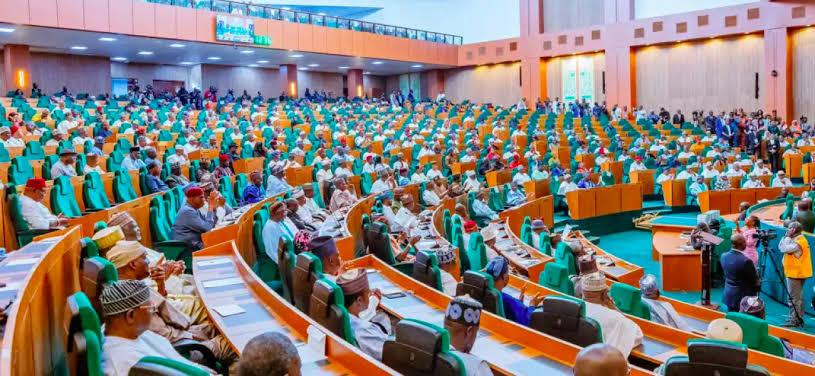
The House of Representatives has urged tertiary health institutions in Nigeria particularly university teaching hospitals, to pay more attention to medical research rather than waiting for emergency situations such as the COVID-19 pandemic to drive action.
The Chairman of the House Committee on Health Institutions, Dr. Patrick Umoh, made the charge during the budget defence session of Federal University Teaching Hospitals, Federal Teaching Hospitals and Federal Medical Centres, in Abuja.
He pointed out that teaching hospitals have largely abandoned their core mandate of research and have instead assumed the roles of general hospitals.
Dr. Umoh criticised the Chief Medical Directors (CMDs) for allocating less than one per cent of their budgets to research, noting that they have failed to consistently raise the issue of research funding during budget preparations.
” Teaching hospitals are supposed to be centres of research. You have never raised the issue of lack of funding for research, but you talk more about infrastructure. That makes you part of the problem.
“The COVID-19 pandemic caught us all unprepared. Let me mock you a little by saying that traditional medicine practitioners appeared to be doing better. You are not doing research. I have gone on several oversight visits, but no hospital has taken me to a facility and said, ‘this is our research centre,” he said.
Speaking on behalf of the Committee of Chief Medical Directors, the Secretary of the Committee and Chief Medical Director of Jos University Teaching Hospital, Professor Pokop Bupwatda, explained that only about one per cent of teaching hospitals’ budgets is earmarked for research, stating that the research budget line is often removed during the budgeting process.
Increased Funding
Professor Bupwatda called for increased funding for the health sector to enable adequate recruitment of qualified manpower and improved staff welfare.
He noted that many federal hospitals are critically understaffed, particularly with medical doctors, and that even when approval is granted to recruit, few doctors apply.
Despite these challenges, he said existing personnel have continued to deliver quality healthcare services and deserve commendation.
He expressed concern that public discourse often focuses on isolated shortcomings in the sector, rather than the progress made, which he said has attracted foreigners to Nigeria’s health sector.
According to him, the sector is grappling with multiple challenges that have affected its operations, including the release of only about 30 per cent of the 2025 budget to federal tertiary health institutions, despite efforts by the House of Representatives to improve budgetary allocations.
Professor Bupwatda also identified power supply as a major challenge, noting that hospitals spend huge sums on electricity bills due to the need for constant power to operate critical equipment and provide patient care.
He explained that federal hospitals currently operate under Band A electricity tariffs, placing additional financial strain on them, alongside the cost of running generators.
He welcomed the proposal to provide solar mini-grids for teaching hospitals and federal medical centres, describing it as a positive development.
Professor Bupwatda appealed to the committee to provide take-off grants for about seven newly established federal health institutions to enable them to effectively commence operations.