

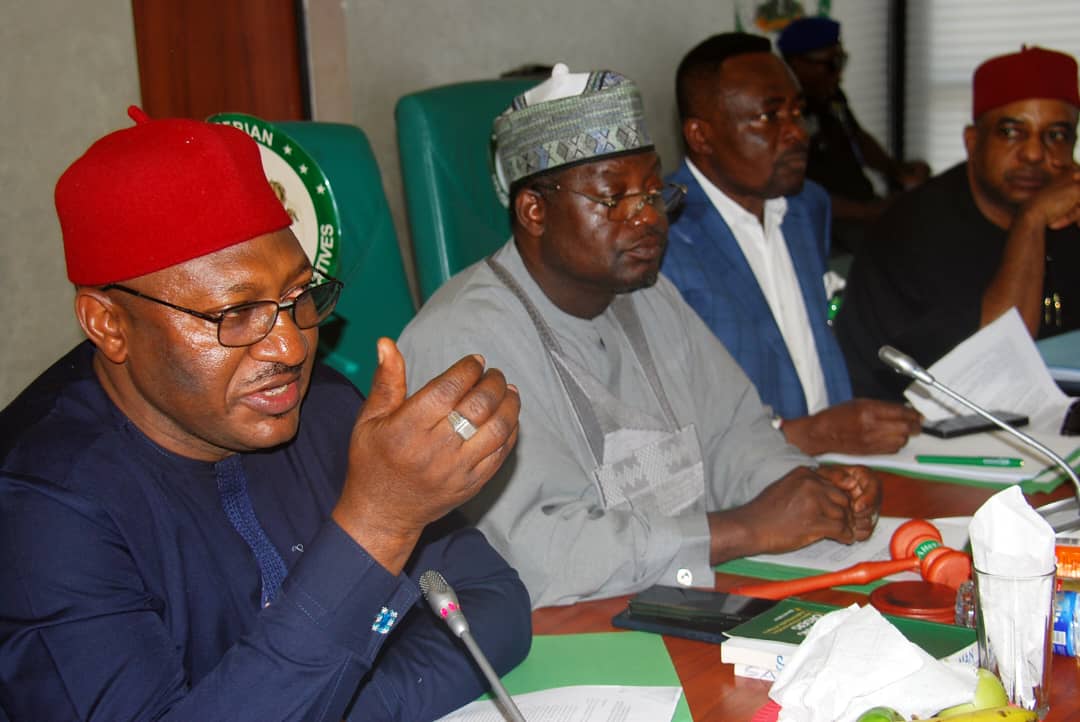
The House of Representatives Committee on Alternative Education has held a public hearing on four bills seeking to establish vocational and skills acquisition training centres across different parts of Nigeria.
The event, held in Abuja, brought together key stakeholders from government, academia, industry, and professional bodies, including the Nigerian Society of Engineers (NSE), to deliberate on the proposed legislative frameworks aimed at boosting technical education and youth empowerment.
Speaking in the opening remarks, the Speaker of the House, Mr Tajudeen Abbas, who was represented by Prof. Paul Nnamchi,
notes that not everyone must participate in formal education, hence the need to embrace alternative education.
He said that vocational, technical and entrepreneurship education is the needed bridge between educational qualifications and skills for national development.
The Chairman of the Committee, Mr Ibrahim Almustapha Aliyu, described the initiative as a bold step toward addressing unemployment, promoting entrepreneurship, and strengthening Nigeria’s human capital base through practical education.
“Vocational training and entrepreneurial skill acquisition are fundamental drivers of national development,” he said. “Nigeria’s youthful population remains a valuable asset that must be empowered through skills training and alternative education for self-sufficiency and national progress.”
Mr Aliyu commended the Speaker of the House for his foresight in establishing, for the first time, the Committee on Alternative Education to bridge the gap for millions of Nigerians without access to formal education.
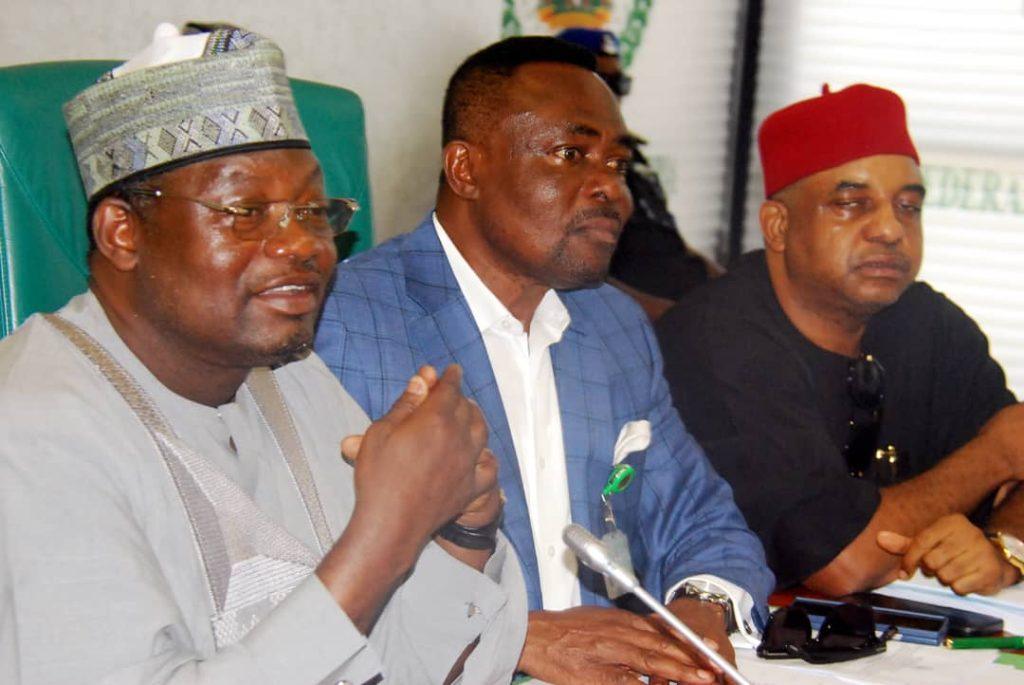
He said the Committee was determined to make the alternative education sector a credible path for lifelong learning and employment generation, noting that the public hearing was designed to gather expert and stakeholder input for effective implementation.
The four bills under consideration include: A Bill for an Act to Establish the South East Institute for Vocational and Entrepreneurial Studies, Umuobum, Imo State (sponsored by Ikeagwuonu Onyinye Ugochinyere — HB.2263);
A Bill for an Act to Establish the Federal Institute of Technical Education and Skills Acquisition, Mbaise, Imo State (sponsored by Chinedu Emeka Martins — HB.2342);
A Bill for an Act to Establish the Federal College of Entrepreneurship and Skills Acquisition, Ilorin West, Kwara State (sponsored by Muktar Tolani Shagaya — HB.554); and
A Bill for an Act to Establish the National Institute for Vocational and Entrepreneurial Studies, Agadagba-Obon, Ese-Odo, Ondo State (sponsored by Donald Kimikanboh Ojogo — HB.2033).
Presenting a detailed memorandum to the Committee, the Nigerian Society of Engineers (NSE) commended the House for its legislative initiative to expand Technical, Vocational Education and Training (TVET) and entrepreneurship capacity nationwide.
The NSE, as the umbrella body for all Nigerian engineers at home and in the diaspora, lauded the sponsoring lawmakers for promoting technical education but called for harmonisation of the institutional names for clarity and policy coherence.
“To aid clarity and ease of regulation, we respectfully propose that all four Bills adopt a single institutional name format — Federal College of Technical Education and Skills Acquisition (FCTESA), [Location, State],” the memorandum stated.
The engineers also recommended that the heads of the proposed institutions be designated as Principals rather than Rectors or Provosts, and that the governing structures be streamlined to ensure efficiency and reduce administrative overlaps.
They further advised that the institutions be placed under the regulatory oversight of the National Board for Technical Education (NBTE) and the National Business and Technical Examinations Board (NABTEB) to ensure quality assurance and accreditation consistency.
In its submission, the NSE raised critical observations and proposed several amendments to strengthen governance, regulatory clarity, and institutional autonomy in the bills.
The NSE also recommended that the Minister of Education be designated as the “Visitor” to the institutions for clear oversight and alignment with national education policy.
Additionally, the professional body warned against clauses that could expose the institutions to political interference, such as provisions allowing the president or ministers to unilaterally remove Council members or issue binding directives without procedural safeguards.
“Such provisions could undermine institutional independence and innovation,” the memorandum noted, urging lawmakers to strengthen autonomy through transparent appointment processes and merit-based criteria for principal officers.
While responding to issues raised by the NSE, Mr Aliyu expressed gratitude to the NSE and other stakeholders for their thoughtful contributions and assured that the Committee would carefully review all submissions before presenting its report to the House.
“Our duty as legislators is to ensure that these institutions are founded on strong legal and operational frameworks,” he said.
On their part, the South-East Development Commission (SEDC) said that the commission supports the establishment of vocational and entrepreneurship educational institutions as it aligns with its establishment mandate.
The hearing was attended by representatives from the Federal Ministry of Education, NBTE, NABTEB, civil society groups, and youth-focused organisations, who all expressed support for the establishment of well-regulated technical and vocational training centres across the country.