

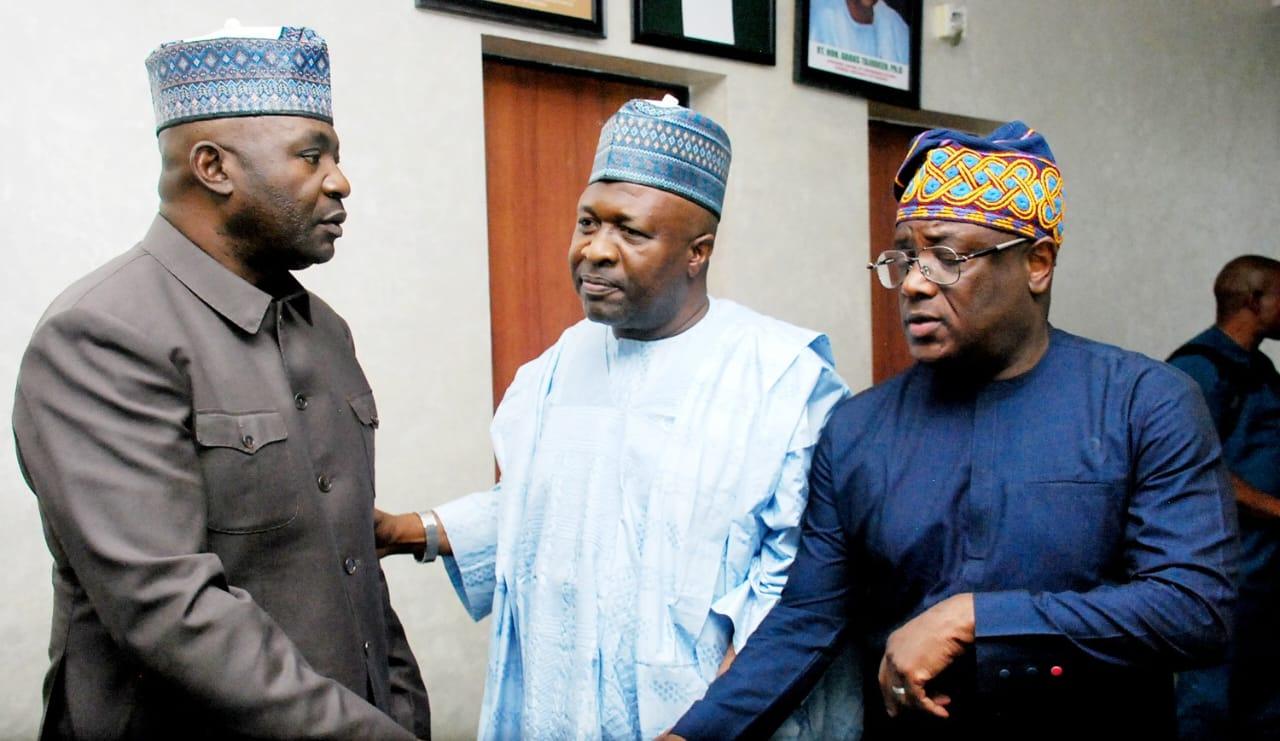
The Chairman of the House Committee on Defence, Mr. Babajimi Benson, says defence spending must be matched with measurable results.
He made the comment at the 2026 Budget Defence Session of the House Committee with agencies under the committee’s jurisdiction, in Abuja.
He said that the budget defence session was aimed at ensuring accountability and better security outcomes.
” This statutory annual exercise remains a sacred constitutional trust bestowed upon us by the Nigerian people. It is one of the most critical stages of the legislative appropriation process, as it provides the platform for rigorous scrutiny, constructive engagement and mutual accountability between the legislature and defence sector institutions in the overriding interest of national security.
” The defence and security sector continues to occupy a central place in Nigeria’s development discourse and this session for the 2026 budget is convened at a defining moment in our nation’s security trajectory. No nation can make sustainable progress without guaranteeing the safety of lives, property and critical national assets.
“We therefore, acknowledge the considerable gains made by our gallant Armed Forces and security agencies in degrading terrorist strongholds, curtailing insurgency and confronting criminality across various theatres of operation. Their valour and sacrifice, often under extremely challenging conditions, continue to inspire national gratitude.
” However, the persistence of security threats underscores the need for deeper institutional reforms, improved coordination and smarter deployment of scarce resources. The expectations of Nigerians are high, and rightly so. They demand results that translate into safer communities, restore livelihoods and renewed confidence in the authority of the state,” Mr. Benson said.
He also said that the Committee strongly advocates a whole-of-government and whole-of-society approach to national security to invest significantly in Strategic Communication to counter extremist ideologies and win the hearts and minds of vulnerable communities.
” We must also fund Community Peace building Architectures that foster local intelligence, dialogue and reconciliation. We must bolster Cyber Defence Capabilities to protect our digital sovereignty. We must enhance Defence Intelligence Infrastructure for pre-emptive action. Furthermore, we must see investment in Border Security Technology, Police Reforms and Inter-Agency Data Fusion Centres as critical force multipliers.
“We must also encourage collaboration with relevant ministries, departments and agencies at the federal, state and local levels. The 2026 budget proposals before us must convincingly demonstrate a holistic balance between the sword and the ploughshare – between military might and the tools for sustainable peace.
” As we consider your proposals, we expect clear alignment with national security priorities and ongoing reforms in the defence sector. Submissions should be realistic, well-justified and performance-driven. We will pay close attention to personnel welfare, training and capacity development, equipment maintenance and modernisation, intelligence capabilities, logistics and the sustainability of ongoing operations. Recurring issues such as abandoned projects, procurement inefficiencies and delays in budget implementation must be decisively addressed,” he added.
The Chief of Defence Staff (CDS), General Olufemi Oluyede, called for the strengthening of the Nigeria Police Force and the Nigeria Security and Civil Defence Corps to complement the efforts of the Armed Forces, citing manpower and operational limitations.
“If these institutions are strengthened, they can effectively hold and secure territories where the Armed Forces have succeeded, ensuring that such areas remain safe,” the CDS said.
He disclosed that newly trained special forces have been deployed to Benue and Plateau states, while a new joint task force, Operation Savannah Shield, will be inaugurated to cover Kwara State and parts of Niger State.
He noted that the police and civil defence, which have larger personnel strength and wider community reach than the Armed Forces, must be adequately equipped to take over and secure areas already cleared of criminal elements by the military.
Providing an overview of the nation’s security situation, Oluyede disclosed that arrangements had been concluded to deploy special forces to Kwara State and parts of Niger State to address the recent surge in insecurity.
He stressed, however, that the Armed Forces alone could not resolve the challenges.
Renewed Efforts
He also assured Nigerians that renewed efforts were underway to tackle lingering security threats in the Middle Belt, particularly in Benue and Plateau states, by taking the fight directly to insurgents’ hideouts.
“We are doing everything within our capacity to ensure that Nigeria becomes safer,” Oluyede said. “As we speak, the situation has improved significantly in the North-East. In the North-West, we still face serious challenges, and the same applies to parts of the North-Central, including Benue, Plateau and even Kwara. But we are evolving modalities to address these challenges within the resources available to us.”
General Oluyede also emphasised that the Armed Forces lacked the manpower to be deployed everywhere at once, noting that continuous movement of troops from one theatre to another had placed enormous strain on personnel.
“The soldiers hardly have rest because we don’t have the numbers. Recruiting more personnel comes with other challenges—housing, logistics and welfare. That is why strengthening the police and civil defence is critical. They have more men and better reach to fill the gaps after military operations,” he said.
He also said that Nigeria is partnering with allied countries to improve intelligence gathering while ensuring that such cooperation does not compromise national sovereignty.
The Minister of Defence, General Musa Christopher, Rtd also appeared before the committee but was asked to take a bow after lawmakers reviewed the ministry’s budget and the level of implementation in 2025.