

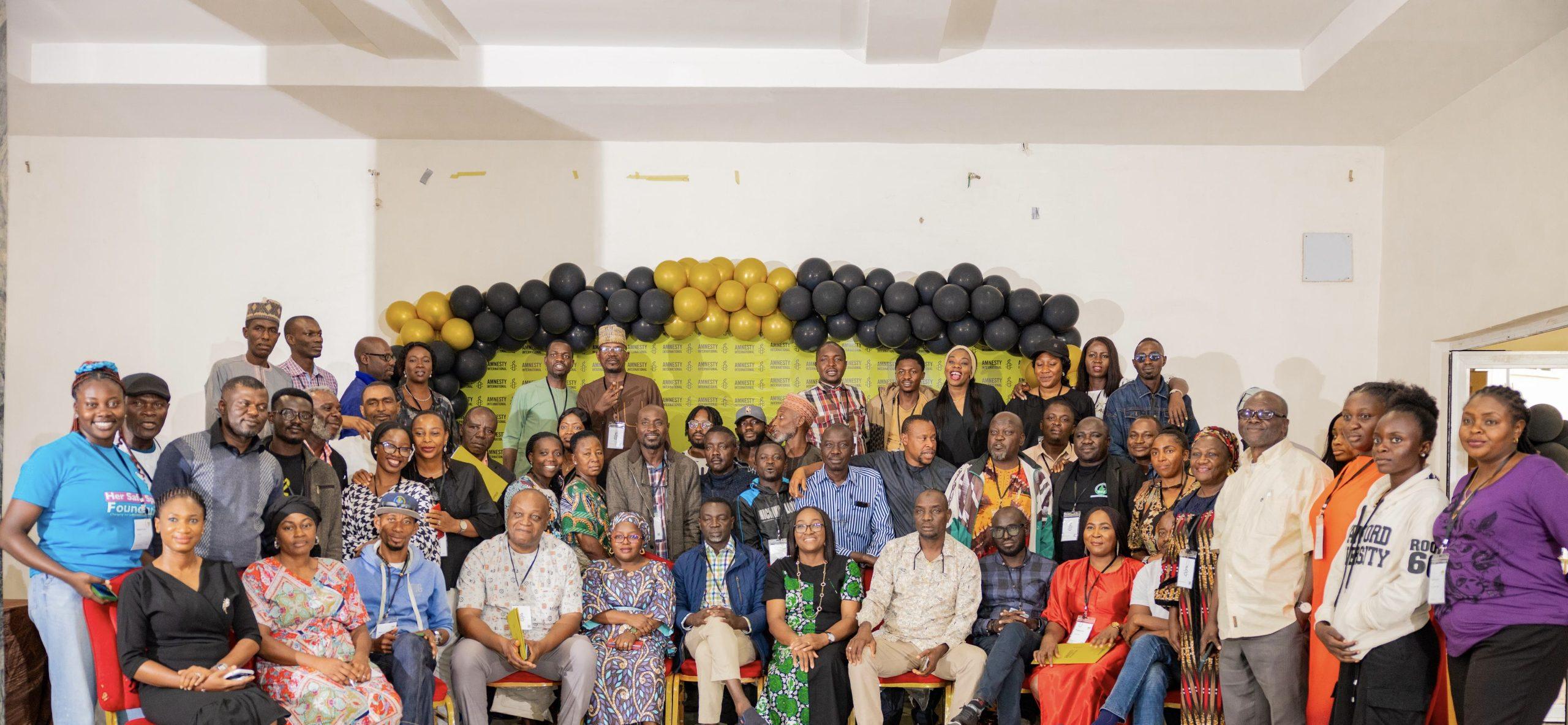
Amnesty International has urged journalists in Plateau State to adopt ethical, conflict-sensitive, and human rights-focused reporting, emphasizing the crucial role of the media in advancing justice and dignity across Nigeria.
The appeal came during a two-day training for journalists held in Jos Under the theme “Human Rights-Centered Journalism,” the workshop organized for the Correspondents’ Chapel of the Nigeria Union of Journalists (NUJ), Plateau State Council gathered reporters from various media outlets to enhance their skills in covering conflicts and human rights issues.
Barbara Magaji, Programme Manager at Amnesty International, explained that the objective of the training was to equip journalists not merely as conveyors of information but as active defenders of human rights.
“The media serves not only as a messenger but as a frontline advocate for human rights. How violations are reported is critically important,” she stated, urging reporters to carefully consider the ethical dimensions of their storytelling, particularly when dealing with incidents such as killings, forced evictions, or protest crackdowns,” she said.
Highlighting Amnesty International’s global reach of over 10 million members in more than 150 countries, Magaji noted that the organization continues to campaign relentlessly against human rights abuses in Nigeria, including arbitrary arrests, sexual violence, and suppression of free expression. She underscored the pivotal responsibility of the media in holding authorities accountable, especially in contexts where human rights are prone to misunderstanding or political manipulation.
Dr. Kabiru Danladi, an academic and media ethics advocate from the Department of Mass Communication at Ahmadu Bello University Zaria, challenged journalists to assess their professional values when reporting on conflicts.
“In a nation facing complex layers of conflict, the media can either heal or exacerbate tensions.
“Labeling individuals by ethnicity or religion calling someone a ‘Fulani herdsman’ or ‘Kanuri Boko Haram’ does more than describe an incident; it stigmatizes entire communities. Such framing can have far-reaching, damaging consequences,” he stated.
Dr. Danladi urged reporters to employ a systemic approach in their reporting, examining underlying causes such as inequality, marginalization, and political manipulation rather than merely focusing on surface-level symptoms.
“Speed should never take precedence over accuracy. Before each report, ask yourself: Am I safeguarding democracy or simply echoing the powerful?” he questioned.
On the issue of gender representation, Dr. Plangsat Dayil, an associate professor at the University of Jos, called on journalists to dismantle stereotypes that marginalize women’s voices in the media.
“In many newsrooms, women are often portrayed as victims rather than experts,” she remarked.
“This imbalance reflects broader systemic problems. The way we report on women matters: do we highlight their achievements and expertise, or do we confine them to discussions of emotion, appearance, or family roles?” she said
Dr. Dayil urged reporters to employ inclusive language, seek balanced sourcing, and quote women as authorities. She also emphasized the importance of recognizing intersectionality and understanding how gender intersects with factors like class, disability, and ethnicity in shaping news narratives.
Speaking on behalf of the Correspondents’ Chapel, Chairman Polycarp Auta described the training as both timely and indispensable.
“Journalists are frequently the first to witness and report human rights abuses, acting as essential gatekeepers who ensure that accurate and just information reaches the public, Our work sheds light on injustices, mobilizing public awareness and political will to demand accountability and redress,” he said
Auta commended Amnesty International for its support and expressed optimism about a sustained partnership, adding he believes this marks the beginning of an enduring collaboration between Amnesty International and the Chapel.