


The Chartered Institute of Logistics and Transport (CILT) has called for continuous evaluation of it’s leaders by strengthening collaboration with government, academia and the industry
Delivering the investiture lecture themed “The Leadership Expectations,” Professor Kayode Oyesiku said leadership failures in logistics and transport have national consequences.
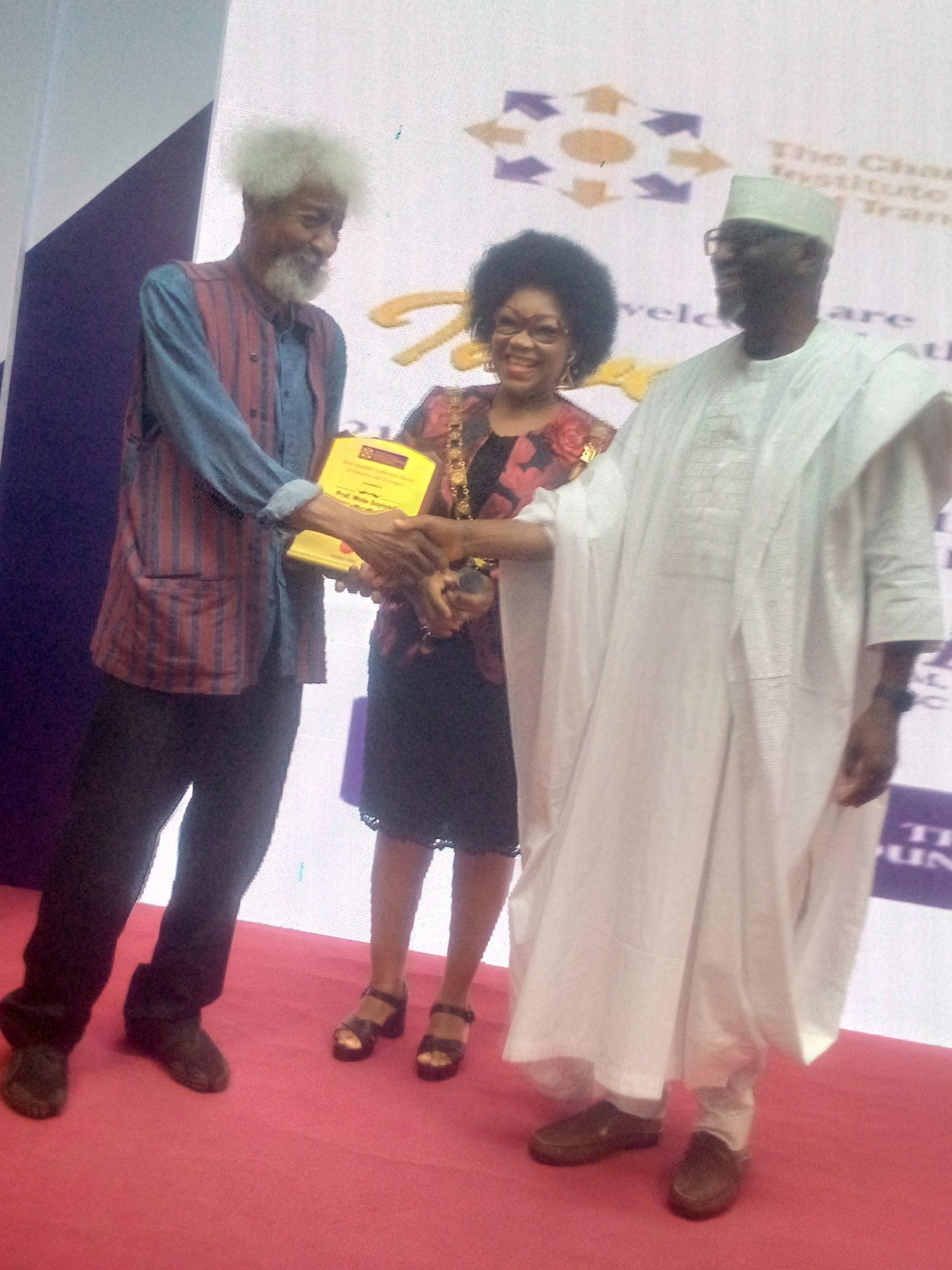
The Chartered Institute of Logistics and Transport (CILT) Nigeria entered a new phase of leadership on Thursday as Dr. Boboye Oyeyemi was inaugurated as the 21st President of the Institute at an investiture ceremony in Lagos.
He urged “the new leadership to prioritise integrity, accountability, membership expansion and institutional reforms.”
Oyesiku stressed that strong membership growth, effective partnerships, improved training, and sustained credibility would serve as key indicators of progress over the next four years.

He called for clear governance structures, early succession planning, and better utilisation of the Institute’s “high-quality but often silent” expert resources.
Nobel laureate Professor Wole Soyinka, who served as Special Guest of Honour, shared personal reflections on Nigeria’s evolving transport landscape, describing transportation as central to national development.

He recalled his long history of advocacy for road safety and urged the Institute to remain aligned with the founding ethos of the Federal Road Safety Corps (FRSC). Soyinka congratulated Oyeyemi and expressed confidence in his ability to drive innovation.
Earlier, outgoing President Mrs. Mfon Usoro, FCILT, presented her four-year stewardship report, highlighting sweeping reforms between 2021 and 2025.
Under her tenure, CILT expanded into new states, increased active membership to 2,021, resolved long-standing CAC compliance issues, renegotiated tax liabilities, and grew revenue from N7.8 million to N55 million. Digitisation of membership and elections, stronger financial controls, and enhanced national conferences also defined her administration.
Usoro noted that CILT Nigeria now enjoys stronger visibility within CILT International, with more Nigerians holding global positions.
She handed over ongoing projects, including the CILT Bill and NBTE accreditation process to the incoming council.
In his inaugural address themed “Building on Our Legacies, Uniting Every Member, and Positioning CILT Nigeria as a Global Force,” Dr. Oyeyemi unveiled an ambitious reform plan.
National mentorship scheme
His agenda includes establishing a CILT Innovation and Research Hub, revitalising the Digital Academy, instituting a national mentorship scheme, and activating a Policy Advisory Council to produce an annual Transport and Logistics Outlook Report.
A major target of his administration is “Project 2027,” a legislative push for an Act of Parliament that would formally recognize CILT Nigeria as the nation’s regulatory professional body for logistics and transport.
Oyeyemi also outlined eight strategic pillars covering governance, digital transformation, research, inclusivity and sectoral alignment, pledging stronger collaboration with key institutions including AfDB, UNCTAD, the Nigerian Army, AfCFTA Secretariat, WiLAT and NextGen.
He added that as the world changes, CILT Nigeria must not remain a spectator—we must lead the transformation.
Lateefah Ibrahim