Peace remains one of the most pressing challenges facing the world today, as conflicts continue to claim lives, displace communities and deepen divisions among societies.
United Nations Secretary-General António Guterres is therefore calling for greater investment in peace, diplomacy and sustainable development, stressing that building peaceful societies requires the commitment of everyone.
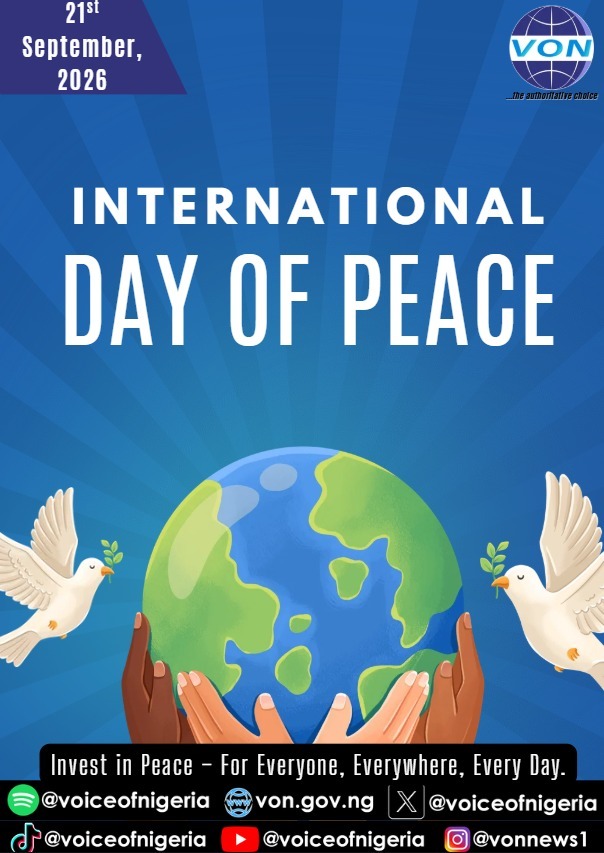
His message comes as the world marks the International Day of Peace on September 21, with this year’s theme, “Invest in Peace: For Everyone, Everywhere, Every Day.”
The United Nations is also highlighting the role of what it describes as the “everyday architects of peace”—people who build trust, bridge divisions and promote peaceful communities through their daily actions.
This is significant, coming at a time when global resources are increasingly being directed towards military expenditure.
A 2025 United Nations report found that global military spending reached a record 2.7 trillion dollars in 2024, nearly thirteen times the amount of official development assistance from the world’s wealthiest nations.
But peace is not simply the absence of war, as the United Nations emphasises.
It is also a condition in which people can live with safety, dignity, opportunity and cooperation.
For Nigeria, this means addressing not only violent conflicts, but also the conditions that allow mistrust, exclusion and division to grow.
Nigeria’s diversity, with more than 250 ethnic groups, numerous languages and different religious and cultural identities, can be a source of strength.
But when differences are exploited, they can also deepen social and political divisions, making peacebuilding an urgent national responsibility.
The Nigerian Government and stakeholders in the peacebuilding sector are currently working on a new National Peace Policy aimed at strengthening conflict prevention, institutional coordination and resilience across the country.
There are also efforts to identify and address conflicts before they escalate.
In March, the Institute for Peace and Conflict Resolution rolled out the National Conflict Early Warning and Early Response System, designed to detect emerging threats and facilitate timely intervention.
The system brings together government institutions, security agencies, traditional leaders, civil society organisations and community actors.
This is important because communities are often the first to notice signs of tension.
When such warning signs are identified early and appropriate action is taken, conflicts can be prevented from escalating and lives can be saved.
Building a culture of peace, however, requires more than responding to crises.
It requires investing in people, especially young people.
Education has an important role to play because tolerance, empathy, dialogue and peaceful conflict resolution are values that can be taught, practised and strengthened from childhood.
On August 28, UNESCO, the Federal Ministry of Education through the Nigerian Educational Research and Development Council, and other stakeholders reviewed and validated Nigeria’s Education for Peace Curriculum.
The initiative is designed to strengthen young people’s knowledge, values and skills for dialogue, tolerance, peaceful coexistence and non-violent conflict resolution.
This is a reminder that education must prepare young Nigerians not only for examinations and employment, but also for responsible citizenship.
Children must learn that disagreement does not have to lead to hatred, and that another person’s ethnic, religious or cultural identity is not a threat to their own.
Another key ingredient of peacebuilding and social cohesion is the way information is produced and shared.
In today’s world, information can reach thousands of people within minutes. The onus, therefore, is on the media and its users to ensure that misleading messages, inflammatory videos and hateful comments are not amplified.
The media must inform without inflaming, while citizens have a responsibility to verify information before sharing it.
In a diverse society like Nigeria, words shared can either build bridges or create walls.
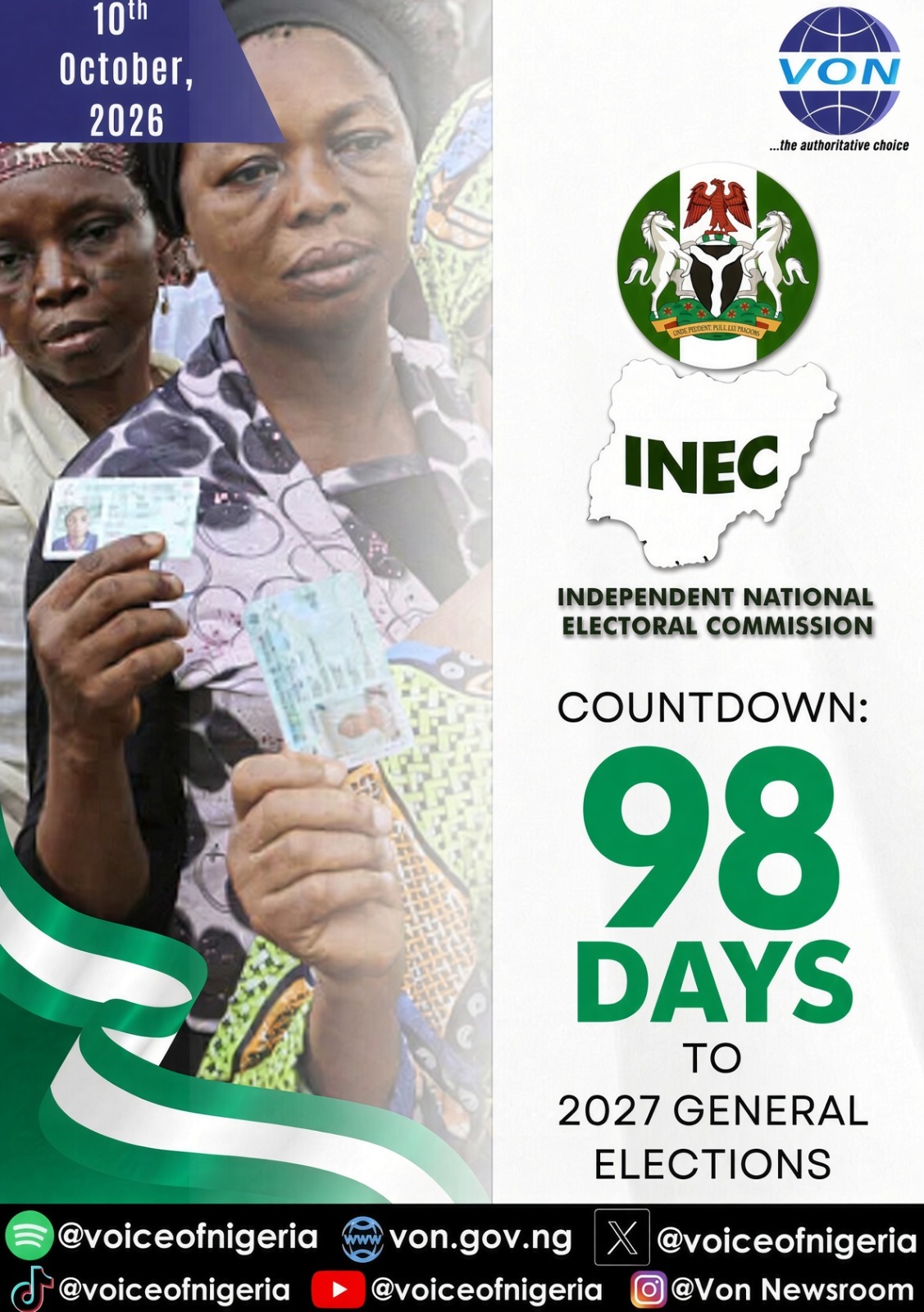
As the country moves towards the 2027 general elections, peaceful political engagement will be another important test of Nigeria’s commitment to peace.
The National Orientation Agency has been promoting its “Elections Without Bitterness” campaign to encourage peaceful political participation and discourage the use of citizens for violent or divisive purposes.
Similarly, in August, political parties and presidential candidates signed the National Peace Accord ahead of the 2027 elections, committing to peaceful and issue-based campaigns and rejecting violence, hate speech, misinformation and other conduct capable of undermining the electoral process.
This is a step in the right direction, but the challenge now is to translate those commitments into conduct throughout the electoral process.
Beyond elections, lasting peace also depends on justice, inclusion and participation.
Young people must be recognised as partners in peacebuilding, while women should have meaningful opportunities to participate in decision-making, conflict prevention and community development.
Government must strengthen institutions and policies that promote peace. Political leaders must encourage responsible engagement. Religious and traditional leaders must use their influence to unite rather than divide. Schools must teach the values that sustain peaceful societies. The media must inform without inflaming. And citizens must recognise that peaceful coexistence is not weakness, but a foundation for stability and development.
As the world marks the International Day of Peace, the message for Nigeria is simple: ‘Peace is everyone’s responsibility.’