

The Nigerian Government has been charged to do everything possible to sustain the industrial harmony existing between it and the Nigeria Labour Congress, NLC.
The International Trade Union Confederation, ITUC-Africa, gave the charge while reacting to the recent new National Industrial Relations Policy, NIRP, approved by the Federal Executive Council during its meeting in Abuja.
A statement signed by the General Secretary of ITUC-Africa, Comrade Joel Odigie said: “The policy, as it stands, does not criminalise the right of workers to withdraw their labour. Therefore, we appeal that no vexatious interpretation should be given to it that may undermine industrial harmony and productivity.
“The right to strike is not a privilege to be granted or withdrawn at will — it is a fundamental right enshrined in international labour standards, including ILO Conventions No. 87 (Freedom of Association and Protection of the Right to Organise) and No. 98 (Right to Organise and Collective Bargaining), to which Nigeria is a signatory. “
Odigie said that the 1999 Constitution of the Federal Republic of Nigeria and the Trade Unions Act, also recognise and protect the rights of workers. 
According to him, dissent, freedom of speech, and opinion are not only ideals but are integral to constitutional governance and democracy.
“Democracy strives when citizens and stakeholders, such as workers and their trade union organisations have mechanisms and tools to advance accountability and safeguard rights at workplaces,” he added.
Government assurance
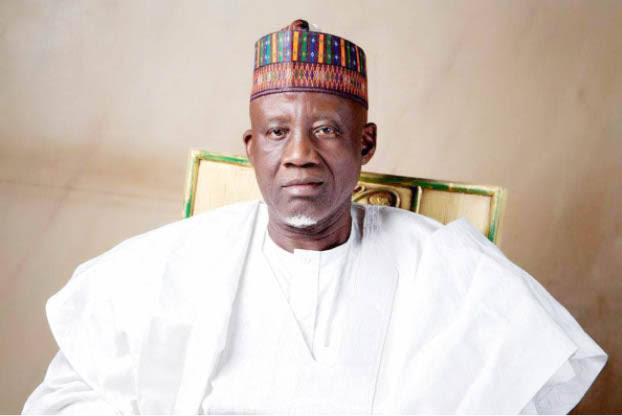
Meanwhile, the Minister of Labour and Employment, Dr Muhammad Dingyadi, has again reassured unions in Nigeria, that the government has no intention of denying workers their right to strike, emphasising that the New National Industrial Relations Policy is aimed at strengthening dialogue as the best option for attaining industrial harmony.
Speaking to Journalists in Abuja on Tuesday, the Minister said that the government would not do anything to jeopardise the existing cordial relationship between it and the organised labour in the country.
“It is not true and it can never be true. We are a democratic country. We should allow everybody to say his mind and we respect the rules of the game.
“I think some people are just misconstruing or misunderstanding it. In fact, the NLC did not say that they are against the policy. What they are saying is that they are against what the government was saying was the purpose of the policy,” the Minister said.
He continued: “I think this came from the fact that I was not at the briefing because we had over 30 something memos on that day and a few of us were picked to go and brief the press on the matter. ( So I had to assign my own part of the memo because I had only one memo. I had to ask the Minister of Information to give a brief on it.
“We have tried to clarify this issue that there is no intention of that policy to prevent workers from going on strike. In fact, it is there to ensure that there is peace and good relationship between partners, between government and employers, and between workers and government.”
To stress that the policy emphasised dialogue and not preventing workers from going on strike, the Minister noted: “You have seen last week, some people went on strike and nobody said anything against them. Far from what people are saying, it is not true, we will continue to partner with our workers.
“Even yesterday, I was interacting with the President of the NLC and we tried to show them the documents. They were all part of developing these documents; NLC,TUC all our partners were part of it and we showed them the original copies of these documents.
“Nothing was done to tamper with it; nothing close to that was included in that policy, so it is a very clear issue.
“This policy is there for everybody to see and it is going public now. There is nothing close to what some people are insinuating,” the Minister said.
He added that the government was there to ensure that workers and employers were working together for the peace, progress and growth of the economy.
Lateefah Ibrahim