

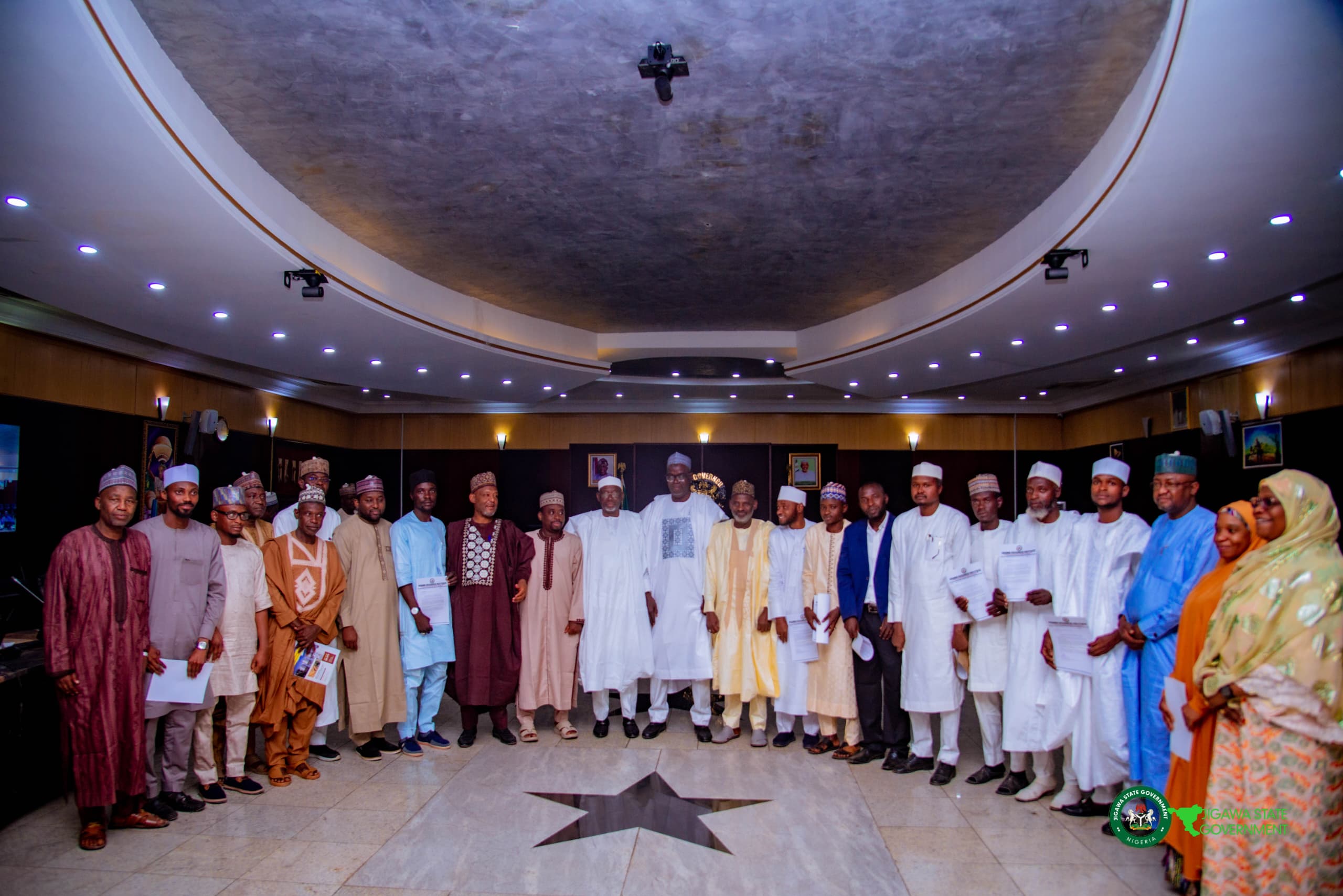
The Jigawa State Government in North West Nigeria has taken a major step towards strengthening national food security with the launch of the country’s first Wheat Value Chain Research Programme, alongside the award of research grants to 10 postgraduate scholars.
The programme was formally unveiled on Wednesday at the Government House in Dutse by the Governor of Jigawa State Malam Umar Namadi, who presided over the presentation of grants to four PhD and six MSc candidates selected through a competitive, merit-based process.
Governor Namadi said the initiative is a strategic response to both national and global food supply challenges, stressing that research and innovation remain critical to improving agricultural productivity and reducing Nigeria’s dependence on wheat imports.
“This programme is designed to generate practical, research-driven solutions that will strengthen wheat production, improve agribusiness, and support food security efforts not only in Jigawa State but across the country,” the governor said.
He noted that Jigawa, Nigeria’s leading wheat-producing state, is well positioned to drive research capable of influencing national agricultural policy and practice.
The governor assured that findings from the studies would receive full government backing and be applied to enhance farmers’ productivity and strengthen wheat value chain development.
Commending the selection committee for its transparency, Governor Namadi described the quality of the selected scholars as a reflection of the seriousness attached to the programme.
He urged the beneficiaries to demonstrate discipline, dedication, and intellectual rigour, adding that their research would form a foundation for future agricultural policies.
Earlier, Chairman of the Committee on Wheat Value Chain Development Programme, Professor Usman Haruna, said the initiative was conceived in recognition of agriculture’s central role in Jigawa State, where about 80 per cent of the population depends on farming for its livelihood.
Professor Haruna explained that wheat remains a strategic crop for Nigeria’s food security and income generation but continues to face challenges including limited research capacity, poor access to improved seed varieties, and inadequate scientific support.
According to him, 36 applications were received from across the country, 17 candidates were shortlisted, and 10 emerged successful after a rigorous interview process.
He said the scholars will focus on key research areas such as the development of wheat seed varieties suited to local climatic conditions, productivity improvement, irrigation efficiency, and value addition.
These outcomes are expected to boost Jigawa’s wheat output and contribute significantly to meeting national demand.
The programme will be implemented in collaboration with leading universities and research institutions, including the Federal University Dutse, Sule Lamido University Kafin-Hausa, Bayero University Kano, the Institute for Agricultural Research Zaria, and the Lake Chad Research Institute.
The Jigawa initiative is expected to position the state as a hub for wheat research and innovation, supporting Nigeria’s broader drive toward agricultural self-sufficiency and sustainable food production.
Details of the engagement are contained in a press statement issued by the governor’s spokesperson, Hamisu Gimel.