
 has mobilised Kaduna communities to fight digital violence against women and)
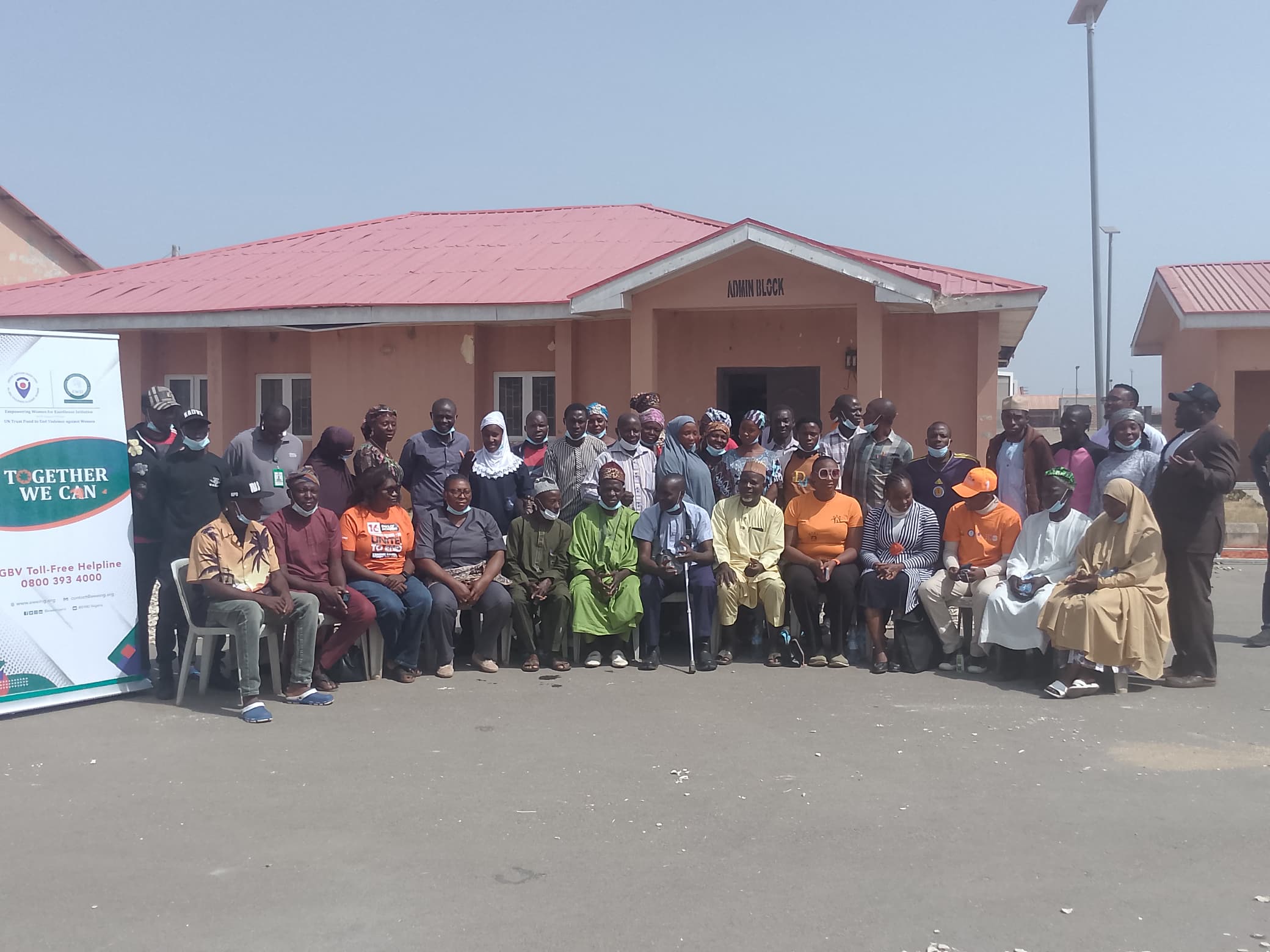
An NGO, Empowering Women for Excellence Initiative, (EWEI) has mobilised Kaduna communities to fight digital violence against women and girls.
Under the EWEI’s “Together We Can” project, the participants, drawn from Kasuwan Magani and Kujama community in Kajuru and Chikun LGAs of Kaduna state, were mobilised for action as part of activities to mark the 16 days of activism against Gender-Based Violence, (GBV).
The years’ theme for the 16 days of activism against GBV is “Unite to End Digital Violence Against All Women and Girls.”
The engagement, supported by the United Nations Trust Fund (UNTF) to end violence against women, took place in Kasuwan Magani with women, girls and men sharing experiences and discussing strategies to prevent digital and technology-facilitated GBV in their communities.
The Programme Manager of EWEI, Mrs Juliana Joseph said that “the communities were selected after surveys identified them as protracted conflict areas with high risks of violence against women.”
She explained that “the project empowered 60 women, 30 from Kasuwan Magani and 30 from Kujama, who had experienced trauma and various forms of violence.”
Joseph said the initiative, now in its third year, has enabled women to start businesses, gain confidence, overcome fear, and become role models in their communities.
According to her, “the beneficiaries received psychosocial support and counselling from the Federal Neuropsychiatric Hospital, Barnawa, Kaduna State, under professional supervision and care.”
Joseph equally stated that the women formed cooperative societies and had introduced another 60 women, expanding the project’s impact across communities.
She said the engagement also targeted men and boys as allies, educating the entire community to understand violence and protect women’s rights.
Nannak Ndam, the Centre Manager of Salama Sexual Assault Referral Centre at Gwamna Awan General Hospital, Kakuri, described digital violence as “a fast growing, technology facilitated form of abuse.”
She highlighted sextortion, blackmail, non-consensual image sharing, online dragging, and cyber threats as common types of digital GBV.
Ndam said; “victims often face anxiety, social isolation, loss of opportunities, and mental health challenges due to exposure and harassment online.”
She urged the people to adopt digital safety measures, control information shared online, protect images, and support survivors of online abuse.
Mr Buba-Yero Alhamdu of the National Agency for the Prohibition of Trafficking in Persons, (NAPTIP) linked digital violence to trafficking and kidnapping, explaining how perpetrators lure victims through fake jobs, scholarships, or romantic advances online.
He said criminals exploit online posts, routines, and location tags to track, abduct, traffic, and exploit victims for sex or forced labor.
Alhamdu stressed that parents, teachers, and community leaders must educate youths on online risks, privacy, early reporting, and collaborative prevention of digital-enabled violence.
Also, the participants shared touching live stories, which highlighted the real-life impact of digital and physical violence, showing how trauma, exploitation, and abuse affect women and girls in their communities.
A drama performance on how a girl’s nude image was shared online was enacted to demonstrate the consequences of digital violence, and how community leaders were able to contain and address the situation through counselling, mediation, and community awareness