

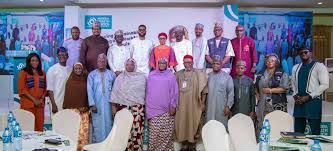
The Kaduna State Ministry of Health, in collaboration with its development partners, has reaffirmed its commitment to improving health indices across the state.
The State Commissioner for Health, Umma Kaltum-Ahmed, gave the assurance on Tuesday during the launch of the 2025 Joint Annual Report, themed “Strengthening Accountability and Evidence-Based Planning through Joint Annual Review of the Health Sector Performance.”
She stated that the launch underscored the collective commitment to a transparent, accountable, and evidence-driven health system in line with the vision for a healthier Kaduna State.
READ MORE:Kaduna Inaugurates Baby Crèches To Support Mothers
“The theme speaks directly to the heart of effective governance.
“Evidence-based planning ensures that policies and investments are guided by reliable data, while accountability guarantees measurable results for the people we serve,” the commissioner said.
She emphasised that the Joint Annual Review was not merely a statutory exercise but a platform for reflection, learning, and shared responsibility, allowing stakeholders to measure progress, identify gaps, and chart a course for improvement.
“By integrating this process into our governance structure, we reinforce a culture where every action is tracked, every investment assessed, and every outcome evaluated based on its impact on citizens’ lives,” she added.
Kaltum-Ahmed commended Gov. Uba Sani for his leadership, under which the health sector had recorded significant progress.
“These include: Revitalisation of more than 300 Primary Health Care (PHC) facilities, ensuring access to essential services in both rural and urban areas.
“Ongoing recruitment and deployment of doctors, nurses, midwives, and community health workers to improve service delivery.
“Expansion of the Kaduna State Contributory Health Scheme (through KADCHMA), increasing coverage for vulnerable groups including pensioners, the poor, and informal sector workers.
“Significant reduction in maternal and infant mortality supported by free maternal and child health services and improved referral systems.
“Enactment of the Kaduna State Public Health Law, and the establishment of robust surveillance systems to enhance epidemic preparedness.
“Modernisation of secondary health facilities, including new diagnostic equipment, ambulances, and upgraded laboratories.
“These achievements are the result of deliberate, data-informed planning and a strong accountability framework that ensures resources reach where they are most needed,” she added.
Kaltum-Ahmed encouraged all stakeholders, government agencies, development partners, civil society, and community leaders, to view the report not just as documentation, but a call to action.
“Let us uphold transparency, foster collaboration, and make decisions grounded in evidence,” she urged.
She also appreciated the Federal Ministry of Health and Social Welfare, National SWAp Coordination Office, National Primary Health Care Development Agency, National Health Insurance Authority, and other national institutions for their technical guidance and collaboration.
The commissioner commended the Planning and Budget Commission and the Kaduna State Bureau of Statistics for providing critical data that enabled informed decision-making.
“To our development partners, both local and international, thank you for your sustained support in resources, expertise, and innovation.
“To our Civil Society Organisations and community representatives, including persons with disabilities, your voice is vital in keeping our health system people-centered.
“To our facility in-charges, health secretaries, and ward development committees, you are the frontline heroes translating policies into action,” she added.
She stressed that the Joint Annual Review was an opportunity for honest self-assessment.
“Let us engage openly, speak frankly, and collaborate creatively. Let us not shy away from confronting uncomfortable truths, because only then can we craft solutions that are meaningful, equitable, and sustainable.
“Our ultimate goal is to ensure that every person in Kaduna State, regardless of location, income, gender, or ability, has access to quality, affordable, and timely healthcare services.”
In a remark on behalf of all development partners, Mrs Sarah Kwasu of Alive & Thrive noted that their organisations remained committed to supporting the state in improving health outcomes.
“We’re pleased to be part of the dissemination of this report. It has captured many lessons that will guide better implementation moving forward.
“This isn’t just a report to file away, it’s a tool to help us improve health outcomes across the state,” she added.
Also speaking, Benjamin Maigari, representing Civil Society Organisations, described the dissemination as a significant step toward accountability.
He commended the state for its efforts so far and called for action on gaps identified through the review process.
“We expect to see continued commitment from the state after this review, particularly in the area of service delivery.”