

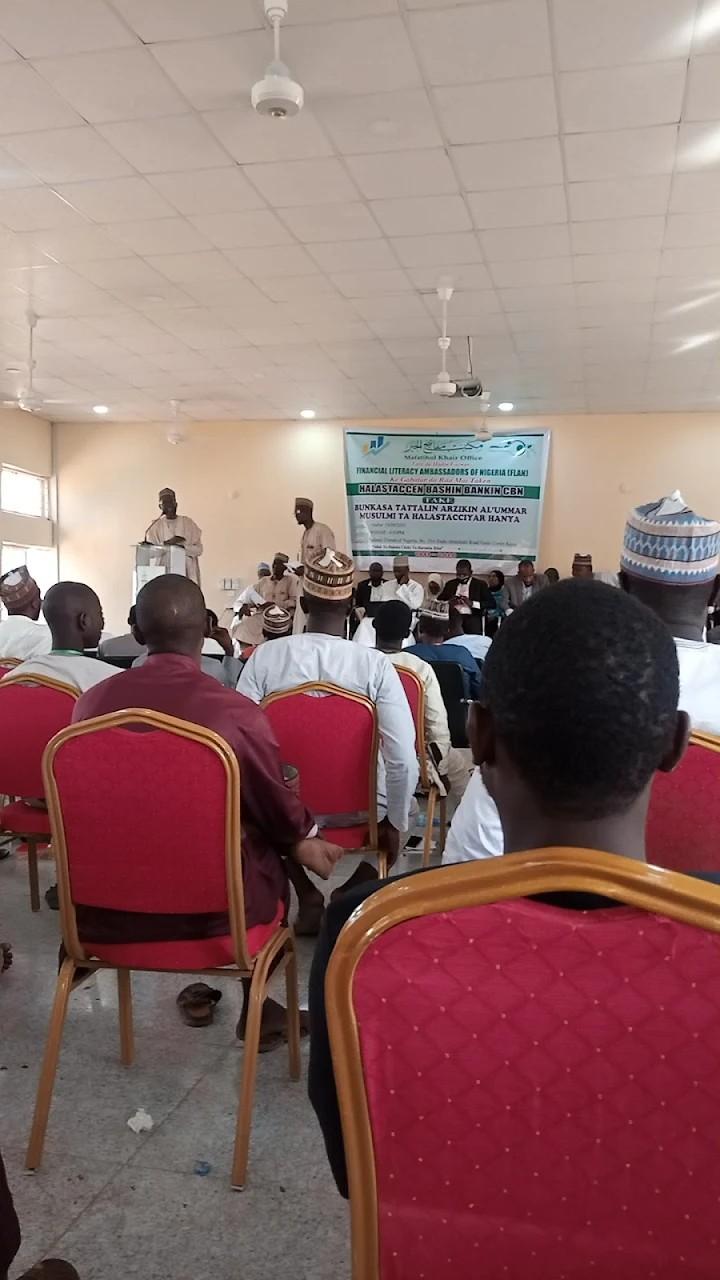
The Islamic Forum of Nigeria, in partnership with the Almubarak WAQF Foundation and the Financial Literacy Ambassadors of Nigeria, has organised a sensitisation programme to enlighten Nigerians on the new tax reforms introduced by the Federal Government.
The programme, held at the Islamic Forum, Farm Centre, Kano, brought together stakeholders from the business community, financial institutions, academia and relevant government agencies to deepen public understanding of the reforms.
Speaking at the event, the Executive Secretary of the Islamic Forum of Nigeria, Alhaji Dalhatu Gwarzo, said the organisation convened the forum to ensure citizens, particularly business owners, clearly understand the new tax policies and their implications.
“We deemed it important to bring all relevant stakeholders together to deliberate on the new tax reforms so that Nigerians, especially those in business, can be properly informed and fully conversant with the policy direction of the Federal Government,” Gwarzo said.
He stressed that improved revenue generation is critical to national development, adding that compliance with tax policies would enhance economic stability and growth.
“When people understand the tax system and comply accordingly, it will contribute significantly to economic growth and stability in the country,” he added.
Read Also: Commission, Stakeholders Back Nigeria Tax Act 2025
ACCI Urges Fair Tax Policies That Protect MSMEs
Delivering a lecture at the programme, the guest speaker, Saleh Adamu Kwaru, said the current economic realities facing many Nigerians informed the Federal Government’s decision to review existing tax laws.
“The country is passing through serious economic challenges, and in response, the Federal Government decided to review the tax system in order to reposition the economy for fairness, efficiency and sustainability,” Kwaru explained.
He noted that under the new tax reforms, businesses would be taxed mainly on profits, while civil servants would continue to pay taxes through deductions from their salaries under the PAYE system.
“The idea is to ensure that taxes are deducted primarily from profits made by businesses, while workers in public service remain under the PAYE system,” he said.
Kwaru disclosed that about 70 different types of taxes are currently undergoing reforms to reduce multiple taxation and streamline the system for greater efficiency.
“These reforms are progressive in nature. The poor will be exempted, the middle class will pay less, while the wealthy will pay slightly more,” he stated.
According to him, the structure is designed to promote equity, ease the burden on low-income earners and strengthen government revenue generation.
Other financial experts who made presentations at the event provided detailed explanations on how the reforms would operate, their effectiveness and their importance to the national economy.
They highlighted key benefits of the reforms, including improved revenue generation, reduced tax evasion and a more transparent fiscal system.
The session was interactive, with participants from the business community and other sectors asking questions on compliance, implementation and the overall impact of the reforms, which were addressed by the experts.
Participants at the programme included members of the Kano business community, academics, revenue generation stakeholders from both state and federal levels, as well as representatives of banks and other key players in the financial sector.
PIAK