


Ladan Nasidi, Kano
The Kano State Government has announced a comprehensive plan to tackle water quality challenges and prevent the spread of waterborne diseases in its 44 Local Government Areas.
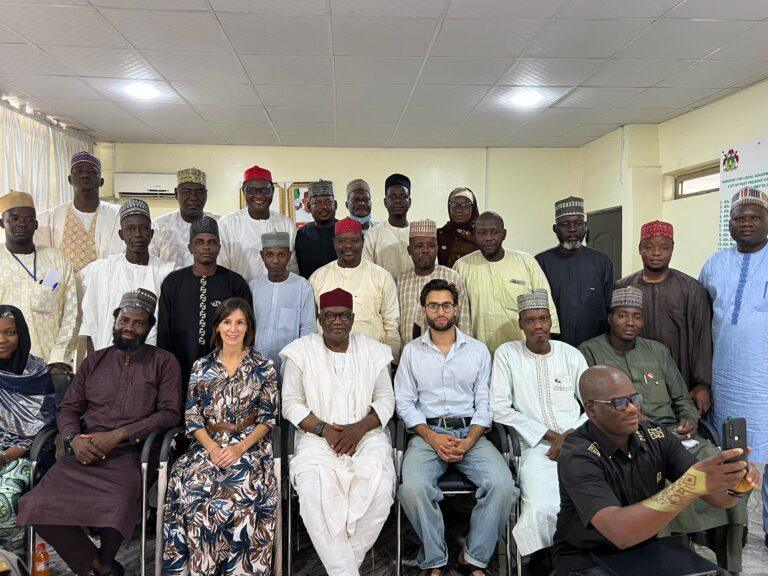
The Commissioner for Local Government, Mohammed Tajo Othman, made this known during a meeting with a delegation from the Development Innovation Lab, where he outlined new measures to enhance access to safe drinking water.
Othman said the initiative combines scientific research with local innovation and will introduce modern water treatment technologies, including precision chlorine dosing machines and natural purification systems.
The meeting also reviewed the outcome of the Chlorine Sensitization and Redemption Pilot Project, implemented in two local government areas, and discussed plans for expansion, technical support, and sustainability.
The Development Innovation Lab team, led by Professor Elisa, included experts from universities in California, Michigan, Berkeley, and Chicago.
The team presented findings from the pilot project and recommendations for scaling up the initiative across the state.
Tajo Othman emphasized the importance of preventive measures, urging local government councils to prioritize the provision of potable water in their areas.
He also called for the inclusion of student exchange and training programmes in water science and technology to build local capacity and support the development of a skilled workforce.
In her remarks, Professor Elisa said the project adopts a scientific, evidence-based approach, developing adaptable water treatment protocols suited to Kano’s diverse environmental conditions.
She explained that systematic testing across the local governments ensures reliable and sustainable results.
The meeting also explored possible collaboration in other Water, Sanitation and Hygiene (WASH) areas as part of the state’s broader effort to promote public health and well-being.
Officials say that by expanding on the pilot project’s success and strengthening partnerships, the Kano State Government aims to reduce the prevalence of waterborne diseases and improve access to clean, safe drinking water for all residents.