

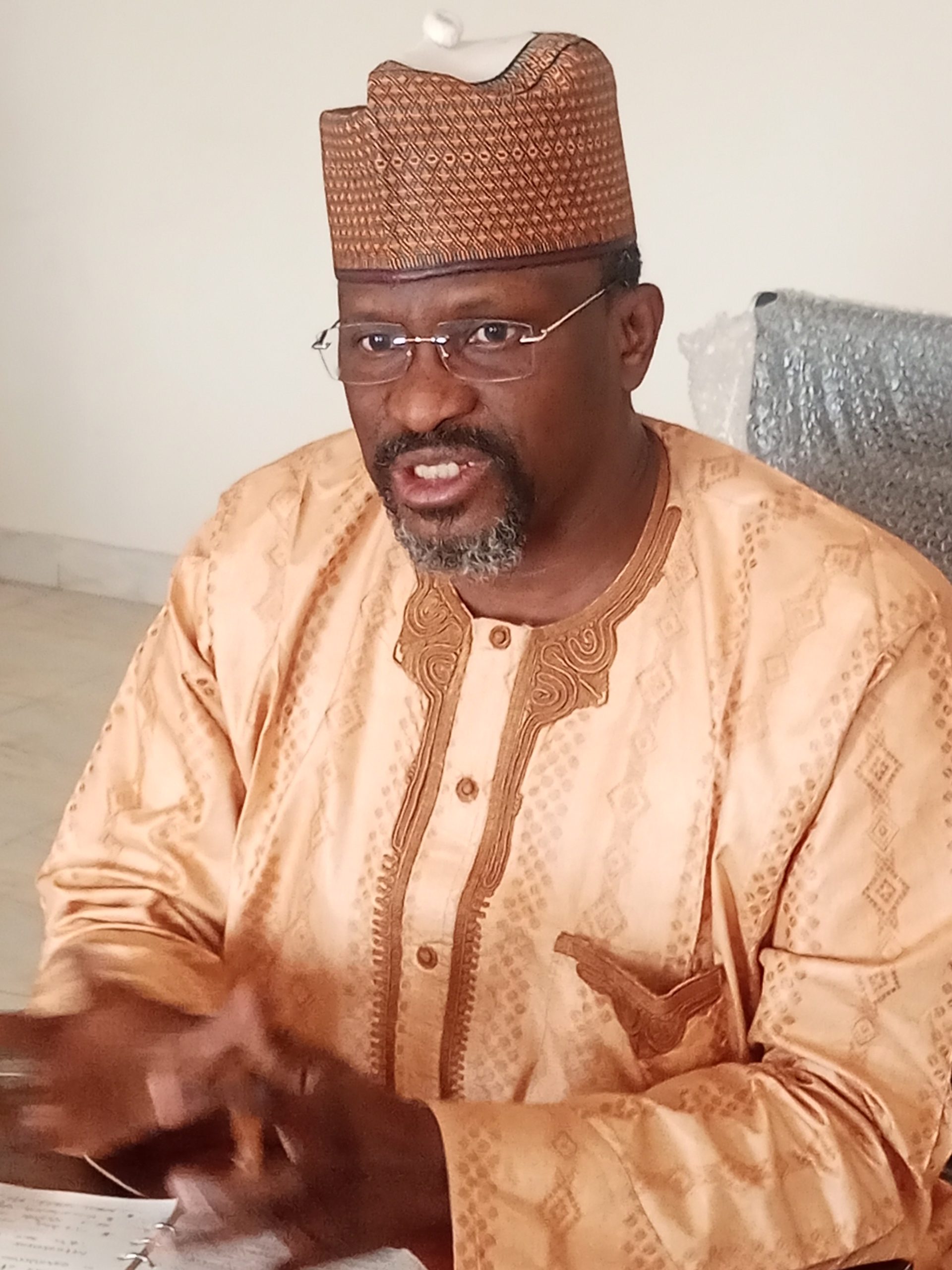
The Chairman of the Implementation Committee for the establishment and takeover of Gaya Polytechnic and immediate past Vice-Chancellor of a Nigerian university, Professor Mukhtar Atiku Kurawa has provided an update on the progress and vision behind the proposed institution in Gaya Local Government Area of Kano State.
According to Professor Mukhtar Atiku Kurawa, significant milestones have been achieved since December 3, when the Executive Governor of Kano State formally flagged off construction at the permanent site during a project commissioning visit to Gaya.
The governor not only laid the foundation but also directed contractors to give the polytechnic top priority, demonstrating strong political will behind the project.
One of the major developments, he explained, is the expansion and relocation of the permanent site.
While the National Board for Technical Education (NBTE) requires a minimum of 50 hectares for a public polytechnic, the governor approved the acquisition of a much larger landmass almost four times the minimum requirement.
The site has also been moved about 100 metres away from the main road for safety reasons, stretching roughly two kilometres along the road and one kilometre inward.
This expansion, however, necessitated a complete revision of the physical master plan, a mandatory requirement for NBTE accreditation.
As a result, consultants must redesign the master plan after fresh surveys are completed by the Surveyor General.
Compensation processes for affected farmers have already begun through the Ministry of Lands and Housing, a step Professor Kurawa said was essential to ensure community support and smooth implementation.
Despite these adjustments causing delays, the committee has continued to work “around the clock.”
Engagements with NBTE officials have been encouraging, with the Board expressing satisfaction over Kano State’s decision to establish an additional polytechnic, noting that the state currently has only one, compared to states like Ogun with multiple institutions.
To fast-track academic activities, the government has also approved a temporary take-off site.
Renovation work is ongoing to prepare facilities that will allow the polytechnic to begin operations before the permanent campus is completed.
Initial programmes proposed include Electrical and Electronic Engineering, Computer Engineering, Computer Science, Business Administration, and Accountancy courses that are less capital-intensive but meet NBTE requirements for a balanced academic structure.
Professor Kurawa disclosed that academic and staffing master plans have already been drafted, including arrangements for redeploying existing government staff and recruiting new personnel in line with NBTE guidelines.
Discussions have also been held with the Joint Admissions and Matriculation Board (JAMB) to ensure that admissions follow the Central Admission Processing System, preventing future complications for students.
On the likely take-off date, he said admissions may begin around the middle of 2026, using results from the 2026 Unified Tertiary Matriculation Examination, provided accreditation and facility preparations are completed as planned.
Looking ahead, Professor Kurawa described Gaya Polytechnic as a future-focused institution built on digital infrastructure and renewable energy. Plans include solar-powered facilities, smart classrooms, online portals for admissions and results, and collaboration with the Kano State Information Technology Development Agency (KASIDA).
The polytechnic will also incorporate skills certification programmes for artisans and craftsmen under the National Skills Qualification Framework.
“Our vision is to produce job creators, not job seekers,” he said, explaining that the institution is designed to serve not only Gaya and neighboring local governments, but Kano State, Nigeria, and even international students.
He urged the public to remain patient, assuring that the delays are a result of deliberate efforts to build a standard, sustainable, and globally competitive polytechnic that will serve generations to come.
Lateefah Ibrahim