

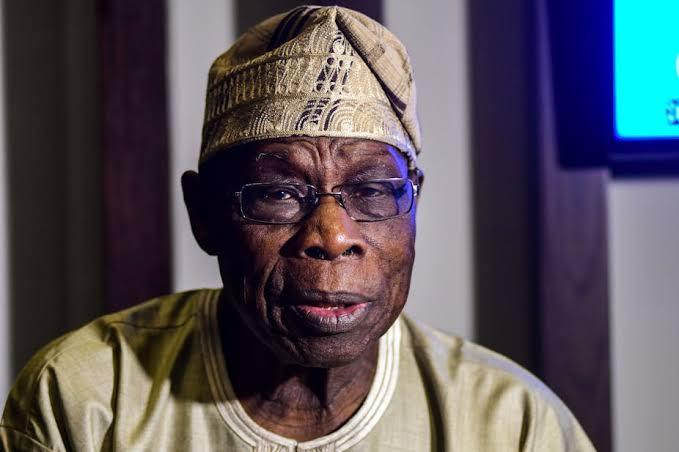
Former Nigerian President Olusegun Obasanjo has stated that a lack of economic literacy among African leaders is a core barrier to sustainable development and the continent’s self-sufficiency.
Speaking on a panel titled “African Renaissance in an Era of Turbulence: Are the Lions Still on the Move?” at the ongoing 32nd Afreximbank Annual General Meeting in Abuja, Chief Olusegun Obasanjo lamented that Africa’s most promising nations—such as Nigeria, South Africa, Ethiopia, Egypt, and the Democratic Republic of Congo—have failed to translate their demographic and resource advantages into meaningful economic progress.
He added that the “sleeping lions,” as he described them, continue to falter due to mismanagement, corruption, and a poor grasp of global economic dynamics.
“Many of our leaders simply do not understand the workings of the global economy.
“And if we don’t understand it, we can’t position ourselves to benefit from—nationally, regionally, or continentally,” Obasanjo stated.
He called for a rethinking of economic policies and a prioritisation of capacity building at all levels of government across African states.
“African leaders must gain the economic literacy and political courage to reform the systems that are holding us back. Until our lions begin to lead with knowledge and vision, the continent will remain stuck,” Obasanjo emphasised.
The former president argued that, rather than seeking aid from other regions, the continent possesses enough internal capacity to finance its development.
He said Africa has relied on foreign aid for too long, questioning whether aid should be the continent’s primary source of support.
The former leader emphasised that African nations should strive to generate their funding internally rather than relying on external countries such as China and Japan, which often provide financial support in the range of $20 billion.
He argued that the resources necessary for this self-sufficiency are readily available within the continent.
Obasanjo further challenged African nations to invest in agriculture and intra-African trade as part of broader efforts to reduce reliance on food imports and foreign currency for trade.
Obasanjo also urged central banks to support Afreximbank’s initiative to promote intra-African trade using local currencies.
“For what reason do I have to look for euros or dollars when I’m buying milk in Uganda? Uganda produces over five trillion litres of milk. Nigeria needs that milk. Now, for me to be able to buy milk from Uganda, I have to go and look for euros and dollars. The milk producer in Uganda doesn’t want euros or dollars. He wants Ugandan shillings. But why can’t we pay him in Ugandan shillings? Ihave my own Naira, and then I’m paying in Naira,” he stated.
Highlighting Ethiopia’s transformation into a wheat-exporting country, he called for continent-wide replication of such success stories, projecting that Africa could save $40 billion annually through food self-sufficiency alone.
“Let us learn from ourselves and among ourselves, and let us then get the lions to move. And when the lions move, the cubs will follow the lions, and they will move together,” Obasanjo stated.