


The House of Representatives has reaffirmed its commitment to energy transition as a strategic solution to unemployment and environmental degradation in Nigeria.
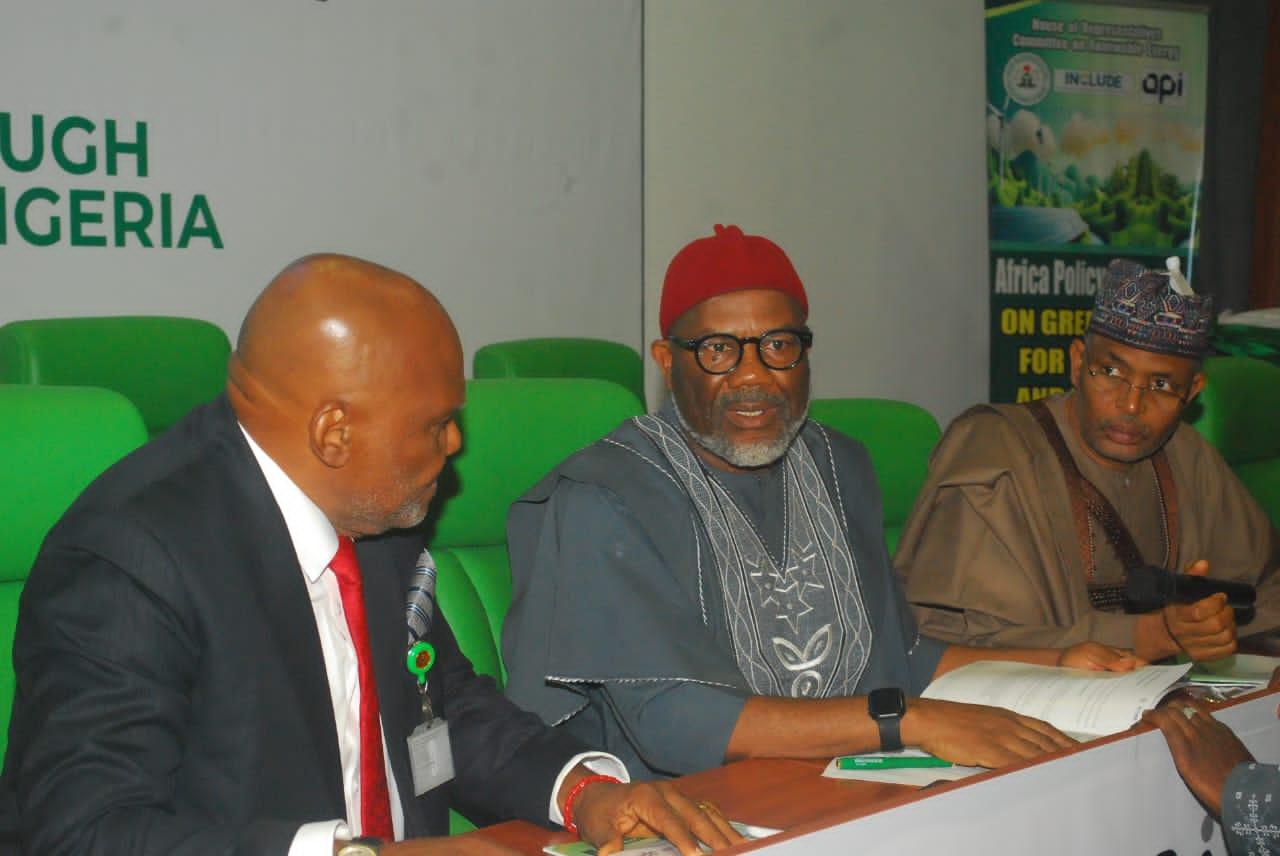
This position was made clear during the Africa Policy Dialogue (APD) workshop themed “Green Jobs and Low Carbon Transition”, held in Abuja.
Speaker of the House, Abbas Tajudeen, said the 10th Assembly is determined to address policy gaps and offer practical, impactful solutions to key national challenges.

“Let me sincerely thank the Honourable Chairman and Members of the Committee on Renewable Energy for their diligence, foresight, and relentless effort in championing this important cause,” he said.
“As a responsible People’s House, we are fully aware of the strategic importance of green energy, not just because of its environmental significance but also due to its immense economic potential.”
Mr Abbas noted that the dialogue aligns with the Assembly’s broader legislative and oversight responsibilities, especially in the face of Nigeria’s vulnerability to climate change and untapped renewable energy potential.
“Our vulnerability to the impacts of climate change and our untapped renewable energy potential,” he stated.
He reiterated the House’s commitment to collaborating with stakeholders to expand energy access, preserve ecosystems, reduce dependence on fossil fuels, and create jobs.
“Nigeria is at a critical juncture. Bold and deliberate policy choices will determine whether we leap into a sustainable future or remain stalled by outdated systems,” the Speaker warned.
Also speaking, Chairman of the House Committee on Renewable Energy, Afam Ogene, said nearly 50 per cent of Nigeria’s renewable energy skilled labour needs remain unmet—hindering the employment of quality personnel in the sector.
“Today, nearly 50 per cent of skilled labour needs in Nigeria’s renewable sector remain unmet. Employers across the country consistently report difficulty hiring qualified technicians, engineers, and system operators,” he said.
Mr Ogene noted the overdependence on imported equipment for renewable energy projects, not due to a lack of raw materials but due to skill gaps and weak policy support for local manufacturing.
“This is not just a workforce problem—it is a policy problem,” he emphasised.
He cited China’s success in creating over 7 million green jobs through deliberate policy support and called on Nigerian academic institutions to realign curricula to meet energy transition demands.
“We recognise that crafting effective green jobs legislation for women and youth is imperative. It requires careful alignment with existing laws and must be potent enough to achieve real impact,” he added.
Ogene expressed confidence in delivering a comprehensive law with support from expert legal advisors, legislative drafters, and his experienced colleagues.
Also speaking at the workshop, Co-founder of Advocacy for Policy Innovation (API), Ms Victoria Manya, urged a people-focused approach to climate action.
“What we must do is reclaim the transition—not only as a climate imperative—but as a generational opportunity to rewrite our social contract,” she said.
She warned that low-carbon efforts risk serving fossil fuel interests unless equity and job creation are prioritised.
“A just transition must not only ask how we reduce emissions—but who gets the new jobs, who trains the workforce, and who shapes the policies,” Ms Manya stressed.
She said Nigeria has the opportunity to lead Africa by embedding labour justice into its renewable energy strategies.
The Africa Policy Dialogue (APD) is a platform for exploring policy solutions around sustainability, with this edition focusing on jobs, climate, and energy equity.
PIAK