

The World Health Organisation (WHO) has revealed that at least 871,000 people die each year globally due to loneliness, warning that the condition is a growing public health threat with wide-reaching implications.
In a report published on Monday, the WHO Commission on Social Connection stated that one in six people worldwide experiences loneliness, while social isolation is also on the rise.
Both issues are linked to an increased risk of a range of serious health conditions.
“Loneliness significantly increases the risk of stroke, heart attack, type 2 diabetes, depression, anxiety, and even suicide,” the commission noted.
According to the WHO, lonely teenagers are 22 percent more likely to underperform academically, while adults who experience loneliness face greater challenges securing and retaining employment.
The impact of loneliness extends beyond the individual, with economic costs mounting in the form of healthcare spending and lost productivity in the workforce.
Feeling lonely, disconnected, or unsupported?
You’re not alone—and you don’t have to face it alone. 1 in 6 people on this planet feels lonely.
Read WHO’s new report to learn why social connection is important: https://t.co/M8FtEse9kO pic.twitter.com/r8XTvnyc7g
— World Health Organization (WHO) (@WHO) June 30, 2025
Understanding the Crisis
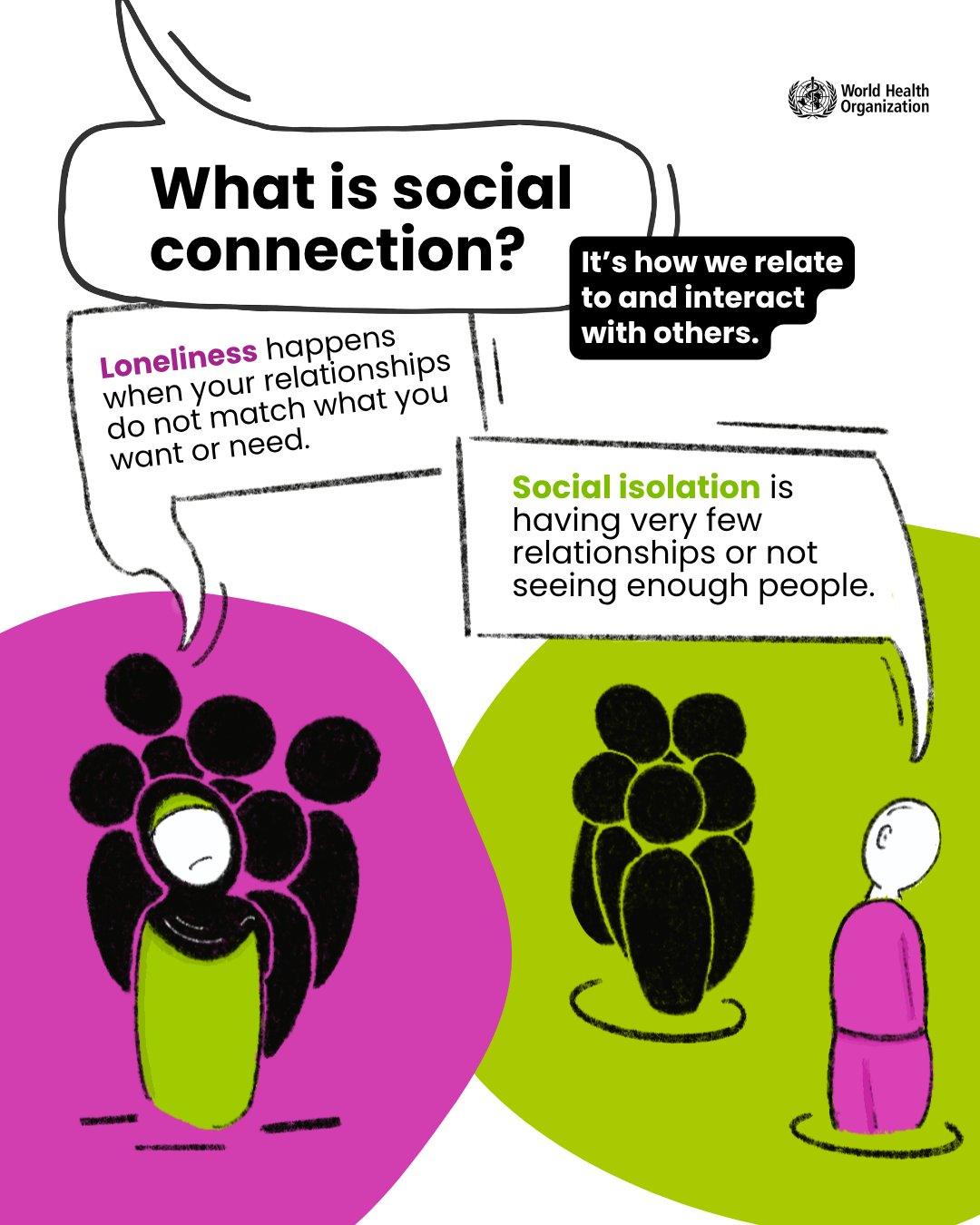
Dr Vivek Murthy, co-chair of the commission, described loneliness as “a painful, subjective feeling that many of us experience when the relationships that we need do not match the relationships that we have.”
He distinguished this from social isolation, which he defined as “an objective state of having few relationships or interactions.”
According to WHO data, one in three older adults and one in four adolescents are estimated to be socially isolated.
Contributing factors include poor health, low income, living alone, inadequate education, and a lack of opportunities for meaningful social interaction.
Increasing reliance on digital technologies is also listed as a growing concern.
Read Also: Experts Warn of Growing Infertility Crisis Nationwide
The Role of Technology
While acknowledging the benefits of digital technologies, such as video calls, the commission warned of the drawbacks of excessive screen time.
Dr Murthy noted that humans have long communicated through non-verbal cues such as facial expressions, body language, and tone of voice — elements often lost in text-based and screen-mediated communication.
“Having places and spaces in our lives where we can interact face-to-face with others without the distraction of technology is very important,” he said.
Sweden’s Model Approach
The report highlighted Sweden as a positive example in tackling the loneliness crisis.
Sweden has adopted a national strategy to reduce loneliness, recognising it as not merely a personal issue but a societal challenge.
According to Jakob Forssmed, Sweden’s Minister for Social Affairs, the government is investing in social infrastructure such as local clubs, shops, and neighbourhood initiatives to foster human connection.
Notably, prepaid cards will soon be distributed to all children and teenagers, allowing them to book group leisure activities, encouraging shared experiences and new friendships.
In another pioneering move, mobile phones are set to be banned in Swedish public schools, a policy based on research showing increased face-to-face interaction and reduced cyberbullying.
Forssmed also noted that digital distractions are not just a youth issue:
“Many children are frustrated by parents who are constantly glued to their phones,” he said.
A Call to Action
The WHO commission emphasised the need to create environments that nurture meaningful human connection, both in policy and in everyday life.
As loneliness continues to pose a growing threat to public health and wellbeing, experts say a collective, global effort is needed to tackle it — one that re-centres human relationships in a digitally connected but emotionally distant world.