As Nigeria looks ahead to the 2027 general elections, the country’s media community is stepping up to play a pivotal role in shaping the future of its democracy. At the heart of this effort is a renewed commitment to champion electoral reforms that promise to strengthen the integrity of the ballot, rebuild public trust, and make elections more inclusive.
This resolve was underscored at a one-day Consultative Roundtable on “Citizens’ Memorandum on Electoral Reform”, held in Abuja. The gathering brought together journalists, civil society leaders, and development partners under the auspices of the European Union Support to Democratic Governance in Nigeria (EU-SDGN) Programme, implemented by the EU, Yiaga Africa, and the International Press Centre (IPC).
The roundtable provided a platform for the media to reaffirm its role as the watchdog of democracy and as a driver of national discourse on electoral reform.
A Renewed Commitment by the Fourth Estate
Media practitioners at the event pledged to intensify fact-based reporting, in-depth editorials, investigative stories, and the creative use of infographics to highlight priority reform issues. These include:
- State of electoral integrity in Nigeria
- Early voting: its prospects, challenges, and implementation
- Democracy Behind Bars: bridging legal and policy gaps to allow inmates to vote
Yiaga Africa also presented three publications on these thematic areas, stimulating robust conversations on the need to address long-standing systemic weaknesses in the electoral process.
Media as a Catalyst for Democratic Reform
The keynote paper was delivered by Dr Tony Onyima, Senior Lecturer at Paul University, Awka, former Managing Director of The Sun newspaper, and Fellow of the Nigerian Guild of Editors.
In his presentation, titled “The Role of the Media in Electoral Reform and Democratic Development – The Citizen Memo in Perspective”, Dr Onyima emphasised the media’s strategic role in holding institutions accountable, educating citizens, and ensuring that reforms translate into practice rather than rhetoric.
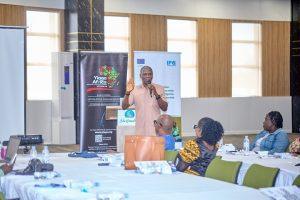
The Director of IPC, Mr Lanre Arogundade, joined Dr Onyima to lead discussions on “Setting the Media Agenda for Proposed Reform”, drawing insights from media professionals and civil society organisations (CSOs).
The exchanges reflected a shared consensus that the media must go beyond merely reporting election outcomes to interrogating the processes that deliver them.
Electoral Integrity and the Push for Early Voting
One of the most discussed issues at the roundtable was the need to appoint a new INEC Chairman with impeccable integrity and proven competence. Participants stressed that the credibility of future elections hinges on the quality of leadership at the Independent National Electoral Commission (INEC).
Yiaga Africa and IPC also advocated for early voting, calling on the National Assembly to include it in the ongoing electoral reform process.
For decades, thousands of Nigerians—including journalists, election observers, security personnel, and members of the National Youth Service Corps—have been unable to vote because of their official assignments on election days. Nigerians in the diaspora have likewise been excluded.
Ms Cynthia Mbamalu, Director at Yiaga Africa, described early voting as a “landmark reform”.
“Nigeria has never implemented early voting. This reform is essential for those who work during elections. It would promote transparency, inclusivity, and rebuild citizens’ trust in the electoral process,” she said.
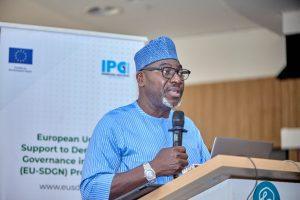
The Executive Director of IPC, Mr Arogundade, echoed this view, lamenting that thousands of journalists accredited to cover elections have repeatedly been denied the chance to cast their votes.
A Call for Reform in Leadership Appointments
In a significant intervention, the Head of Digital Department at the Voice of Nigeria (VON), Dr Qasim Akinreti, proposed that a veteran journalist with extensive experience in political reporting and human-rights activism be considered for the role of INEC Chairman.
Dr Akinreti argued that Mr Arogundade’s decades-long experience in electoral coverage, his reputation as a political and human-rights advocate, and his proven managerial skills make him well-suited for the task.
He recalled that renowned journalists such as Chief Segun Osoba, the late Chief Bisi Onabanjo, and the late Alhaji Lateef Jakande, who went on to become state governors, demonstrated that journalists can successfully manage public institutions with credibility and a sense of national responsibility.
The Historical Context: Who Leads the Polls?
Since Nigeria’s first post-colonial elections in 1959, the leadership of the country’s electoral bodies has largely been drawn from technocrats, teachers, unionists, political scientists, academics, lawyers, and retired judges.
A total of 14 Nigerians have led the nation’s electoral commissions, with the South-South producing seven chairmen, the South-East three, the North-West and North-Central one each, while the South-West has yet to produce a Chief Electoral Officer.
Notable past electoral leaders include:
- Ronald Edward Wraith (1958)
- Eyo Ita Esua (1964–1966), Cross River State (South-South)
- Michael Ani (1976–1979), Cross River State (South-South)
- Justice Victor Ovie-Whisky (1980–1983), Delta State (South-South)
- Eme Awa (1987–1989), South-South
- Professor Humphrey Nwosu (1989–1993), South-East
- Professor Okon Edet Uya (1993), Akwa Ibom State (South-South)
- Sumner Dagogo-Jack (1994–1998), Rivers State (South-South)
- Justice Ephraim Akpata (1998–2000), Edo State (South-South)
- Dr Abel Guobadia (2000–2005), Edo State (South-South)
- Professor Maurice Iwu (2005–2010), Imo State (South-East)
- Professor Attahiru Jega (2010–2015), Kebbi State (North-West)
- Mrs Amina Bala Zakari (Acting, 2015), Jigawa State (North-West)
- Professor Mahmood Yakubu (2015–present), Kogi State (North-Central)
Eight-Point Pathway to Electoral Integrity
Yiaga Africa’s publication on the State of Electoral Integrity in Nigeria outlined the following key recommendations:
- Timely completion of the electoral legal framework, including provisions for electronic transmission of results, early voting, diaspora voting, and the creation of a Political Parties Regulatory Commission.
- Strengthening INEC’s operational and financial autonomy, as well as its stakeholder engagement and communications strategy.
- Vigilant civil society oversight of INEC appointments to safeguard impartiality.
- Improving judicial independence to enhance dispute resolution and restore public trust.
- Establishing safeguards against the abuse of incumbency and systemic vote-buying, particularly in the context of rising poverty.
- Promoting the inclusion of marginalised groups in governance to address exclusion and underrepresentation.
- Enhancing electoral security coordination and the professionalisation of security agencies.
- Introducing regulatory and policy safeguards against disinformation, misuse of artificial intelligence, and cyber threats to elections.
VON’s Role in Strengthening Democracy
In line with its mission to provide accurate, credible, and objective information and its vision to project Nigeria’s voice to the world, the Voice of Nigeria (VON) reaffirmed its commitment to supporting reforms that strengthen electoral integrity and deepen democratic governance.
As Dr Akinreti noted: “The media has both the responsibility and the platform to shape reforms and rebuild trust in Nigeria’s democracy.”
Through balanced and fact-based reportage, VON pledged to continue amplifying public discourse on inclusive reforms, credible elections, and the protection of citizens’ rights, helping to foster transparency and national confidence in Nigeria’s electoral institutions.
The Road to 2027
The roundtable in Abuja marked not just another conversation on electoral reforms but a clear signal of intent by the media to lead by example.
By embracing reforms, advocating inclusivity, and holding power to account, Nigeria’s journalists reaffirm their historic role as defenders of democracy ensuring that as the 2027 polls draw near, the country’s electoral process reflects the will of the people.