

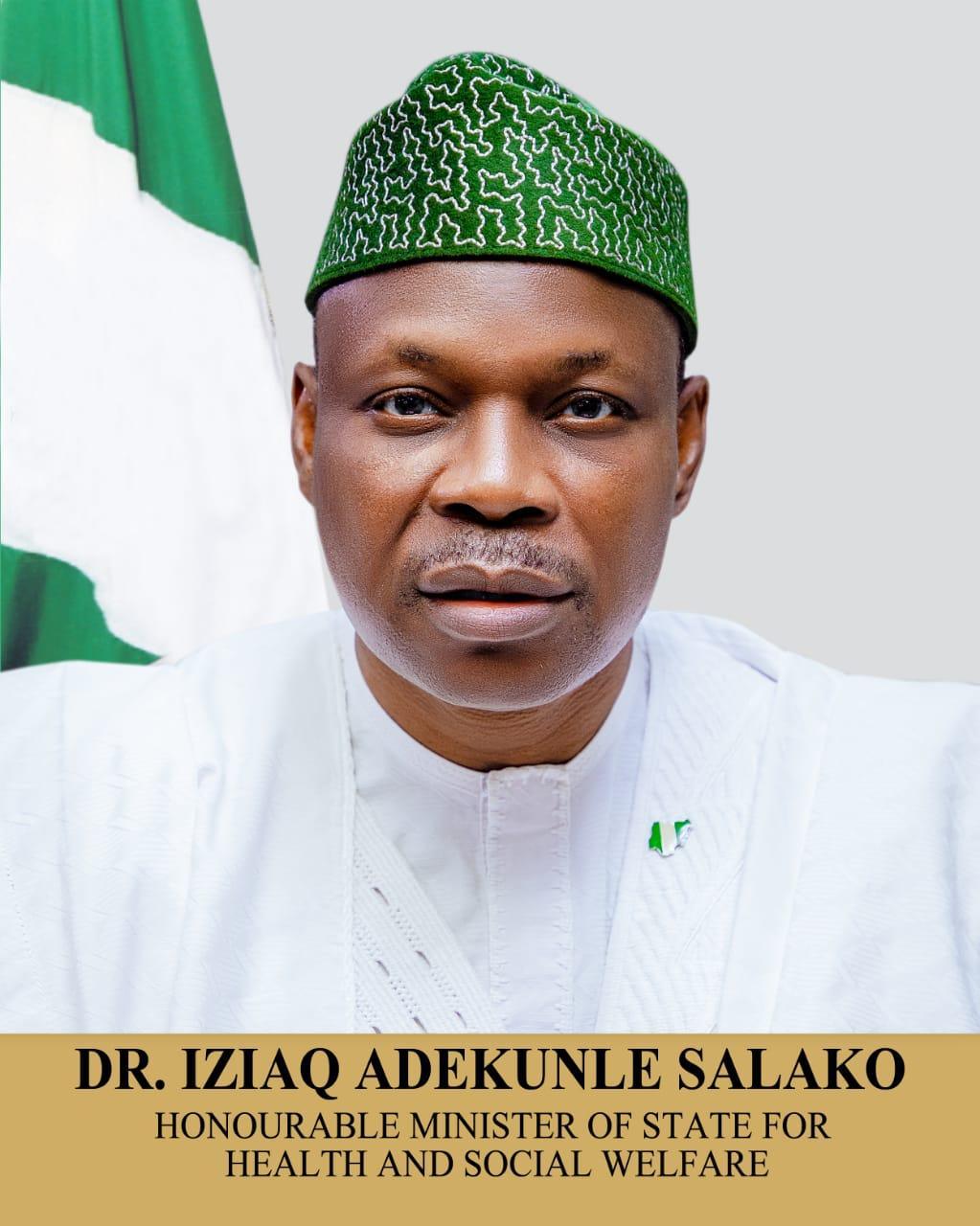
The Minister of State for Health and Social Welfare, Dr Iziaq Adekunle Salako, says the ongoing disagreement between the Federal Government and the National Association of Resident Doctors (NARD) is due to structural and policy limitations, not government indifference.
Speaking during an interview programme, Dr Salako said the Federal Ministry of Health and Social Welfare remains committed to uninterrupted healthcare delivery and industrial harmony in the sector.
He explained that government must balance salary demands in the health sector with other national priorities such as education, security and infrastructure, within the limits of available revenue.
He disclosed that in November 2025, the Federal Government approved an upward review of professional allowances for health workers, adding nearly ₦90 billion annually to government expenditure.
According to him, the increment covers call duty, shift duty, non-clinical duty and rural posting allowances, and was achieved through joint negotiations involving all categories of health workers.
The Minister explained that previous negotiations were often fragmented, with different professional groups engaging government separately, resulting in conflicting agreements on pay relativity and frequent industrial actions.
“To address this, the Ministry adopted a collective bargaining framework, bringing doctors, nurses, laboratory scientists and other health professionals to the negotiating table together,” he said.
On the specific demands of NARD, Dr. Salako said the association’s requests had reduced from 19 to nine, indicating progress in ongoing discussions. He, however, noted that some of the remaining demands are limited by existing civil service rules and approved schemes of service.
Addressing calls for specialist allowances for resident doctors, the Minister clarified that residents are specialists-in-training, adding that current regulations reserve specialist allowances for consultants.
Also Read: Nigerian Government Moves to End Resident Doctors’ Strike
He revealed that the National Salaries, Incomes and Wages Commission advised against extending the allowance to resident doctors, warning it could trigger similar demands from other health workers undergoing specialist training.
Dr. Salako also dismissed claims that government was inactive on certification matters, explaining that the National Postgraduate Medical College does not issue certificates after Part I examinations, a policy the Ministry lacks the authority to override.
On the disengagement of five resident doctors in Lokoja, the Minister said the matter arose from civil service disciplinary procedures. He disclosed that a Ministerial review committee recommended the reinstatement of two doctors, reprimand for two others, and a fresh disciplinary hearing for one, in line with due process.
While acknowledging public frustration over frequent strikes, Dr. Salako noted that industrial actions by doctors are a global occurrence, citing similar disputes in the United Kingdom and parts of Europe.
He assured Nigerians that the Ministry, in collaboration with the Federal Ministry of Labour and other stakeholders, “remains committed to sustained dialogue aimed at stabilising the health sector, ensuring industrial harmony and preventing future disruptions to healthcare services.”