

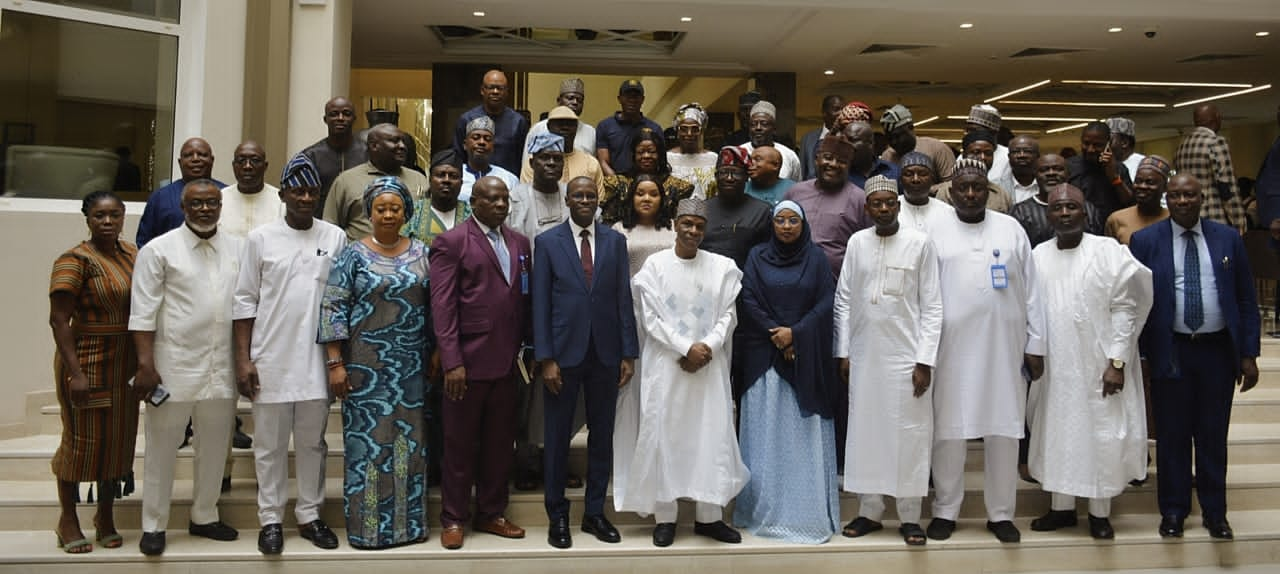
Nigeria’s Minister of Marine and Blue Economy, Dr. Adegboyega Oyetola, has emphasised the importance of system integrity in public institutions, highlighting its role in driving good leadership, ethical conduct, and revenue generation.
The Minister who was represented by the Permanent Secretary, Federal Ministry of Marine and Blue Economy, Fatima Mahmood, made this known at a retreat, themed: “The Art and Practice of System Integrity in Public Institutions” organised by National Inland Waterways Authority (NIWA) in collaboration with Independent Corrupt Practices and Other Related Offences Commission, (ICPC).
Accordimg to Oyetola, “system integrity is crucial for NIWA’s success, enabling the authority to fulfill its mandate and contribute to Nigeria’s Blue Economy agenda.
The Minister further outlined key areas for improvement, including: revenue generation, transparency, and accountability, urging NIWA to leverage technology and public-private partnerships to enhance efficiency and financial sustainability.
“System integrity is not a moral luxury; it is an economic necessity,” Oyetola stated, calling on NIWA’s Board and Management to prioritize financial sustainability and drive innovation in revenue generation,” he said.
Furthermore, the Minister observed that the partnership with ICPC aligns with the Federal Government’s preventive approach to combating corruption.
He added that ethical leadership and transparent revenue systems are critical to harnessing the full economic potential of Nigeria’s inland waterways.
Earlier, the Acting Managing Director of NIWA, Umar Girei, said the retreat aims to strengthen NIWA’s system and processes, promoting a culture of transparency, accountability, and performance-driven leadership.
The Managing Director, emphasised the Authority’s commitment to institutional reforms, effective revenue generation, and zero tolerance for corrupt practices.
Also speaking, the Chairman, ICPC, Dr. Musa Aliyu (SAN) reaffirmed its organisations readiness to support public institutions through preventive mechanisms, capacity building, and integrity-driven initiatives.