


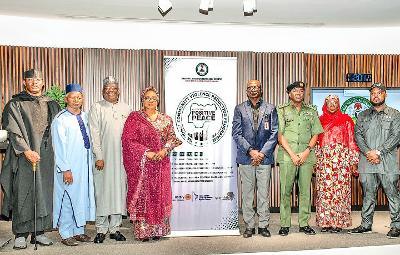
The Minister of Women Affairs and Social Development, Hajiya Imaan Sulaiman-Ibrahim, has reaffirmed her Ministry’s commitment to promoting inclusive and community-driven security responses as part of Nigeria’s counter-terrorism strategy.
Speaking on the launch of the Community Violence Reduction Programme under the Security Sector Reference Group (SSRG) of the National Counter Terrorism Centre, she highlighted the vital role of integrating gender perspectives into national security.
The SSRG, chaired by the Ministry of Women Affairs and Social Development, serves as a multi-sectoral platform linking government agencies, civil society, and development partners to ensure security strategies are inclusive and effective.

The Minister described the mechanism as central to strengthening national security architecture, stating: “The SSRG ensures that gender considerations are systematically integrated into policies and operations, enhancing the effectiveness of counter-terrorism efforts and fostering trust between security agencies and the communities they serve.”
She emphasised that peacebuilding must be inclusive and community-led, adding: “As we strengthen our national security architecture, it is imperative to continuously mainstream gender perspectives, ensuring that women, men, girls, and boys are equally engaged in prevention, response, and recovery efforts.”
Sulaiman-Ibrahim also underscored the family’s role as the first line of defence against extremism, noting: “By equipping families with the right values, resources, and support systems, we can address vulnerabilities early and build a culture of peace and tolerance from the ground up.”
The Minister highlighted that under President Bola Ahmed Tinubu’s Renewed Hope Social Impact Intervention Programmes, government is prioritising the rehabilitation and reintegration of victims of terrorism through psychosocial support, livelihood empowerment, and community reintegration pathways that restore dignity and opportunity.
Anchoring Nigeria’s approach within the framework of United Nations Security Council Resolution 1325, Sulaiman-Ibrahim added that the country’s third National Action Plan provides a roadmap to ensure women’s full participation in peace and security processes.
She concluded by calling for stronger partnerships across sectors, urging government, security agencies, civil society, community leaders, and families to work together to break the cycle of violence, heal affected communities, and secure a safer future for generations to come.
PIAK