


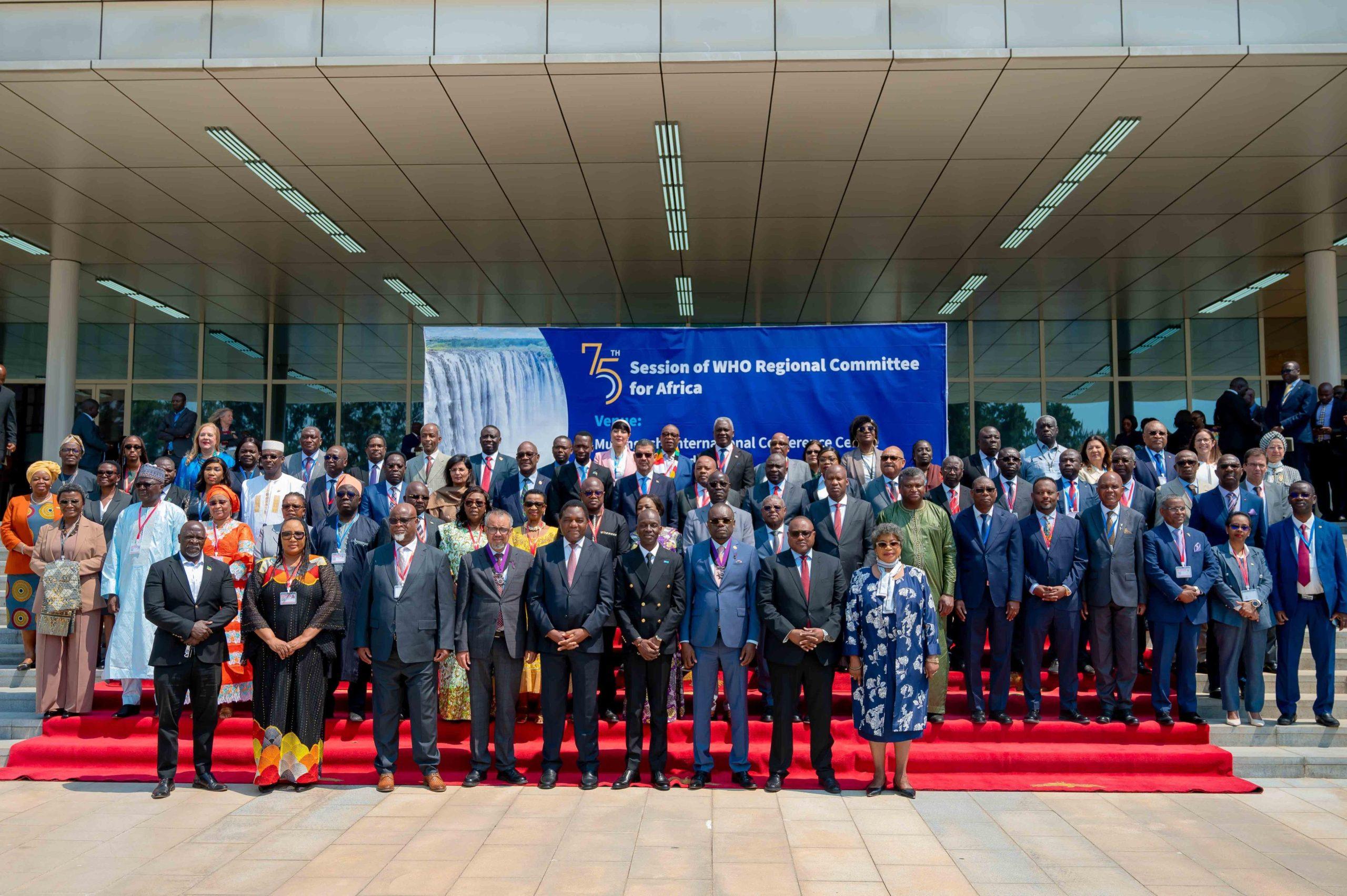
African ministers of health have opened a landmark meeting in Lusaka, setting an ambitious course to transform the continent’s health systems through unity, leadership, and self-determination.
The 75th session of the World Health Organisation (WHO) Regional Committee for Africa, taking place from 25 to 27 August 2025, brings together leaders from all 47 member states of the WHO African Region to debate pressing health challenges and adopt new policies that will reshape Africa’s health architecture.
Zambian President Hakainde Hichilema set the tone with a rallying call for bold, Africa-driven solutions.
African ministers of health opened the 75th session of the @WHO Regional Committee for Africa today in Lusaka.
From 25–27 August, 47 Member States will deliberate on measures to address challenges & endorse key resolutions to advance health in the Region.https://t.co/WsvlertZrM
— WHO African Region (@WHOAFRO) August 25, 2025
“We must position health as a tool of empowerment – a driver of trade, industry, and human capital. The future of our continent depends on how well we invest in our people’s well-being today,” he declared.
The president also highlighted the need for harmonised health policies across borders and stronger regional solidarity, stressing the lessons learned from the COVID-19 pandemic.
Zambia’s Health Minister, Dr Elijah Muchima, echoed this sentiment, urging a united continental response:
“No country can stand alone in the face of today’s health emergencies. Collaboration isn’t optional, it’s our only way forward.”
Read Also: WHO Endorses Twice-Yearly Injectable Lenacapavir for HIV Prevention
WHO Director-General, Dr Tedros Adhanom Ghebreyesus, described the gathering as a “pivotal moment,” with many African countries working to rebuild health systems strained by limited financing and security threats.
He reaffirmed WHO’s support for African-led initiatives rooted in resilience and innovation.
Dr Mohamed Janabi, the newly appointed WHO Regional Director for Africa, called for a fundamental mindset shift:
“We must no longer see health as a burden, but as a building block of prosperity and power. Africa must lead its own health transformation.”
It is my honour to welcome Member States, colleagues and partners to #RC75AFRO in Lusaka, Zambia, my first Regional Committee as @WHOAFRO Regional Director.
My sincere gratitude to H.E. President @HHichilema for hosting us as we begin deliberations to shape the future of health… pic.twitter.com/NBPNY95mRQ
— Prof. Mohamed Janabi (@ProfJanabi) August 25, 2025
Key agenda items include:
- A regional strategy for oral health, long neglected yet affecting millions;
- A modernised framework for blood donation and supply to end chronic shortages;
- Expanded access to rehabilitation services for people with disabilities and post-illness recovery;
- Concrete measures to reduce maternal and child mortality, which remain unacceptably high;
- A renewed offensive against malaria;
- Plans to close the continent’s critical health workforce gap;
A blueprint for strengthening health security, after more than 250 public health emergencies were recorded in Africa in 2024.
Beyond technical policies, the ministers are sending a strong political message: Africa is ready to take charge of its own health future.
The outcomes from Lusaka are expected to define health priorities for the next decade, anchoring ambitions for healthier populations, stronger health systems, and a united regional approach firmly grounded in African realities — and African leadership.