


From the quiet, sunbaked streets of Daura in northern Nigeria to the commanding halls of Aso Rock, Muhammadu Buhari’s story is one that stirred admiration, controversy and unrelenting curiosity.
A Soldier, Politician, Enigma. In his 82 years, Buhari wore many uniforms, titles and expressions, and he left none untouched by discipline.
Early Life and Education
Born on December 17, 1942, in Daura, Katsina State in Northwest Nigeria, Muhammadu Buhari was the 23rd child of his father, Adamu, and his mother, Zulaiha. Raised in a modest family, Buhari’s early years were marked by a strong sense of discipline and duty, traits that would define his later career. He attended primary school in Daura and Mai’adua between 1948 and 1952 before enrolling at Katsina Middle School in 1953. His secondary education took place at Katsina Provincial Secondary School (now Government College, Katsina), where he earned his West African School Certificate in 1961.
Buhari’s path to leadership began in earnest when he joined the Nigerian Army in 1961. He underwent officer cadet training at the Nigerian Military Training College in Kaduna and later at the prestigious Royal Military Academy Sandhurst, also known as the Mons Officer Cadet School in Aldershot, England. Commissioned as a second lieutenant in January 1963, Buhari’s military career was characterised by rapid advancement and strategic postings, including a stint at the Army Mechanical Transport School in Borden, England, in 1965.
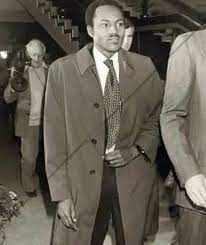
Military Career and Rise to Power
Buhari’s military career was punctuated by key roles that shaped Nigeria’s political landscape. In 1975, he played a significant part in the coup that ousted General Yakubu Gowon, leading to the rise of General Murtala Mohammed. Following this, Buhari was appointed military governor of the North-Eastern State (now Borno), a position he held until 1976. That same year, he became the Federal Commissioner for Petroleum Resources under General Olusegun Obasanjo, a role that also saw him chair the Nigerian National Petroleum Corporation (NNPC) until 1978.
Buhari’s military trajectory continued with further training, including attendance at the Defence Services Staff College in Wellington, India, in 1973, and the United States Army War College in Washington, D.C., from 1979 to 1980. His return to Nigeria in 1979 saw him take on regular army duties, commanding a division in Kaduna. However, it was on December 31, 1983, that Buhari’s name became etched in Nigerian history when he led a coup against President Shehu Shagari, assuming the role of Head of State and Commander-in-Chief of the Armed Forces.
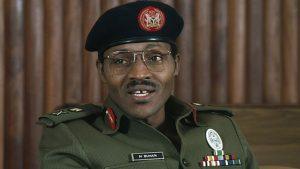
Role In Nigeria’s Civil War
Buhari was assigned to the 1st Division under the command of Lieutenant Colonel Mohammed Shuwa. The division had temporarily moved from Kaduna to Makurdi at the onset of the Nigerian Civil War.
He served as the Adjutant and Company Commander of the 2nd Battalion, Second Sector Infantry of the 1st Division.
He was briefly the 2nd battalion’s commander and led the battalion to Afikpo to merge with the 3rd Marine Commando and advance towards Enugu through Nkalagu and Abakaliki.
Post-War Contributions
From 1970 to 1971, Buhari was Brigade Major/Commandant of the Thirty-first Infantry Brigade. He then served as the Assistant Adjutant-General, First Infantry Division Headquarters, from 1971 to 1972.
He also attended the Defence Services Staff College, Wellington, India, in 1973.
From 1974 to 1975, Buhari acted as the director of transport and supply at the Nigerian Army Corps of Supply and Transport Headquarters.
In 1977, when the Nigerian National Petroleum Corporation was created, Buhari was appointed as its chairman, a position he held until 1978.
Head of State (1983-1985)
As Nigeria’s military ruler from 1983 to 1985, Buhari’s regime was marked by a strict focus on discipline and anti-corruption. His “War Against Indiscipline” campaign sought to instil order and accountability in a nation grappling with economic decline and widespread corruption. However, his authoritarian approach, including the suppression of dissent and the controversial execution of drug traffickers, drew criticism both domestically and internationally.
Buhari’s first tenure was cut short on August 27, 1985, when he was overthrown in a coup led by General Ibrahim Babangida. Following his ouster, Buhari was detained for several years before being released in 1988. Despite this setback, his influence in Nigerian politics was far from over.
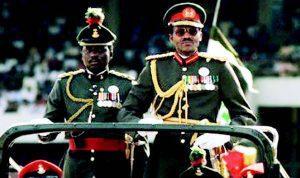
Buhari’s Tenure As Federal Commissioner of Petroleum
During his tenure as the Federal Commissioner for Petroleum and Natural Resources, the government invested in pipelines and petroleum storage infrastructures.
The government built about 21 petroleum storage depots all over the country, from Lagos to Maiduguri and from Calabar to Gusau; the administration constructed a pipeline network that connected the Bonny terminal and the Port Harcourt refinery to the depots. Also, the administration signed the contract for the construction of a refinery in Kaduna and an oil pipeline that will connect the Escravos oil terminal to the Warri Refinery and the proposed Kaduna refinery.
Divisional commands held in the Nigerian Army:
General Officer Commanding, 4th Infantry Division: August 1980 – January 1981
General Officer Commanding, 2nd Mechanised Infantry Division: January 1981 – October 1981
General Officer Commanding, 3rd Armed Division: October 1981–December 1983
Political Career and Path to the Presidency
After his release, Buhari transitioned into civilian life, though his political ambitions remained evident. In 1994, he was appointed Executive Chairman of the Petroleum (Special) Trust Fund (PTF) under General Sani Abacha, a role he held until 1999. The PTF was tasked with rehabilitating Nigeria’s infrastructure, and Buhari’s leadership was noted for its focus on transparency, though the fund’s operations were not without controversy.
Buhari’s quest for the presidency began in earnest in 2003 when he ran under the All Nigeria Peoples Party (ANPP), losing to incumbent Olusegun Obasanjo. Undeterred, he contested again in 2007, only to be defeated by Umaru Yar’Adua. In 2010, he founded the Congress for Progressive Change (CPC) and ran for president in 2011, losing once more to Goodluck Jonathan. It was not until December 2014, under the banner of the All Progressives Congress (APC), that Buhari’s fortunes changed. He was selected as the APC’s presidential candidate for the 2015 election, which he won in a historic victory over incumbent President Goodluck Jonathan, marking the first time an opposition candidate had unseated a sitting president in Nigeria.
Presidency (2015-2023)
Sworn in on May 29, 2015, Buhari’s presidency was defined by his focus on anti-corruption, economic reform, and security, particularly in the fight against the insurgent group Boko Haram. His administration launched initiatives such as the National Social Investment Program in 2016, aimed at reducing poverty and unemployment. However, his tenure was also marred by economic challenges, including a recession in 2016, and persistent security issues in the northeast and other regions.
Buhari’s health became a matter of public concern during his first term. In 2017, he spent significant time in London receiving medical treatment for an undisclosed illness, sparking speculation about his ability to govern. Despite these challenges, he secured re-election in February 2019, defeating Atiku Abubakar, and began his second term on May 29, 2019.
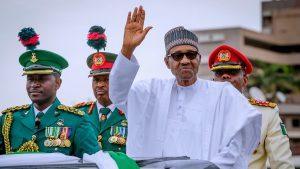
Throughout his presidency, Buhari’s leadership style was often criticised, pointing to his reluctance to engage with the media and his perceived slow response to crises. Nonetheless, his supporters praised his integrity and commitment to Nigeria’s unity.
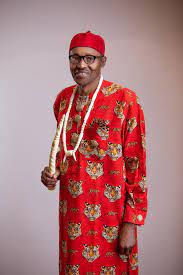
Retirement and Final Days
After completing his second term in 2023, Buhari retired to his hometown of Daura in Katsina State. In April 2025, he travelled to London for a routine medical check-up but fell ill, leading to his hospitalisation.
Despite initial reports of recovery, his condition deteriorated, and he passed away on July 13, 2025, at the age of 82.
Legacy and Reactions
Buhari’s death has prompted a wave of reactions across Nigeria and beyond. Current President Bola Tinubu, who confirmed the news, expressed his condolences to Buhari’s widow, Aishat, and ordered that national flags be flown at half-staff in honour of the former leader. Tinubu also dispatched Vice President Kashim Shettima to London to accompany Buhari’s body back to Nigeria for burial.
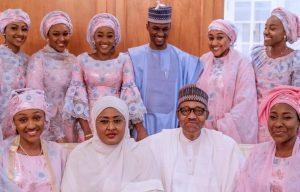
On social media, Nigerians have shared mixed sentiments. Some mourned the loss of a leader they viewed as a symbol of discipline and anti-corruption, while others criticised his tenure for failing to address Nigeria’s deep-seated economic and security challenges. Posts on X reflected this divide, with users recalling both his contributions and shortcomings.
Buhari’s life was one of resilience and transformation, from a young soldier to a military ruler and finally to a democratically elected president.
His legacy, however, remains a subject of debate. As Nigeria prepares to bid farewell to one of its most consequential leaders, the nation reflects on the indelible mark he left on its history.
Remembering Buhari
Buhari’s death ends a chapter, but his impact remains alive in the institutions he reformed, the discipline he preached, and the debate he incited. Whether loved or loathed, he was never ignored.
“He touched Nigeria like a hammer on an anvil,” said one citizen in tribute. “You either felt broken or you felt shaped.”
His body will be flown back to Daura, where it all began, for burial with full state honours.