


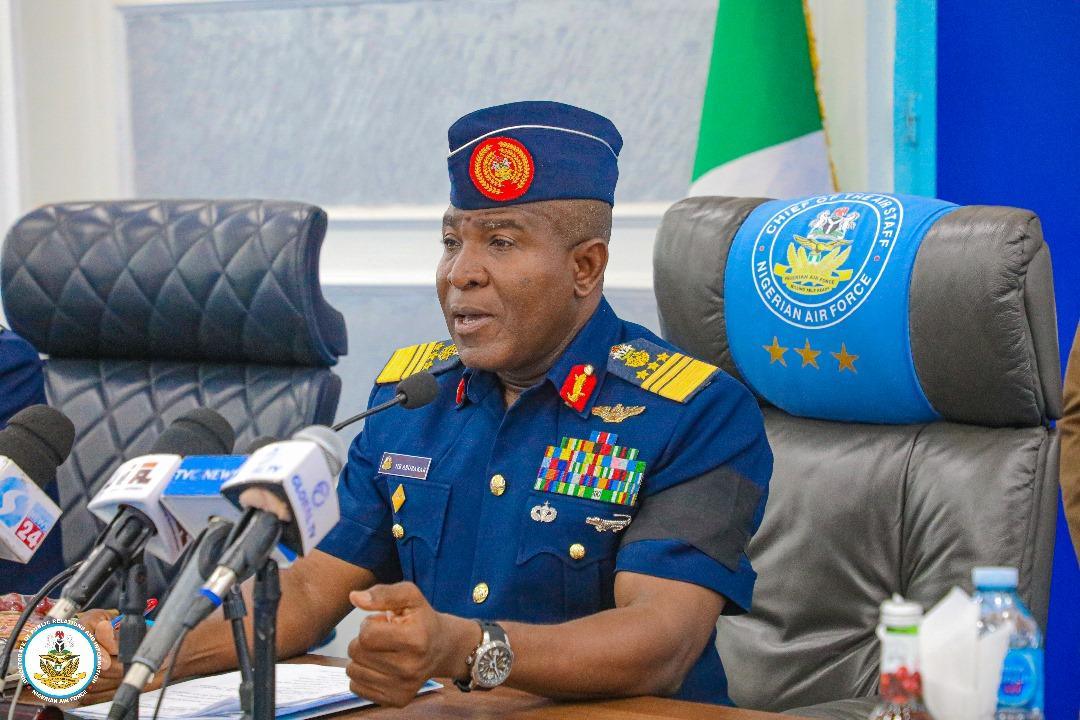
The Chief of the Air Staff (CAS), Air Marshal Hasan Abubakar, says the Nigerian Air Force (NAF) remains committed to enhancing its operational readiness by prioritising aircraft serviceability through a strong maintenance culture, institutional reforms, and strategic partnerships.
Air Marshal Abubakar stated this on Thursday while declaring open the 2025 Aircraft Engineering Conference at the NAF Headquarters in Abuja.
The Air Chief emphasised that “mission success in contemporary air operations is directly tied to the availability, airworthiness, and sustained performance of aircraft platforms,” underscoring the critical role of engineering excellence in the NAF’s transformation agenda.

Themed “Enhancing Aircraft Serviceability in the NAF through Strong Maintenance Culture and Strategic Partnerships,” the two-day conference brought together serving and retired aviation engineering experts to share practical solutions for sustaining high fleet readiness.
Describing the event as “timely and transformative,” Air Marshal Abubakar noted its significance in light of the Service’s expanding fleet and growing demand for efficient technical support.
He disclosed that the NAF had inducted 15 new aircraft in the last two years, with 49 more advanced platforms expected by the end of 2026.
In his keynote address, the CAS set a target of achieving a 90 per cent fleet serviceability rate by the fourth quarter of 2025, revealing that the NAF had already attained a 72 per cent average, owing to investments in technical manpower, spare parts, ground support equipment, and predictive maintenance systems.
“Each of these high-tech platforms demands sophisticated, data-driven maintenance to remain mission-ready,” he said.
He also identified the adoption of digital documentation protocols as a significant step towards maintenance precision and accountability.
A major highlight of the conference was the formal creation of the Directorate of Aircraft Life Cycle Management (DALCM), a strategic body tasked with overseeing aircraft health from induction to retirement.
According to the Air Chief, the directorate would ensure that every aircraft acquisition comes with a structured, long-term sustainment plan, aligning engineering practices with evolving operational needs.
This, he said, underscores the NAF’s commitment to proactive lifecycle management and self-reliance in aircraft sustainment.
Earlier, the Chief of Aircraft Engineering (CACE), Air Vice Marshal AI Amodu, thanked the CAS for his consistent support to the engineering branch and pledged continued innovation amid rapid technological change.
“We are the backbone of the Force, the ones who keep the wheels turning,” Amodu said, urging participants to take ownership of the engineering transformation process and commit to continuous improvement.
The first day featured technical presentations by seasoned aviation experts. Air Vice Marshal J Laoye spoke on “Technical Documentation in the NAF: A Prerequisite for Strong Maintenance Culture,” while AVM MA Yakubu (Rtd) delivered a paper on “Aircraft Maintenance and Operational Effectiveness: Leveraging Local and Foreign Partners.”
Both sessions sparked in-depth discussions focused on sustaining air power through collaboration, innovation, and engineering excellence.
The conference reaffirmed the NAF’s resolve to pursue engineering reforms and maintain a technologically advanced, combat-ready force aligned with Nigeria’s security imperatives.
PIAK