


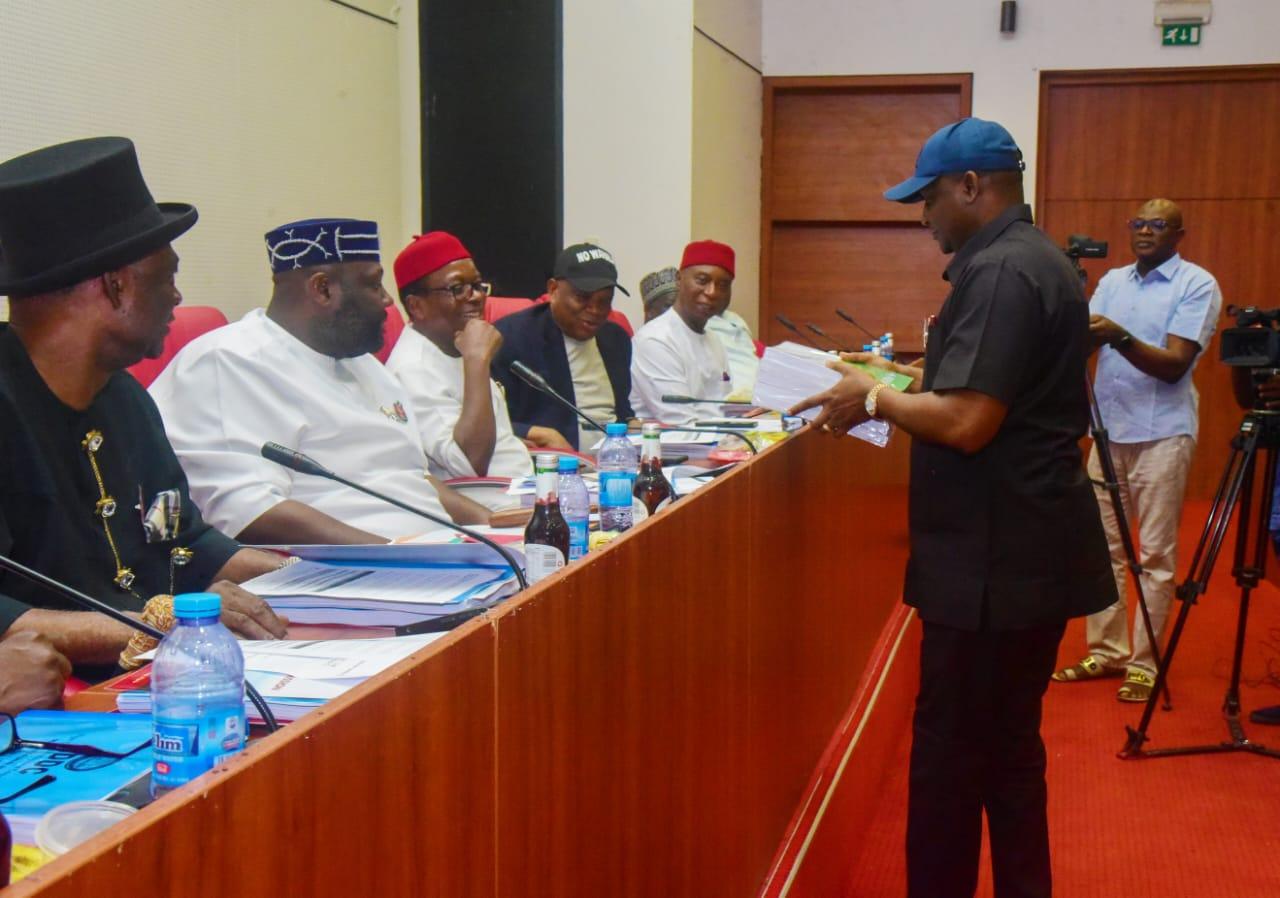
The Niger Delta Development Commission (NDDC) in Nigeria, has presented a budget estimate of N1.75 trillion for the 2025 fiscal year to the National Assembly, outlining a consolidation focused spending plan aimed at deepening development across the oil-producing region.
The proposal was presented at the National Assembly complex in Abuja Nigeria ‘s capital, to the Senate Committee on NDDC, chaired by Senator Asuquo Ekpenyong and the House of Representatives Committee on NDDC, chaired by Ibori-Suenu Erhiatake.
Presenting the estimates, the Managing Director of the NDDC, Dr Samuel Ogbuku, said the 2025 budget, themed “Budget of Consolidation,” builds on the achievements of the 2024 “Budget of Renewed Hope”. He explained that the new proposal reflects a strategic shift from transactional to transformational development, in line with the Renewed Hope Agenda of President Bola Ahmed Tinubu.
Dr. Ogbuku expressed gratitude to President Tinubu for the confidence placed in the current management of the Commission and commended the Supervising Minister of Regional Development, Engr. Abubakar Momoh, for what he described as consistent strategic guidance, he also praised the leadership and members of the 10th National Assembly for their constructive oversight and partnership.
According to him, improved public perception and growing credibility of the NDDC are products of effective synergy among the Commission’s board and management, the Ministry of Regional Development and the National Assembly. He said that legislative oversight has remained a collaborative process anchored on accountability, transparency and measurable impact.
The Managing Director disclosed that the N1.75 trillion proposal represents a nine per cent reduction from the N1.985 trillion proposed and appropriated for the 2024 fiscal year. He explained that the budget is expected to be funded from multiple sources, including N776.5 billion from the Federal Government, N752.8 billion from oil companies, N109.4 billion carried over from 2024 revenue, N53.67 billion from recoveries from federal government agencies, and N8.35 billion from internally generated revenue.
A breakdown of the estimates showed that N1.631 trillion was earmarked for project execution across the Niger Delta, while N223 billion was allocated for internal projects.
Personnel costs were pegged at N47.56 billion, with N49.93 billion set aside for overhead expenditure. On the performance of the 2024 budget, Ogbuku told lawmakers that as of October 31, 2025, the Commission’s actual revenue stood at N1.985 trillion, exceeding the initial target of N1.911 trillion.
He attributed the improved revenue performance largely to the extension of the 2024 budget implementation to December 31, 2025 and also revealed that the Commission had abandoned line-item budgeting in favour of sectoral allocations, a reform he said was designed to reduce project delays and improve overall efficiency.
Following the presentation, the committees held a closed-door session with the NDDC management to review the budget proposal and assess the status of ongoing and completed projects across the region.
Briefing journalists after the session, Senator Ekpenyong said the Senate Committee would embark on an extensive oversight tour of NDDC projects in the nine Niger Delta states in January 2026.
He noted that reports on ongoing and completed projects were critically examined during the closed session and that physical verification would follow, while acknowledging notable project delivery in the outgoing fiscal year,
Ekpenyong said expectations remain high for improved performance, particularly in ensuring value for money and timely project completion.
Similarly, the House of Representatives Committee on NDDC cautioned that the proposed N1.75 trillion budget must translate into tangible development for Niger Delta communities. Erhiatake Ibori-Suenu said the lawmakers would not treat the budget defence as a routine exercise, stressing that legislative support would be tied strictly to performance and verifiable results.
She described the budget as a renewed opportunity for millions in the oil-producing region and urged the Commission to ensure that implementation remains people-centred, transparent, and aligned with national development priorities.