

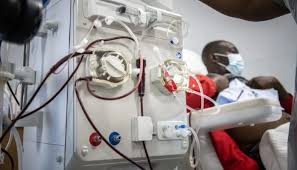
The Nigerian Association of Nephrology has applauded the Nigerian Government’s subsidy on kidney dialysis sessions, describing it as a major relief for patients battling the disease.
In a statement, the Association urged the government to build on this initiative by integrating dialysis and kidney transplant services into the National Health Insurance Authority (NHIA) scheme.
It explained that “such integration would guarantee sustainable financing for kidney disease treatment, expand access to life-saving care, and ease the heavy financial burden on affected families.”
The Association’s President, Professor Olugbenga Awobusuyi, made the appeal in an interview with the Newsman in Lagos, Southwest Nigeria on Sunday.
The Nigeria Government has reduced the cost of dialysis sessions from ₦50,000 to ₦12,000 in designated federal hospitals across the country.
The intervention is part of the administration’s Renewed Hope Agenda, which seeks to provide relief, expand access to healthcare and address the growing burden of kidney diseases.
Professor Awobusuyi noted that “the initiative showed that the government has taken an interest in the management of kidney disease.”
He, however, emphasised that the intervention should be reviewed to impact all kidney disease patients, stating that the “cost of adult dialysis is now lower than that of children.”
READ MORE: Nigeria Cuts Dialysis Costs Under New Subsidy Scheme
He said: “The cost to treat adults is lower than the cost for children’s dialysis because the intervention is mostly for adults’ dialysis.
“Now adults pay N12,000 while children still pay N40,000 or N50,000, depending on the area.
“What we’re advocating for right now is that there should be a comprehensive intervention for every patient battling kidney disease, be it children or adults.”
To boost access and ensure the sustainability of kidney treatment, Professor Awobusuyi called for integration of dialysis and transplants into health insurance to alleviate the financial burden on patients.
He said; “It’s what’s been done in advanced countries where dialysis runs mostly and patients have access to transplantation. Patients don’t pay out-of-pocket.
“The one we still have in Nigeria is that patients pay out-of-pocket. And we know that many people don’t have that money which is forcing many patients into financial hardship or making continued treatment impossible.
“So, it’s good that there’s an interventional fund which is being used to subsidise dialysis at some centres but the coverage as of now is not that great.”
Professor Awobusuyi emphasised that health insurance would assist in expanding coverage to include more patients and also reduce the need for the government to pump interventional funds yearly for kidney treatment.
Speaking on the epidemiology of Kidney disease, Professor Awobusuyi said; ”data shows an estimate of 11 to 12 per cent of adult Nigerians have kidney disease.”
According to him, the majority of the cases are early Kidney disease that don’t have too many symptoms, except when the urine or blood is screened.
He, however, said chronic Kidney disease was prevalent among people with diabetes and hypertension and estimated to be about 40 per cent of the population.
According to him, Nigeria has fewer than 250 nephrologists, lamenting that the figure keeps dwindling as more specialists embrace better opportunities outside the country.
He warned that the number of specialists was grossly inadequate to manage the burden of Kidney disease among citizens.
The nephrologist advised people to reduce their risk of Kidney disease by avoiding a sedentary lifestyle, controlling their blood pressure and sugar level, and eating a healthy diet with minimal salt, sugar and fat.
He called for prompt inclusion of more health facilities beyond Nigerian government-owned ones to reach more citizens with the life-saving intervention.
The Professor also called for increased investment in healthcare infrastructure, a strategic plan to boost the number of functional dialysis machines and improved maintenance of existing equipment.
He highlighted the importance of improving public awareness to effectively combat the growing burden of Kidney disease in the country.
Kidney disease occurs when the kidneys are damaged and can no longer effectively filter waste and excess fluid from the blood.
This damage, which is often progressive and results in a slow loss of function over time, is known as chronic kidney disease (CKD).
Key risk factors for kidney disease include diabetes, high blood pressure, heart disease, obesity, a family history of kidney disease, aging, smoking, and certain infections, among others.
According to the World Health Organisation, kidney disease is a silent epidemic that affects more than 850 million people worldwide and contributes to rising rates of disability and premature death.
The disease is expected to become the fifth leading cause of death globally by 2040.
Chronic kidney disease has no cure, but in general, treatment consists of measures to help control signs and symptoms, reduce complications and slow progression of the disease.
In May 2025, the WHO adopted a Resolution to prioritise kidney health, recognising kidney disease as a major global public health problem, comparable to cancer, cardiovascular disease, and diabetes.
WHO, through the landmark Resolution, would promote kidney health and strengthen prevention and control efforts for kidney disease worldwide.
This includes strategies for early detection, prevention, and ensuring equitable access to lifesaving treatments like dialysis and transplantation, aiming to reduce the growing burden of the diseases.