


The implementation of the Kampala Declaration (2026–2036) on agriculture and food security would intensify sustainable food production, promote agro-industrialisation, reduce post-harvest losses, and increase intra-African trade in the agricultural sector.
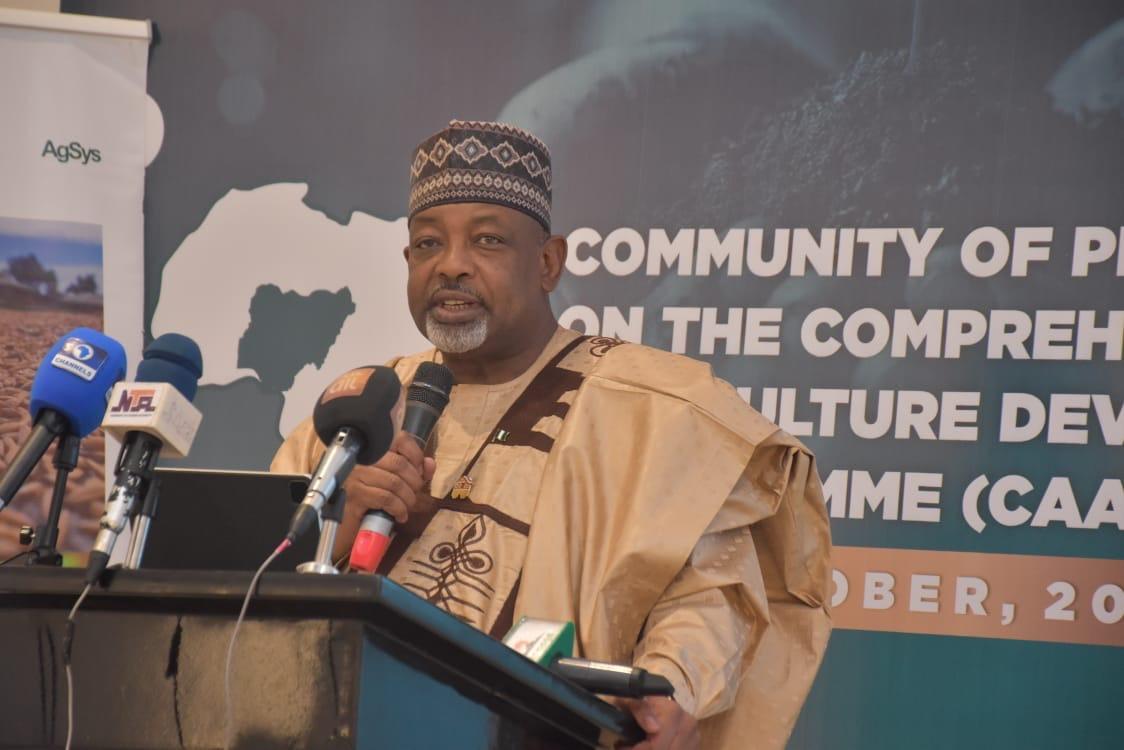
The Minister of Agriculture and Food Security, Sen. Abubakar Kyari, made this disclosure during the Community of Practice Summit on the Comprehensive Africa Agriculture Development Programme (CAADP) with the theme: “From Kampala to Abuja: Transforming Agrifood Systems in Nigeria”, held in Abuja, Nigeria’s capital.
Sen. Kyari stated that the aim was to increase investment portfolio, facilitate regional integration through inter/intra-Africa trade, promote inclusivity, advance research and development, encourage innovative technology, as well as strengthen the institutionalisation of good governance.
He noted that “the need to drive food system transformation cannot be over-emphasised. We must move beyond business-as-usual approaches and embrace bold reforms that will make our food systems more productive, resilient, inclusive, and sustainable. This transformation is essential to ensure food security in the country.”
The Minister explained that “the federal government has made tremendous efforts by providing clear policy direction and fostering stronger collaboration with the states in the implementation of the Malabo Declaration.
“Over the past decade, the African Union’s assessment of Nigeria’s progress during the Biennial Review has shown that our country is making significant strides in the agricultural ecosystem.”

He pointed out that the Ministry has set up an Agricultural Sector Working Group comprising research institutions, private and public sectors, development partners, non-governmental organisations, and stakeholders from civil society organisations.
According to him, “the group serves as a critical governance mechanism to scale up best practices, monitor progress, identify gaps, stimulate actions for results, promote accountability, and mobilise collective action towards the achievement of our shared responsibility.”
He mentioned that “the federal government has provided 2,000 tractors and related implements to boost agricultural production. We have equally launched the Special Agro-Industrial Zone (SAPZ) in Kaduna, Cross River, and Ogun States, with others coming on board.
Under this project, the country has committed to substantial investments of $538.05 million, leveraging the private sector in the establishment of industrial hubs and agricultural transformation centres. The zone will further stimulate a total sum of $1 billion by 2027,” the Minister added.
Kyari revealed that “recently, at the just concluded African Food System Summit in Dakar, I hosted a deal room with investors and other critical stakeholders on the Nigeria Postharvest Systems Transformation Programme (NiPHaST), which aims to cut massive annual post-harvest inefficiencies valued at ₦3.5 trillion and strengthen value chains for secured national food sovereignty.
“The outcome of this investment drive will create a more efficient, sustainable, and equitable food system, ultimately contributing to farmers’ income, livelihood improvement, waste reduction, value chain enhancement, economic development, and food security.”
He stated that “in this perspective, our collective understanding and ownership of this process is essential. This is achievable by working together to drive the domestication of the framework at the sub-national level. We can sustain the momentum of progress and ensure that our agricultural policies and actions continue to deliver tangible benefits for all Nigerians.”

He emphasised that “the need for synergy between the Federal and State Governments is not just beneficial; it is indispensable for achieving sustainable food security, resilient livelihoods, and the transformational change envisioned by the Kampala Declaration. Through effective coordination and shared responsibilities, all tiers of government can impactfully streamline policies, mobilise resources, and implement interventions.”
The Minister appealed to “Commissioners of Agriculture, Livestock, Fisheries, and Rural Development; you hold a crucial role in shaping the direction and impact of our agricultural policies and programmes at the sub-regional level. Our challenges require not only innovative solutions but also coordinated action and unwavering commitment at every level of government.”
He assured that “the Federal Government stands ready to support and collaborate with you as we align our efforts with the Comprehensive Africa Agricultural Development Programme (CAADP) and our national priorities. Together, let us set realistic targets, pool endowments, and drive the reforms needed to build robust, equitable, and sustainable food systems across all our sub-regions.”
Earlier, in his remarks, the Permanent Secretary in the Ministry, Dr Marcus Ogunbiyi, stated that the implementation of CAADP has already had a transformative impact on the agricultural landscape in Nigeria and across Africa.
He added that by providing a strategic framework for agricultural development, CAADP has enabled countries to align national policies with continental priorities, resulting in numerous positive outcomes.
In her goodwill message, the Head of German Cooperation, Dr Karen Yansen, stated that the Kampala Declaration (2025) is evidence-based and aimed at strengthening governance systems through integrated monitoring, promoting inclusivity and equity.