

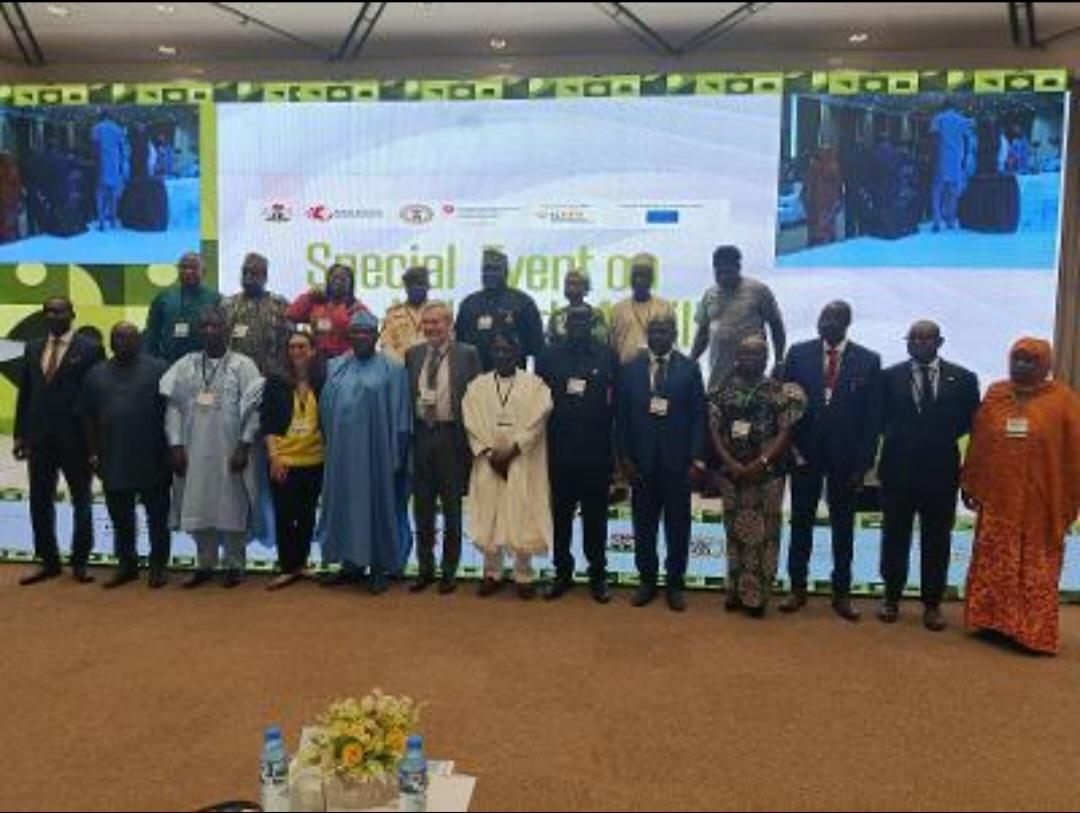
The Nigerian Government says sound policies backed by legal protection and adequate investment can serve as a legitimate adaptation strategy that enhances resilience and preserves dignity in human mobility.
President Bola Ahmed Tinubu stated this in Abuja at the Senior Officials’ Meeting of the Rabat Process, which marked Nigeria’s final official meeting under his Chairmanship.
Represented by the Secretary to the Government of the Federation, George Akume, President Bola Tinubu noted that climate change, being one of the most significant drivers of human mobility, has significant implications for development, peace, security, and human dignity across Africa, Europe, and beyond.
He said, “Nigeria has moved from reactive approaches toward proactive climate disaster preparedness through the launch of the Global Flood Disaster Management Project (GFDMP), a multi-year initiative aimed at enhancing early warning systems, strengthening flood-resilient infrastructure, and improving disaster coordination and community engagement across Nigeria.
“Through this programme, real-time forecasting and digital alert systems are being scaled up to ensure that citizens and government agencies have the information needed to prepare for and respond to extreme weather events.
“Equally, my government has developed the Climate-Resilient Livelihoods Empowerment Programme for Displaced Populations; CLEP4DPS – a transformative 10-year, US$250 million initiative built on one revolutionary premise: economic empowerment is climate adaptation.”
The President explained that CLEP4DPS provides five climate-resilient livelihood pathways:
“Climate-smart agriculture for displaced farmers using drought-resistant crops and water-efficient systems; renewable energy entrepreneurship training youth as solar technicians and clean energy installers; climate data employment turning displaced persons into community monitors and early warning messengers; green value chains creating waste-to-value and eco-restoration enterprises; and dedicated women and youth climate leadership tracks, recognizing that 62% of our IDPs are women and 58% are youth.
“Each pathway provides comprehensive support: skills training, startup capital, equipment, market linkages, and mentorship. We are building complete enterprises, not temporary jobs.”
President therefore, emphasised Mobility can serve as a legitimate adaptation strategy that enhances resilience and preserves dignity, hence the need for a deliberate effort by all stakeholders to move beyond reactive responses toward proactive, coordinated, and people-centred approaches that reduce forced displacement while enabling safe and orderly movement where it becomes unavoidable.
The European Union delegation to Nigeria and to the ECOWAS, Gautier Mignot said the gathering marks a pivotal moment for the Dialogue, offering the opportunity not only to look ahead, but also to reflect with clarity and purpose on the journey undertaken together with Nigeria over the past year.
“When Nigeria assumed the Chair in January 2025, we did so at a time of heightened global attention to migration. Public discourse across regions was increasingly shaped by fear, fragmentation, and narrow security lenses.
“Our Chairmanship was therefore guided by a clear intention: to help reposition the narrative on migration by grounding it in evidence, shared responsibility, and the lived realities of countries of origin, transit, and destination,” he said.
Representing the Economic Community of West African States, ECOWAS, the Director, Free Movement of Persons and Migration Department of Economic Affairs and Agriculture, Albert Siaw- Boeteng said the Community has adopted a climate strategy which integrates human mobility which is key to adaptation and resilience efforts.
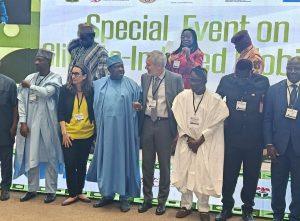
“Building on this strategic commitment, ECOWAS is currently undertaking an assessment of its own institutional capacities as well as that of its member States to evaluate progress achieved, identify remaining gaps and better understand the challenges faced in addressing climate Induced Mobility.”
Th ECOWAS emphasised the need for anticipatory and risk-informed approaches, stronger early warning systems, integration of Mobility integration considerations into national adaptation plans.
Head of International Cooperation at the Swiss State Secretariat for Migration, Cristina Probst-Lopez said as Switzerland takes over the Chairmanship of the Process, it’ll build on what the previous leadership has done by getting into more deepening conversations.
“This event in Nigeria is the occasion to discuss it with everyone in the Rabat Process and we get the feedback from everyone, we’ll consolidate it. So, it’s not the Swiss Chairmanship,it’s us in coordination with partners because we do not want to do things that interest Switzerland, but things that interest everyone,” she said.
The Rabat Process is a Euro- African Dialogue on Migration and Development with steering committee comprising seven African countries, seven European countries,the Eu and ECOWAS.