

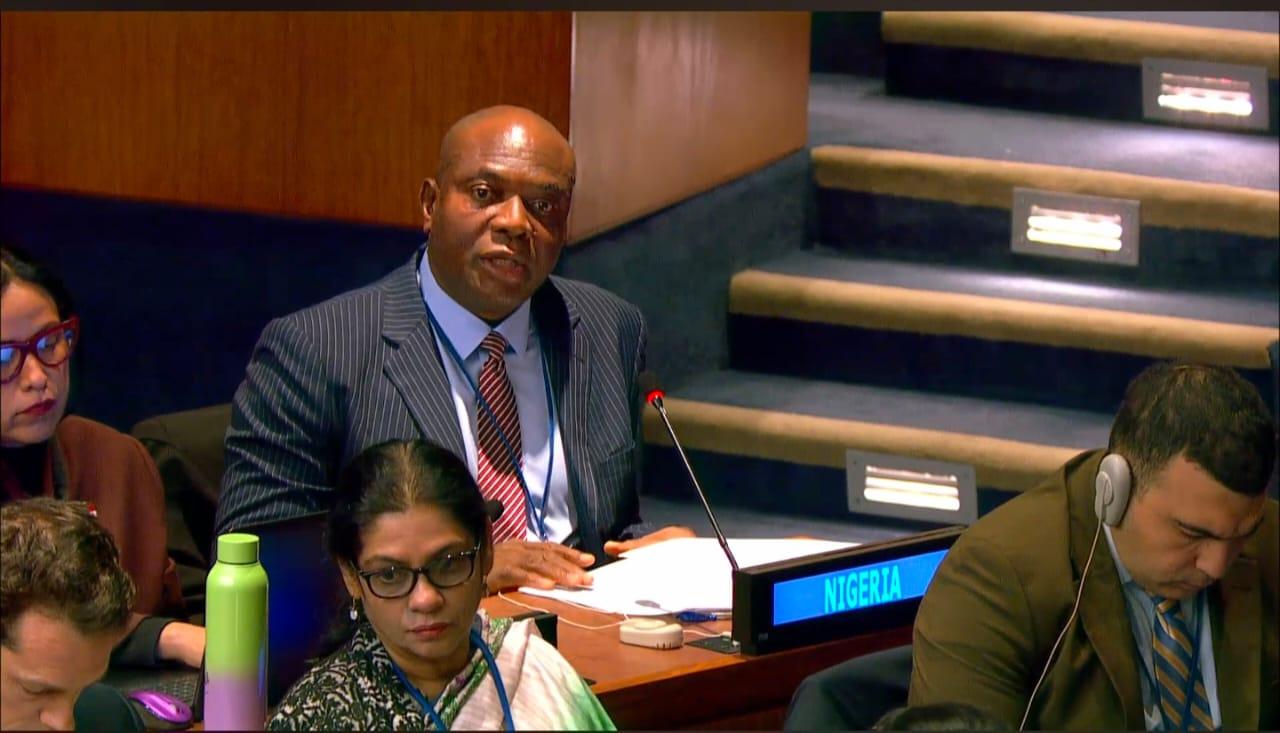
Nigeria has backed the outcome of the 70th session of the Commission on the Status of Women (CSW70) while formally dissociating itself from aspects of the text, citing concerns over both the adoption process and certain terminologies.
Delivering Nigeria’s statement at the session under the United Nations, Charge d’Affaires Syndoph P. Endoni reaffirmed the country’s commitment to gender equity, declaring, “Nigeria’s unwavering commitment to safeguarding and promoting the rights and well-being of every woman and girl has been exemplary and a top priority. This conviction also led to Nigeria voting in favour of the agreed conclusions of the CSW-70.”
Nigeria, however, clarified that its support did not imply full alignment with all elements in the document, stressing that due process and consensus, hallmarks of multilateral diplomacy, must remain central to UN engagements.
Endoni stated, “the manner in which the CSW-70 document was adopted raises concerns regarding the legitimacy and integrity of the purpose,” signalling Nigeria’s unease with procedural departures.
Nigeria also warned against deviations from the previously agreed international language.
“We are also concerned about the CSW-70 negotiations’ departure from previously agreed language under internationally endorsed frameworks,” Endoni stated, highlighting the importance of consistency in global agreements.
Firmly articulating Nigeria’s position, Charge d’Affaires Endoni emphasised, “for the record, Nigeria does not align with the introduction of new or expanded terminology that may give rise to controversial interpretations or create obligations beyond those contained in globally agreed frameworks.”
Consequently, Nigeria dissociated itself from references including “multiple and intersectional forms of discrimination,” “gender stereotypes,” “all forms of discrimination,” “universal access to sexual and reproductive health,” “diverse situations, context and conditions ”, among other issues.
Reaffirming its sovereign stance, Endoni added, “the interpretation and application of terms in the document must remain consistent with national laws, culture, religion, and values, and should reflect the understanding of natural gender categories.”
In voting, Nigeria demonstrated a calibrated approach, supporting the resolution on women, the girl child, and HIV/AIDS, while abstaining on procedural motions related to terminology. Divergent positions among member states, including the European Union and the United States, underscored negotiation complexities.
Nigeria aligned with calls for consensus-driven decision-making, maintaining that constructive dialogue remains the cornerstone of effective multilateralism, reaffirming its commitment to future negotiations that uphold inclusivity and respect for established frameworks.