

Helen Shok Jok, Abuja
The Federal Commissioner of the National Commission for Refugees, Migrants and Internally Displaced Persons (NCFRMI), Mr Tijanni Ahmed, made the call on Tuesday at the National Culminating Conference of the Public Service International (PSI) in Abuja.
Represented by Mrs Chinwe Nwachukwu, the Commissioner described displacement as one of Nigeria’s most pressing humanitarian, development and peace challenges, noting that millions of Nigerians had been uprooted by conflict, disasters, and other crises.
“Whether through voluntary return, local integration, or relocation to new communities, durable solutions must be safe, free from threats and persecution, sustainable and supported by livelihoods, housing, and services as well as inclusive by respecting the rights and voices of displaced persons,” he said.
Ahmed added that frameworks such as the Kampala Convention and the draft national durable solutions strategy had laid the foundation but insisted that “the time has come to move beyond frameworks to implementation, monitoring, and accountability.”
He listed five priorities: strengthening governance, investing in livelihoods, ensuring legal protection, promoting peacebuilding, and instituting monitoring systems.
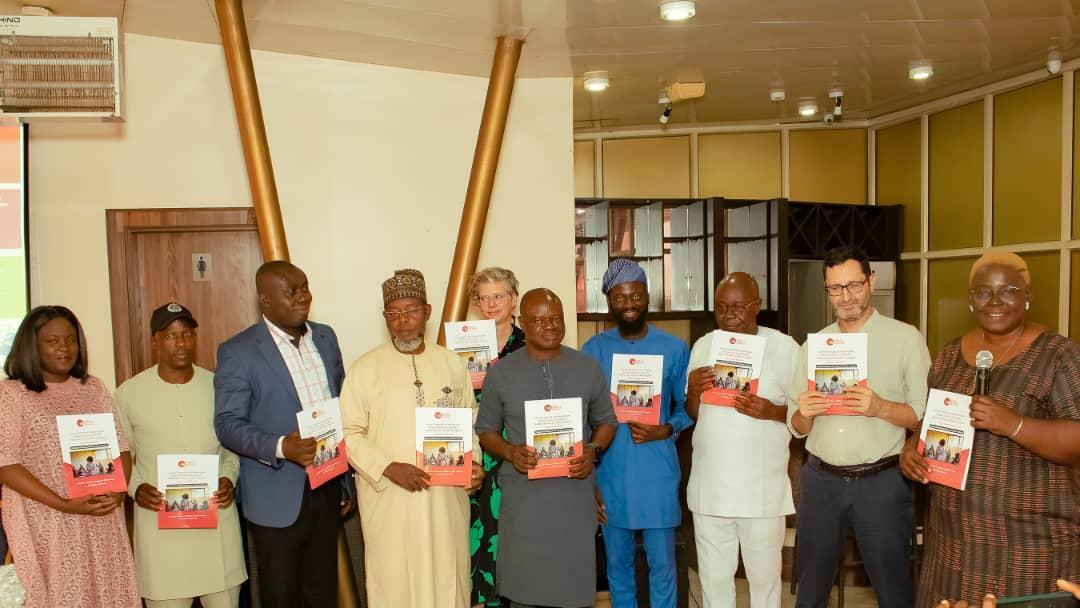
Josefine Johansson of ASSR Sweden lauded the cooperation between Nigerian trade unions, civil society groups, and the Swedish labour movement in defending the rights of frontline workers while advocating public services for IDPs.
She noted that the project had raised awareness about dangers faced by workers in displacement areas, including kidnapping, sometimes forcing families to raise ransom.
“The training manual we are launching today will serve as a tool to spread this work even further. We are proud to be part of a project that not only supports IDPs but also advocates for the rights and safety of frontline workers, who are often exposed to kidnapping, harassment and exploitation,” Johansson said.
She further stressed that displacement was not unique to Nigeria, citing recent flooding in Sweden as evidence that climate-driven crises could affect any country, and called for stronger global solidarity.
PSI Project Coordinator, Mr Luis Monje, said the project had initially faced challenges due to a lack of reliable data on displacement but had since generated critical insights through collaboration with unions and frontline workers.
“This project has helped affiliates to see the nexus between IDPs, decent work, and access to quality public services. Our ultimate goal is to ensure that all citizens, including IDPs, enjoy full access to their human rights,” Monje said.
He added that participatory methods had enabled broad engagement across unions, strengthening dialogue and positioning them as key actors in Nigeria’s development.
Acting General Secretary of the Nigeria Labour Congress (NLC), Comrade Benson Upah, described frontline workers as the “backbone of humanitarian response”, stressing that they operate in extremely difficult conditions.
“In Nigeria, frontline workers have been instrumental in responding to the needs of IDPs and refugees, often at great personal risk, yet they continue to face inadequate protection, insufficient resources and limited access to support services. We must ensure that they have safe and healthy working environments and access to the necessary support for their wellbeing,” he said.
Upah called for stronger protections, awareness campaigns, and joint action among government, civil society, and humanitarian groups to create an enabling environment for workers and strengthen humanitarian responses.
PIAK