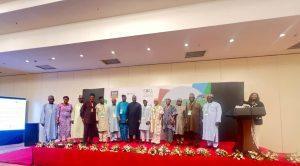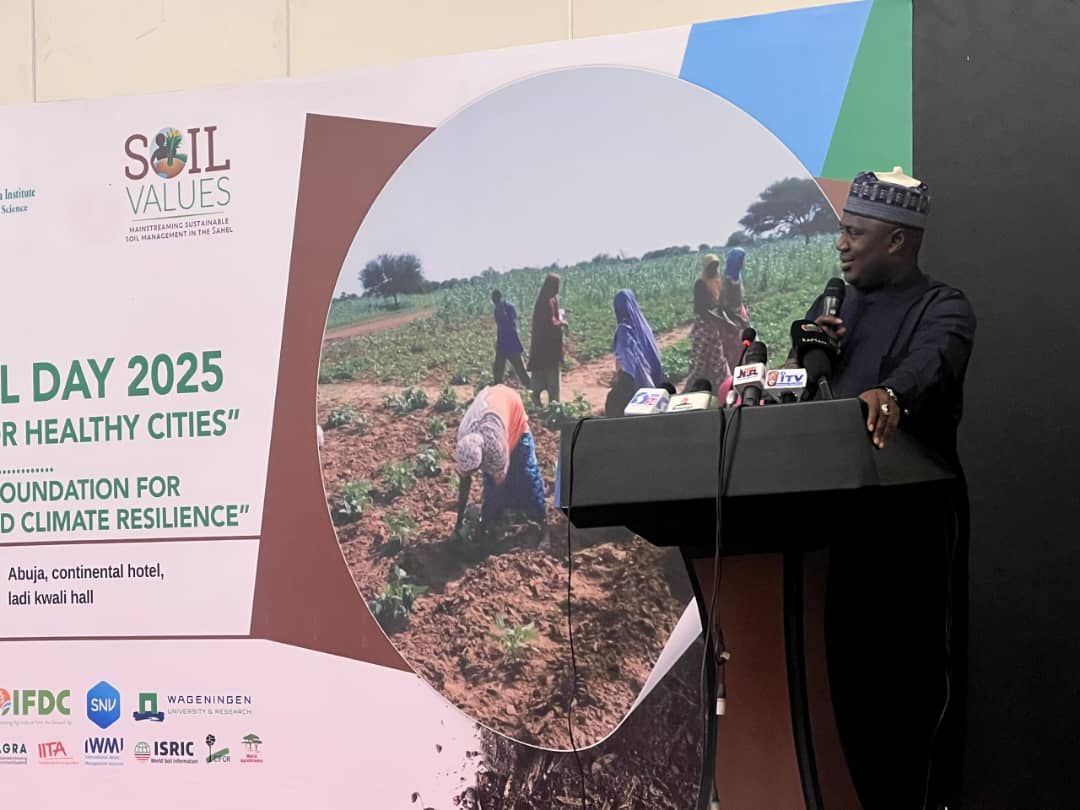
The Minister of State for Agriculture and Food Security, Senator Aliyu Sabi Abdullahi, has reaffirmed that healthy soil remains the bedrock of food sovereignty, climate resilience and sustainable livelihoods in Nigeria. He stated this in Abuja during the commemoration of World Soil Day, a global event that underscores the central role of soil health in agricultural productivity and environmental stability.
Senator Abdullahi noted that soil supports 95 per cent of global food production and supplies essential nutrients that sustain crops and ecosystems. He emphasised that healthy soil regulates water, stabilises the climate, stores carbon, supports biodiversity and forms the backbone of Nigeria’s agricultural transformation agenda.
However, the minister expressed concern over the unprecedented levels of degradation, erosion and pollution affecting Nigerian soils, warning that these threats undermine food quality and long-term productivity. “More than half of our soils are already depleted, and natural regeneration may take hundreds of years. This underscores the urgency of adopting sustainable soil management practices,” he said.
He observed that although Nigeria has approximately 73 million hectares of arable land, soil degradation continues to hinder national food production. He therefore described the World Soil Day commemoration as a platform to intensify awareness on conservation agriculture, agroforestry, crop rotation, integrated soil fertility management and responsible fertiliser application.
Senator Abdullahi highlighted the launch of the Nigeria Farmers’ Soil Health Scheme, designed to enhance food security and cut production costs. The scheme provides crop- and location-specific fertiliser recommendations, discouraging blanket application and encouraging the use of organic amendments and regenerative agriculture. According to him, the initiative will reduce soil and water pollution, lower greenhouse gas emissions, and strengthen farmers’ access to soil advisory services, especially for women and young farmers.
Reaffirming Nigeria’s commitment to the Nairobi Declaration on Fertiliser and Soil Health, endorsed by African Heads of State in 2023, the Minister acknowledged the support of AGRA, the World Bank, IITA and other partners in strengthening soil mapping, fertiliser quality control and climate-smart agriculture. “We are taking the driver’s seat in charting our development priorities, and we expect our partners to align their interventions with our national goals,” he added.
Speaking at the event, Dr Alain Traoré, Director of the Soil Values Programme, described soil as a living resource vital to national prosperity.
“Soil provides everything: nutrients, biodiversity and climate resilience. It is home to millions of organisms and remains the backbone of our food system,” he said.

He noted that this year’s theme, “Healthy Soil for Healthy Cities,” reminds nations that soil health is not exclusively an agricultural concern but a national priority for food security, environmental protection and sustainable development. Dr Traoré added that the Soil Values Programme is working with Nigeria to restore and strengthen soil health through innovation, research support, capacity building and community-led interventions, all aligned with the Federal Government’s agricultural agenda.
Mr Godswill Aguiyi, Programme Officer at AGRA, said the organisation is supporting Nigeria to promote proper fertiliser use, sustainable agronomic practices and policy reforms that improve soil health nationwide. He noted that AGRA is assisting in the development of the National Fertiliser and Soil Health Roadmap, a ten-year strategic guide aligned with ECOWAS and African Union frameworks.
“AGRA promotes the right fertiliser for the right soil, and we support farmers to adopt practices that do not deplete the resources we depend on,” he said. He added that soil depletion in Africa remains a major challenge, but AGRA is committed to supporting Nigeria’s efforts to rebuild soil fertility through innovation, mentorship and extension services.

Professor Ayodeji Coker of the Federal University of Technology, Minna, explained that the National Fertiliser and Soil Health Roadmap is a comprehensive framework developed with AGRA’s support to address systemic challenges in the fertiliser market and soil ecosystem. He said the roadmap includes reforms, stakeholder roles, investment strategies and monitoring frameworks for effective implementation between 2025 and 2034.
According to him, the roadmap aligns with national policies, ECOWAS frameworks and the African Union’s Agenda 2063. “Our target is to achieve healthier soils, increased productivity and sustainable farming systems within the next decade,” he said.

One of AGRA’s beneficiaries in Nigeria, Dr Aisha Adamu, highlighted the extensive support women in rural Niger State continue to receive from the organisation. She explained that AGRA’s interventions have significantly improved women farmers’ knowledge and confidence through structured mentorship, hands-on training and field demonstrations.
She noted that many women now properly understand fertiliser application, soil nutrients and improved seed use. “Women who once relied on guesswork now apply the right techniques, and this has boosted crop yields and reduced waste,” she said.

Dr Adamu added that AGRA’s empowerment programmes have helped women access advisory services, join farming cooperatives and adopt climate-smart techniques tailored to their environments.
Speaking on behalf of the Federal Ministry of Agriculture and Food Security, Mr Sunday Okey described the partnership with AGRA as robust and productive. He said AGRA has strengthened capacity building, soil health improvement, fertiliser management and policy support, all of which complement the Federal Government’s efforts to enhance national food systems.

According to him, the Ministry values the long-standing collaboration and is committed to expanding joint efforts to empower smallholder farmers, deepen agricultural reforms and achieve sustainable food security.
The event closed with a renewed commitment by government officials, researchers, development partners and farmers to protect Nigeria’s soil resources for future generations. Stakeholders agreed that restoring soil health is essential for strengthening food security, driving economic growth and supporting national development.