


President Bola Ahmed Tinubu has officially designated 2026 as the “Year of Social Development and Families in Nigeria,” reaffirming the Federal Government’s commitment to economic advancement, social cohesion, and the empowerment of women and families as the foundation of national development.
The declaration, made at the State House, Abuja, follows the signing of a strategic Memorandum of Understanding during the President’s visit to Türkiye in January 2026, aimed at strengthening family cohesion and advancing social welfare systems.
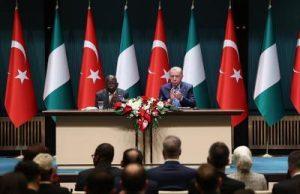
According to President Tinubu, the initiative reflects a deliberate shift in governance priorities.
“…reflects our resolve to entrench inclusion as a permanent feature of governance. We are choosing systems over sentiments, institutions over intentions, and impact over rhetoric,” he said.
The President’s priorities for women and children are being implemented through the Renewed Hope Social Impact Interventions, a nine-pillar multisectoral framework aligned with the Beijing Declaration and Platform for Action, designed to deliver targeted social services nationwide.
By this declaration, Nigeria joins a select group of nations, including Türkiye, the United Arab Emirates, and Egypt that have adopted family-centred policies as a foundation for sustainable national development.
President Tinubu described the move as a deliberate response to the root causes of national challenges, including poverty and insecurity.
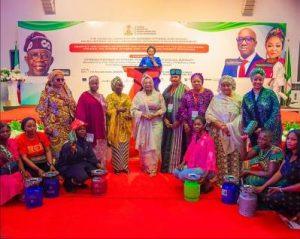
“Strong families are a national security and development asset. Societies that invest in family stability reduce vulnerability, social risk and long-term instability. I hereby direct that the year 2026 be designated as the Year of Social Development and Families in Nigeria, with coordinated action across all arms and levels of government,” he stated.
Also Read: President Tinubu Deepens Nigeria–Türkiye Ties Through Bilateral Talks
He emphasised that the declaration is more than symbolic, describing it as a strategic decision grounded in the understanding that women and families are indispensable to national progress.
“This administration has been guided by a simple conviction: no nation can rise on the strength of half its population alone. Sustainable growth is impossible where women remain constrained, unseen, or unsupported,” he said.
Highlighting women’s central role in development, the President added:
“Women are not an afterthought in our development story. They are its authors. They are the backbone of family stability, the engine of community resilience, and indispensable partners in our collective ambition to build a competitive and inclusive nation.”
He further noted:“A nation that relegates its women is a nation bound for implosion. We have long understood this truth. That is why this administration has not only placed women at the forefront of decision-making but has also entrusted them with leadership in causes that redeem our national promise.”
At the heart of the 2026 designation is the Federal Ministry of Women Affairs and Social Development, tasked with driving Nigeria’s ambition of a one-trillion-dollar economy through women and family productivity.
Under Minister Hajiya Iman Sulaiman-Ibrahim, the Ministry has introduced innovative programmes, including the Renewed Hope Social Impact Intervention for Women, Children, and Vulnerable Persons, aimed at empowering families and strengthening social cohesion.
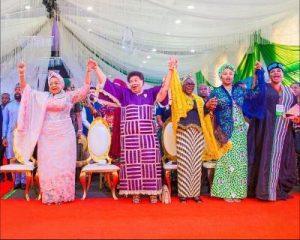
Speaking on the Ministry’s vision, Sulaiman-Ibrahim said: “When we came into office, we took a hard look at the Ministry and made a strategic decision: we would fully activate its mandate not partially, not symbolically, but fully.”
She highlighted the Nigeria Families First Programme as a core pillar of the administration’s social impact strategy, focusing on four transformative areas: economic empowerment of families, parenting skills upskilling, social safety nets through universal child benefits, and expanded access to health, housing, and professionalised care.
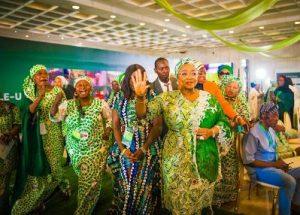
Additionally, the Happy Woman App Platform has been launched to provide a secure, scalable digital interface connecting women to finance, skills, markets, essential services, and government support, promoting digital inclusion and national competitiveness.
“Family cohesion and social welfare reflect a shared understanding that strong families underpin stable societies and economic resilience,” the Minister said, noting that women-led interventions across multiple sectors validate the President’s assertion that:
“Women sustain markets, grow enterprises, feed families, and anchor communities. They are the quiet architects of our non-oil economy. It is therefore our collective responsibility to unlock their full potential.”
Implementation Framework
The declaration’s success depends on effective implementation. Recent surveys, including the National Demographic and Health Survey, show a historic surge in female labour participation, now at 95.6%, though political representation remains limited.
The Federal Government aims to include 25 million women through digital finance initiatives like the Happy Woman App, supported by policy mainstreaming across all Ministries, strengthened social protection, inter-ministerial coordination, localised action plans, partnerships with civil society, faith leaders, the private sector, and improved data systems for monitoring.
Stakeholder Reactions
The declaration has been widely welcomed. Honourable Edema Iyom, Dean of Commissioners of Women Affairs, praised the decision as timely, stating: “Focusing on the family means peaceful coexistence, sustainability of the food value chain and reduction of GBV issues in our communities. When the family is empowered through social interventions, Nigeria grows.”
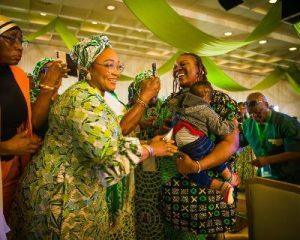
Other stakeholders, including Dr Jumai Ahmadu of Helpline Social Support Initiative, Hajiya Aisha Ibrahim of NAWOJ, and Dr Annette Mubarak of PWEDF, highlighted the declaration’s significance in placing families, women, and children at the centre of national progress.
Dr Mimidoo Achakpa noted: “It is both encouragement and responsibility to deepen our impact, strengthen partnerships, and hold ourselves and the state accountable to Nigerian families.”
Mrs. Ugochi Juliana Nwokeoma of Rivers State added:“2026 signals a more robust phase of economic growth for Nigeria.”
Rev. Ayobami Akinadewo of WOWICAN emphasised the role of faith-based institutions in supporting family stability and social development.
Barrister Ujunwa Rita Ezeani described the declaration as a historic alignment of national interest, stating: “It signifies a shift from viewing social welfare as a burden to seeing it as a strategic investment.”
A Defining Moment
The 2026 national declaration frames the family not as a private sentiment but as public infrastructure, ensuring that interventions from healthcare to economic empowerment begin at the household level and translate into lasting national development.
President Tinubu reaffirmed: “To the women of Nigeria: this government sees you, values your contribution, and is investing in your success not as charity, but as a deliberate national strategy for growth, stability, and prosperity.”
With Minister Hajiya Iman Sulaiman-Ibrahim at the helm, the focus for 2026 is clear: mobilise a coordinated national effort to rebuild social systems, restore family stability, and secure Nigeria’s human development foundation.