

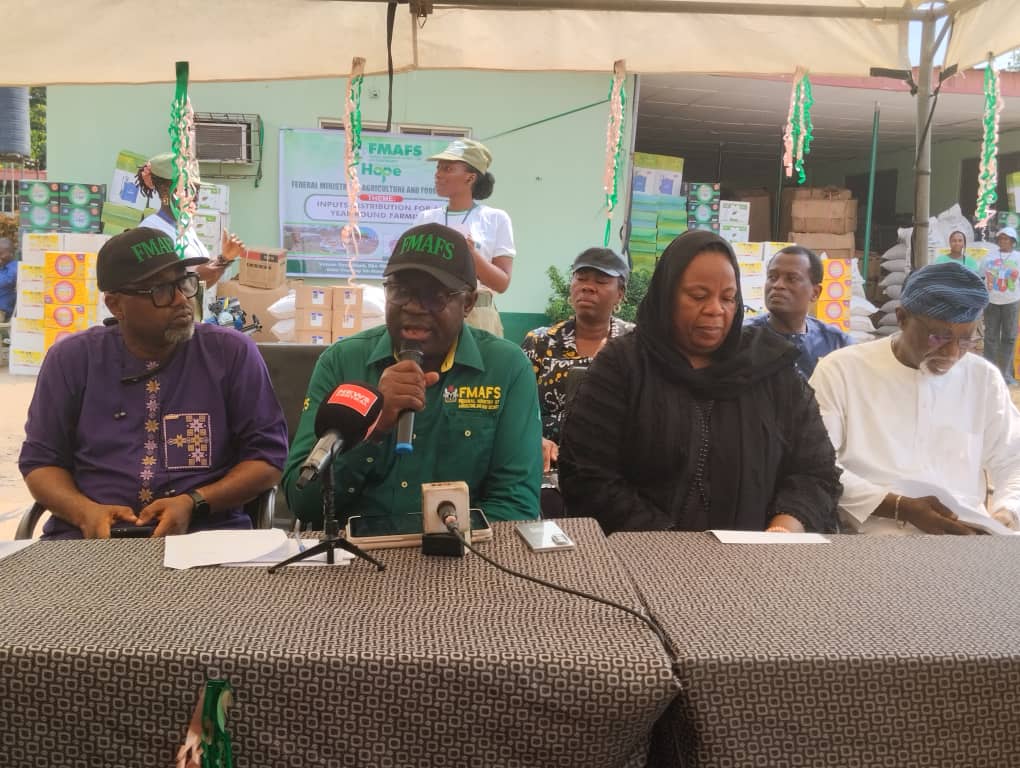
The Federal Ministry of Agriculture and Food Security (FMAFS) has commenced the distribution of free agricultural inputs to farmers as part of efforts to boost productivity, improve livelihoods, and promote food sovereignty.
Speaking at the flag-off ceremony held in Lagos State, the Minister of Agriculture and Food Security, Abubakar Kyari, said the initiative waas designed to enhance agricultural productivity, encourage year-round farming, and strengthen national food security.
The Minister, who was represented by the Permanent Secretary in the Ministry, Marcus Olaniyi Ogunbiyi, described farmers as the backbone of every nation’s food system.
READ ALSO: Nigeria Government Disburses ₦32.9bn to Boost Primary Healthcare
He noted that the intervention was strategic and deliberate, aligning with the Renewed Hope Agenda of President Bola Tinubu’s administration.
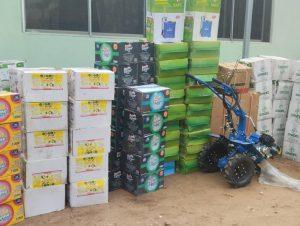
Kyari explained that the programme reflects the government’s commitment to strengthening food production through the distribution of critical farm inputs such as improved seeds, fertilisers, agrochemicals, and other essential materials.
Intervention Programme
He noted that the initiative forms part of the Federal Government’s broader intervention programme aimed at reducing production costs, increasing crop yields, and improving farmers’ livelihoods.
According to him, empowering farmers is essential to achieving sustainable food security.
Collaboration
The Minister also highlighted the collaboration between the Federal Government and the Lagos State Government, describing it as a strong example of synergy in achieving shared development goals.
He stated that Lagos State plays a unique role in Nigeria’s agricultural value chain, noting that the state is not only a major consumption hub but also a model for urban agriculture, aquaculture, poultry production, vegetable farming, and agribusiness innovation.
Kyari further emphasised that the Ministry recognises food security as a matter of national security and is therefore implementing targeted interventions to support farmers across Nigeria’s various agro-ecological zones.
“These include input support schemes, Mechanisation services, climate-smart agriculture initiatives, and capacity-building programmes designed to improve resilience and productivity,” the Minister noted.
He further said that provision of inputs alone cannot ensure the realisation of the food sufficiency goal, therefore calling for proper distribution, effective use by genuine farmers, adoption of best practices, and robust monitoring to measure impact.
Kyari pledged that ministries would continue to support farmers with innovative solutions, strengthening extension services, promoting irrigation and dry-season farming, expanding access to improved seed varieties, and encouraging youth participation in agriculture as a viable and profitable enterprise, among others.
He charged beneficiaries to ensure judicious and responsible use of the inputs.
“Let them translate into increased output, improved incomes,and greater food availability for our people.
“To our farmers here today: you are not alone. The Federal Government stands firmly with you. Your labour feeds the nation. Your resilience sustains our economy. Your success is Nigeria’s success,” Kyari stated.
He lauded the Lagos State Government for its continuous investment in agricultural development, noting that partnership between federal and state institutions remains critical to achieving the nation’s food security objectives.
“Let this moment mark the beginning of renewed productivity, enhanced collaboration, and shared prosperity. Together, we will build a food-secure Nigeria, a nation where every citizen has access to affordable, nutritious, and sufficient food,” he added.
In her remarks, the Commissioner of Agriculture and Food System, Lagos, Ms. Abisola Ruth Olusanya, stated that the initiative align with the agricultural policies of the Governor Babajide Sanolu’s led administration geared towards achieving food security and improving the livelihoods of farmers in the state.
Ms. Olusanya pledged that the farmers would make judicious use of the inputs and enhance food production.
The event was graced by various Farmer Associations, Cooperative Societies, Development Partners, and dignitaries from all walks of life.
Highlights include the presentation of various inputs for distribution to cooperative farmers especially farmers with Special Needs and the commissioning of the State’s office store.