

Margaret Ebeshi, Abuja
Nigeria and Germany have reaffirmed their commitment to strengthening cooperation across key sectors—including energy, security, trade, migration, and culture—under the framework of the Nigeria–Germany Bi-National Commission.
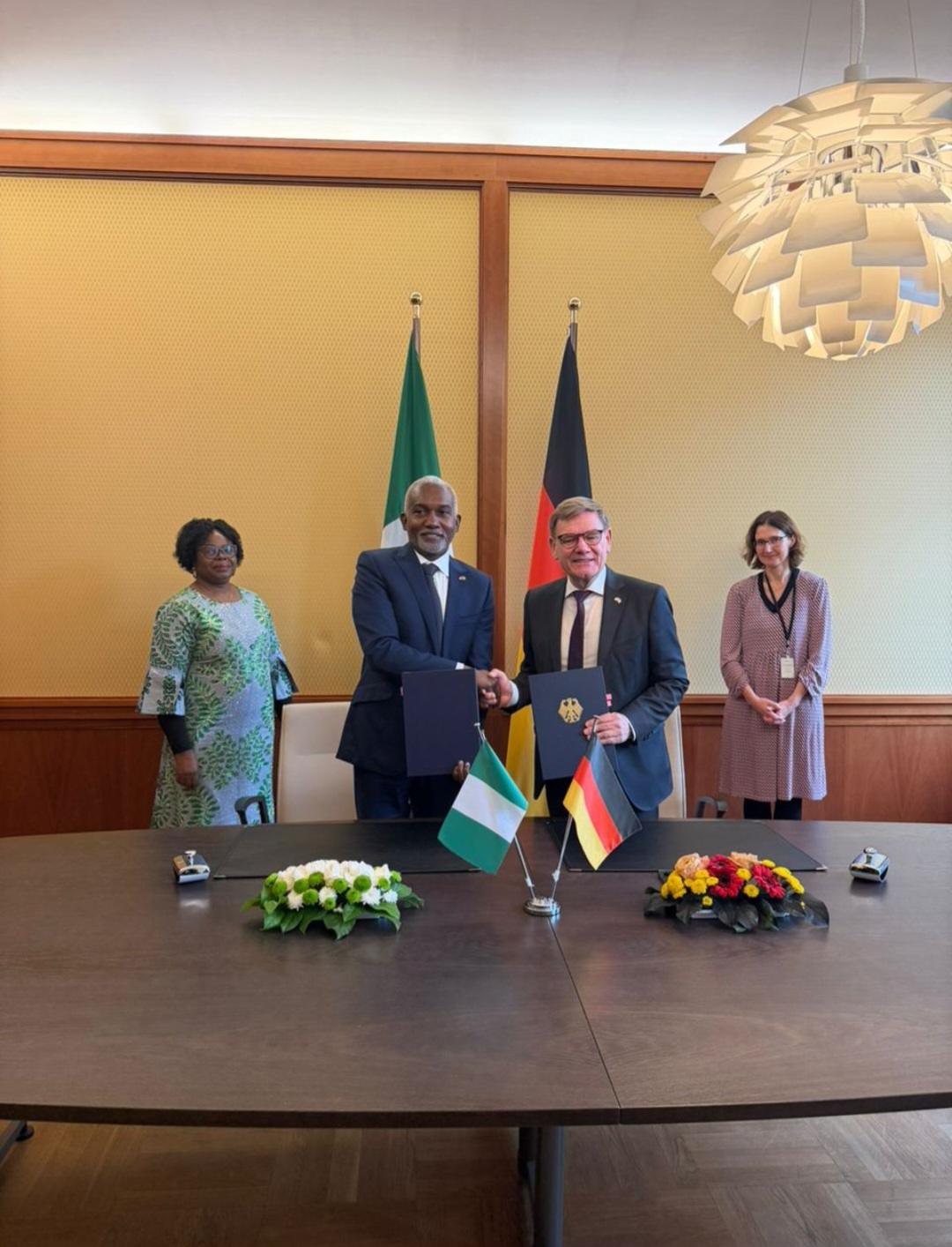
The Minister of Foreign Affairs, Ambassador Yusuf Maitama Tuggar, met with his German counterpart, Minister Johann Wadephul, in Berlin as both countries marked 65 years of diplomatic relations.
Conveying the warm greetings of President Bola Tinubu, Ambassador Tuggar commended Germany for its “enduring friendship and constructive partnership in advancing Nigeria’s national development priorities.”
He described Nigeria–Germany relations as “a cornerstone of our engagement with Europe and the wider global community.”
During the meeting, both ministers reviewed progress on the Presidential Power Initiative (PPI) led by Siemens Energy and the Green Guarantee Group (GGG), co-chaired by Nigeria.
The initiatives are designed to attract investment in renewable energy and climate-resilient infrastructure.

Tuggar reaffirmed Nigeria’s inclusive approach to energy transition, “leveraging gas as a transition fuel while scaling up renewables.”
On security cooperation, the two sides agreed to strengthen intelligence sharing, cybersecurity, and border management under the German Technical Advisory Group (GTAG).
Ambassador Tuggar also called for “a firmer stance within the EU against proscribed organisations that exploit European jurisdictions for incitement and illicit financing.”
Bilateral trade between the two nations reached €3 billion in 2024, positioning Germany as Nigeria’s second-largest European trading partner.
Tuggar emphasised the need to diversify trade “beyond hydrocarbons into automotive assembly, ICT, manufacturing, and agro-industrial exports,” noting that Nigeria’s removal from the FATF Grey List has boosted investor confidence and reduced transaction risks.
Both parties also commended ongoing collaboration in migration and skills development, particularly through the Talent Partnerships and SUSTAIN Project.
Nigeria proposed an expansion of these programmes to include ICT, engineering, and healthcare.

Amb. Tuggar said that “Business Process Outsourcing offers new opportunities for young Nigerians to service German industries remotely.”
The Minister expressed appreciation to Germany for the restitution of the Benin Bronzes, describing cultural cooperation as “a bridge between our peoples and a symbol of shared respect for history and heritage.”
On regional and global issues, Ambassador Tuggar briefed his counterpart on Nigeria’s leadership role within ECOWAS and the Regional Partnership for Democracy (RPD), inviting Germany to join efforts to strengthen democratic institutions and stability across West Africa.
Both ministers reaffirmed their shared commitment to democracy, UN reform, and multilateral cooperation.
Ambassador Tuggar concluded that the renewed dialogue “will consolidate mutual trust and elevate our partnership—anchored on equality, shared values, and sustainable progress.”