

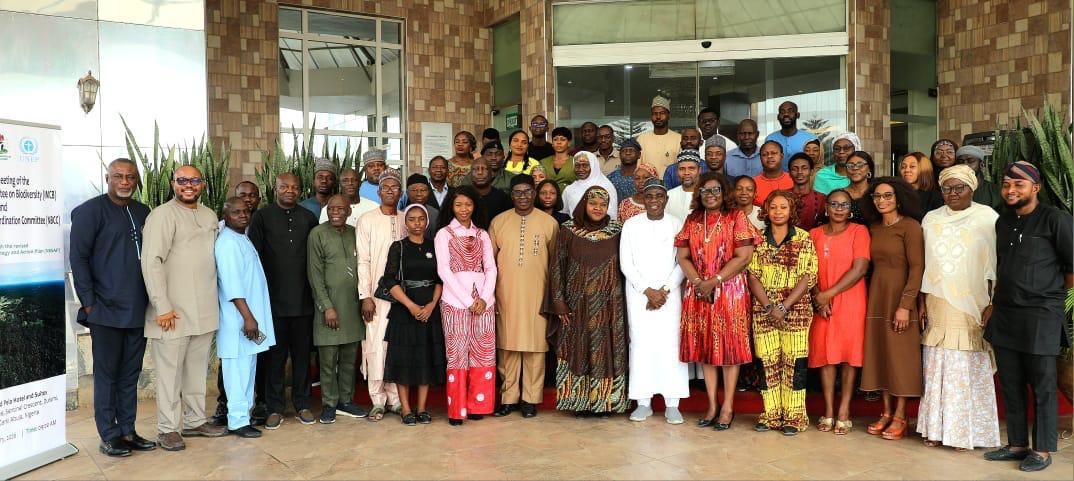
The Nigerian Government has inaugurated key institutional committees to drive the effective implementation of the nation’s revised National Biodiversity Strategy and Action Plan (NBSAP), thereby reaffirming its commitment to biodiversity conservation and sustainable development.
Speaking at the inauguration ceremony in Abuja, Nigeria’s capital, the Minister of Environment, Balarabe Lawal, described the event as a critical milestone in the nation’s efforts to safeguard its rich biological resources and meet international biodiversity commitments.
The Minister noted that the country is endowed with diverse ecosystems vital to food security, livelihoods, climate resilience, and national development, but warned that these resources are under growing threat from habitat loss, pollution, unsustainable exploitation, and climate change.
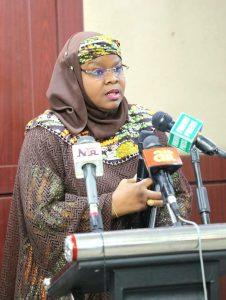
“The revised NBSAP provides a clear national roadmap for addressing these challenges in a coordinated, inclusive, and results-oriented manner, in line with our national priorities and obligations under the Convention on Biological Diversity,” Lawal stated.
He explained that effective implementation of the NBSAP goes beyond policy formulation, requiring strong institutions, clear coordination mechanisms, sustained political support, and collective ownership across government, civil society, the private sector, development partners, and local communities.
“To this end, the Federal Government has established three complementary bodies: the Inter-Ministerial Committee on Biodiversity, the National Biodiversity Coordination Committee, and the National Biodiversity Technical Committee,” he said.
According to the Minister, these committees are designed to provide strategic direction, technical leadership, coordination, and accountability for NBSAP implementation, while ensuring a whole-of-government and whole-of-society approach.
Lawal emphasised that the inaugural meeting offered an opportunity to assess progress made so far, clarify roles and expectations, and agree on priority actions going forward. He also stressed the importance of strengthened collaboration among Ministries, Departments and Agencies, as well as engagement with non-state actors, noting that biodiversity is a cross-cutting issue affecting all sectors of the economy.
The Minister urged committee members to uphold transparency, inclusivity, technical rigour, and a results-driven focus in the discharge of their responsibilities, adding that regular reporting, effective communication, and mutual accountability would be essential for success.
Also Read: Nigeria Launches Biodiversity Finance Initiative to Safeguard Ecosystem
He further assured participants that the Secretariat would continue to play a central coordinating role and ensure alignment with national and international reporting obligations. Reaffirming government support, Lawal stated that while the Federal Government would provide the necessary policy leadership, the achievement of Nigeria’s biodiversity goals ultimately depends on the collective efforts of all stakeholders.
“I urge you to approach your responsibilities with dedication, professionalism, and a shared sense of national purpose. Together, we must safeguard Nigeria’s biodiversity heritage for present and future generations, while unlocking its potential for sustainable development and economic growth. On this note, it is my honour to formally inaugurate the Committees for the implementation of the National Biodiversity Strategy and Action Plan (NBSAP),” he added.
The Director of Forestry in the Ministry, Mrs Halima Bawa-Bwari, emphasised that the gathering represents a transition from policy formulation to decisive action aimed at protecting, restoring, and sustainably managing the nation’s biodiversity.
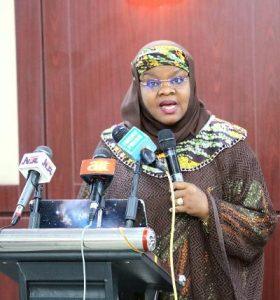
She explained that the inauguration of the NBSAP Implementation Committees marks a significant milestone in Nigeria’s commitment to safeguarding its rich natural heritage.
“The NBSAP is more than a policy framework, it is a national pledge to ensure that forests, wildlife, wetlands, and ecosystems continue to support livelihoods, food security, climate resilience, and cultural identity. Biodiversity remains the backbone of sustainable development and a critical asset for present and future generations,” she noted.
According to her, the forestry sector stands at the heart of biodiversity conservation. Nigeria’s forests provide habitats for countless species, regulate climate systems, and deliver essential ecosystem services to communities. However, increasing pressures from deforestation, unsustainable exploitation, and climate change demand coordinated and innovative responses that now rest with the newly inaugurated committees.
She therefore called for strong collaboration among government agencies, civil society, academia, the private sector, and local communities.
Expressing appreciation to all contributors to the NBSAP process, Mrs Bawa-Bwari urged stakeholders to approach implementation with optimism, unity, and a deep sense of stewardship, stressing that collective action is key to securing a future where biodiversity conservation drives sustainable growth.
The establishment of the NBSAP Implementation Committees signals a renewed call to duty for all stakeholders.
These committees are expected to play a pivotal role in coordinating actions, monitoring progress, and aligning biodiversity conservation efforts with national development priorities and international environmental obligations.