

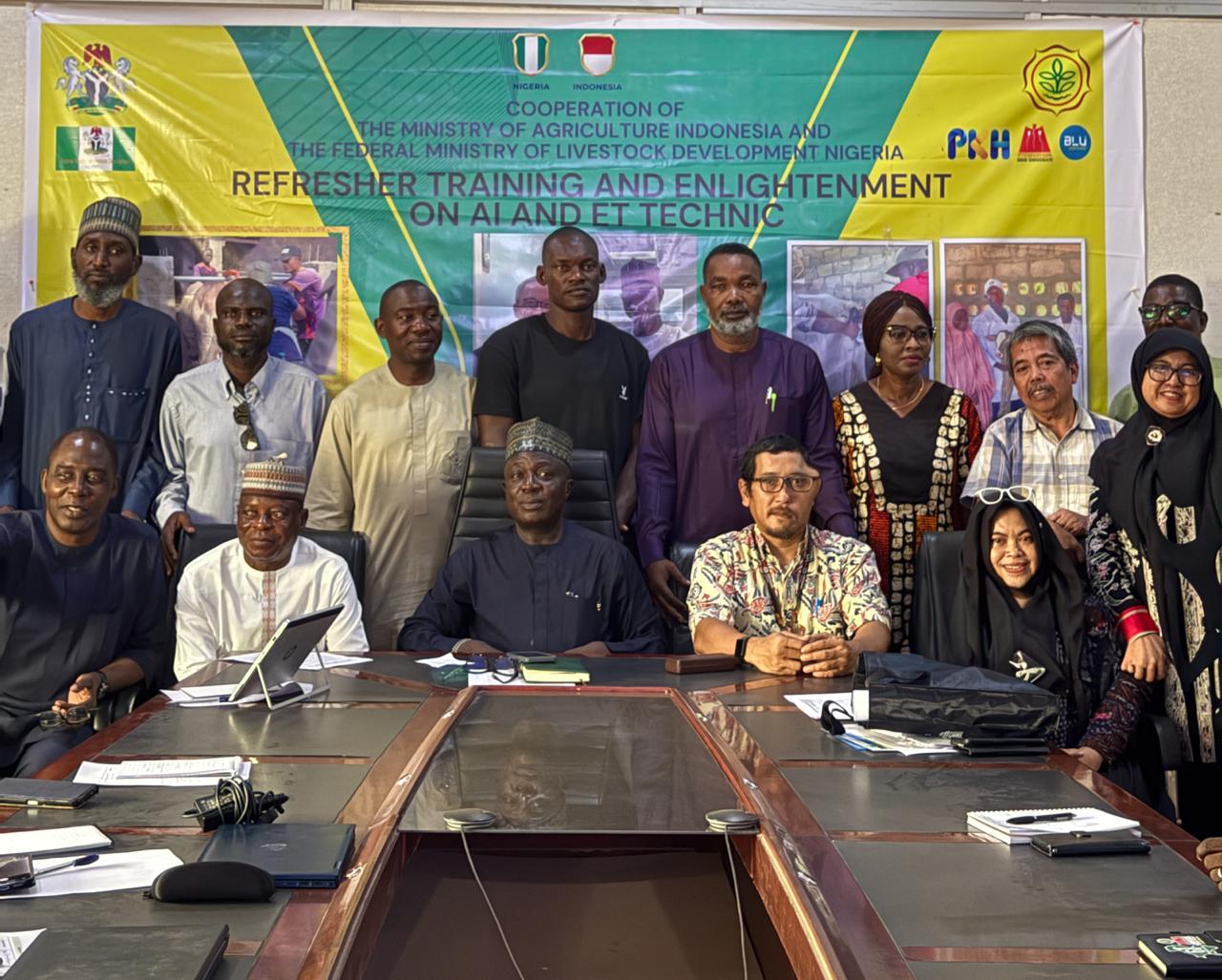
15 veterinary experts from the Federal Ministry of Livestock Development have completed an advanced training program on cutting-edge breeding techniques in a significant step towards modernising Nigeria’s livestock sector.
The four-day intensive workshop, held at the National Agriculture Investment Center in Abuja, focused on Artificial Insemination (AI) and Embryo Transfer (ET).
The program delivered under a South-South cooperation framework between Nigeria and the Republic of Indonesia, was facilitated by the Embassy of Indonesia in Abuja.
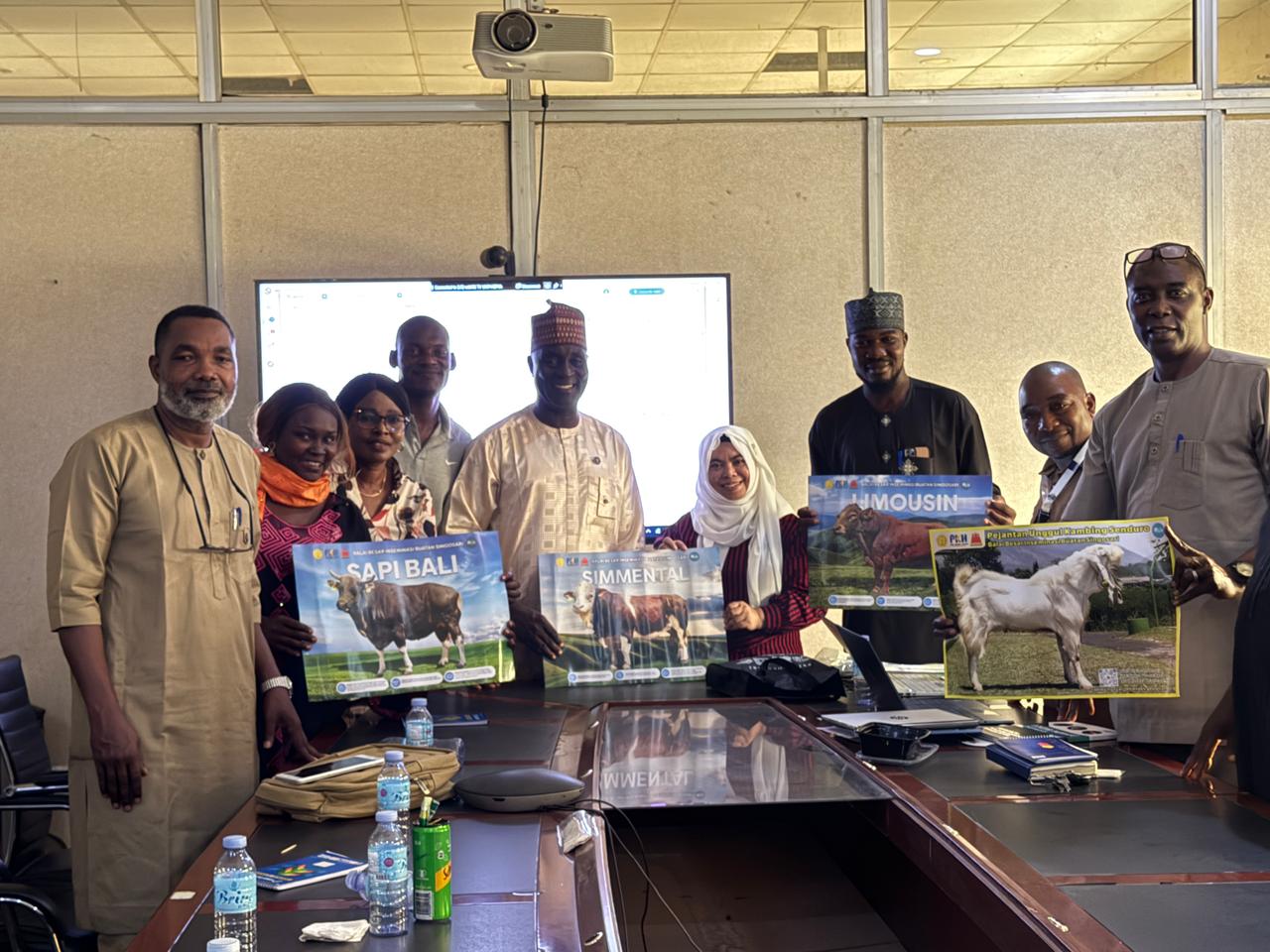
The training which was designed and led by specialists from Indonesia’s renowned Research Center for Artificial Insemination (BBIB Singosari), combined classroom theory with practical field application.
Participants conducted hands-on sessions at the Karu abattoir, mastering modern protocols for semen handling, AI, and ET techniques aimed at improving herd genetics and productivity.
“This capacity-building initiative is critical for transferring technology and building local expertise,” said a trainer from BBIB Singosari.
“The participants’ commitment is a positive sign for Nigeria’s agricultural future.”
The collaboration builds on existing successes in Nigerian states like Sokoto and Kebbi, where dozens of high-quality calves have already been born using frozen semen and techniques provided by the Indonesian partners through Indonesian Ai said a participant.
“The evidence is on the ground in our northern states,” noted a participating veterinarian.
“This training empowers us to replicate and scale these results nationally, improving food security and farmers’ incomes.”

Organisers of the training emphasised the need for sustained investment in infrastructure, such as cold chain systems for semen storage, and supportive policies to fully integrate these technologies into Nigeria’s agricultural landscape.
The Embassy of the Republic of Indonesia reaffirmed its commitment to the partnership, viewing it as a model for mutual growth and development within the Global South.