


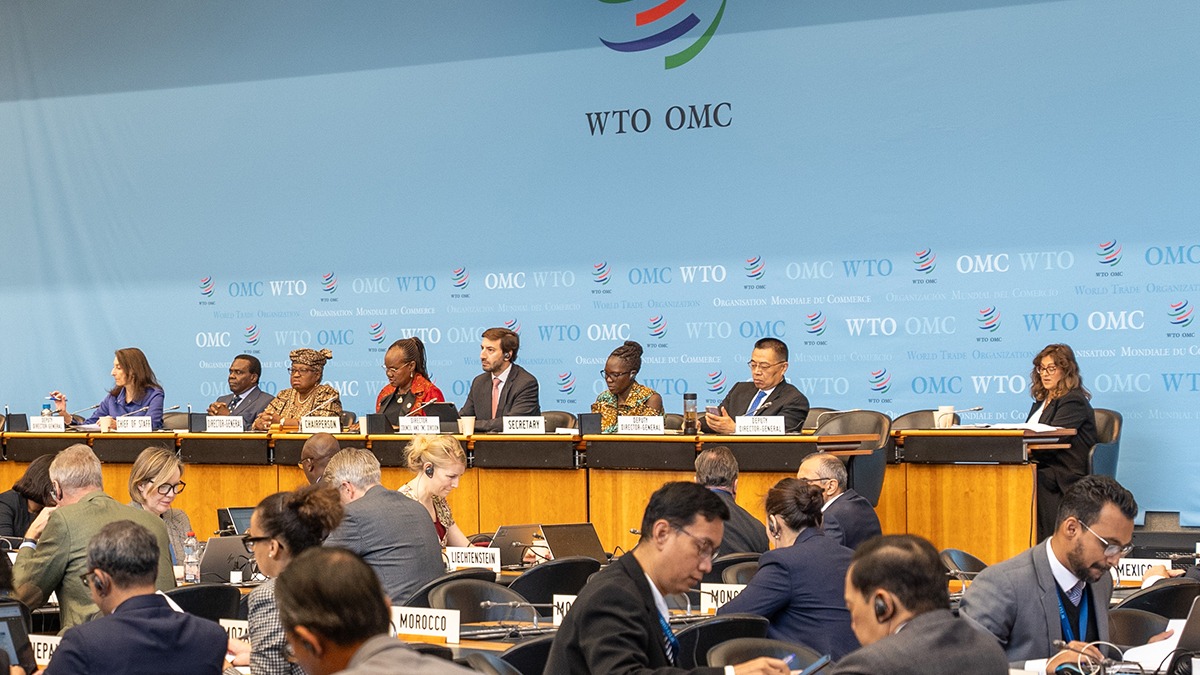
Nigeria has intensified efforts to consolidate its leadership under the African Continental Free Trade Area (AfCFTA) while strategically positioning itself ahead of the 14th World Trade Organization Ministerial Conference.
The Nigerian Minister of Industry, Trade and Investment and Chairperson of the AfCFTA Central Coordination Committee, Jumoke Oduwole made this known while declaring open the First Quarter 2026 meeting of the AfCFTA Central Coordination Committee in Abuja.
“This meeting comes at a pivotal moment when we consolidate Nigeria’s leadership under the African Continental Free Trade Area (AfCFTA) and strategically position our country ahead of the 14th Ministerial Conference of the World Trade Organization (MC14),” she said.
Dr. Oduwole who was represented by her Special Adviser, Patience Okala stressed that 2026 must move beyond planning to measurable delivery under the AfCFTA framework.
“With this framework in place, 2026 must now be the year of disciplined execution.”
She disclosed that the Committee will review the Report of the Sub-Committee on Governance Structure to ensure that the AfCFTA Central Coordination Committee operates as a performance-driven mechanism.
“The AfCFTA CCC must function not merely as a coordinating forum, but as a performance-driven mechanism aligned with our National Action Plan, our governance structure must embed the Institutional Performance Barometer, strengthen inter-agency coherence, and ensure accountability to the public.” She added.
Dr. Oduwole also highlighted preparations for the upcoming WTO Ministerial Conference scheduled to hold in Yaoundé, Cameroon from March 26 to 29, 2026.
She noted that African Trade Ministers, under the African Ministers of Trade platform, had already met in Maputo, Mozambique to consolidate common positions on priority issues including WTO reform, agriculture, development concerns, digital trade and investment facilitation.
“We are mindful of the fact that regional coherence strengthens Africa’s negotiating leverage. Africa must negotiate multilaterally from a position of continental consolidation,” she said.
She added that Nigeria played an active role in shaping Africa’s emerging common position for the conference.
“We must continue to demonstrate leadership in galvanizing the participation of relevant stakeholders at the Ministerial Conference to advance Africa positions and ensure that the present global tensions in the multilateral trading system do not impinge inclusive growth, economic transformation and sustainable development for Africa,” she stated.
The Permanent Secretary of the Federal Ministry of Industry, Trade and Investment, Ambassador Nura Rimi, who was represented by Mr. Mohamed Abbas described the Committee as the central platform for policy alignment, inter-agency coordination and performance monitoring of Nigeria’s commitments under the African Continental Free Trade Area.
“Facility among our institutions is not merely desirable, it is indispensable, we must continue to position Nigeria strategically to harness the immense opportunities provided within AfCFTA.”
Abbas emphasized that AfCFTA represents more than a trade agreement.
“AfCFTA is not just a trade agreement, it is a transformative economic framework that must deliver tangible results for Nigerian business and citizens,” he said.