

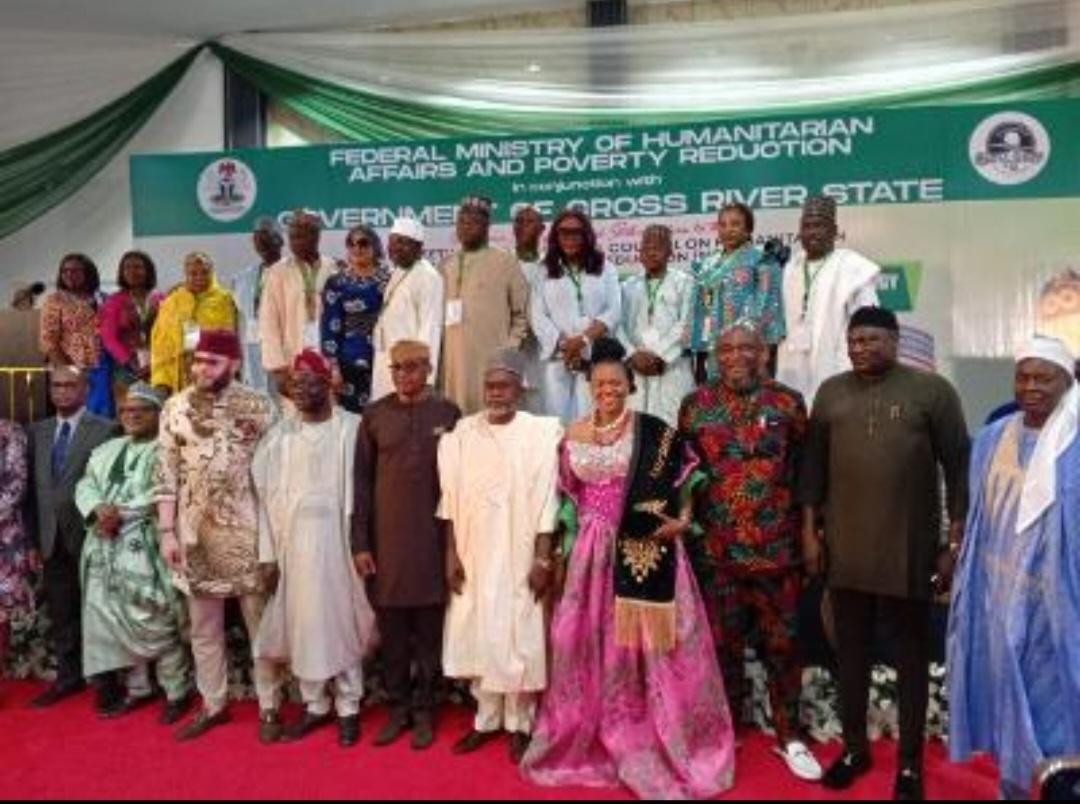
The Nigerian Government has established the National Council on Humanitarian Affairs and Poverty Reduction, marking a significant shift towards a coordinated national strategy for tackling humanitarian crises and multidimensional poverty in the country.
The Minister of Humanitarian Affairs and Poverty Reduction, Dr. Bernard Doro, said the council would serve as the country’s highest policy coordination platform, aligning humanitarian response, social protection and poverty reduction initiatives across federal, state and local governments.
Speaking at the maiden session of the Council in Calabar, the capital of Cross River State, south-south Nigeria, Dr. Doro said that Nigeria’s humanitarian and poverty challenges could no longer be addressed through “isolated actors or fragmented interventions.”
Dr. Doro stated, “This council is the institutional vehicle for delivering our ministerial vision of One Humanitarian, One Poverty Reduction System – a system designed to harmonise interventions, eliminate duplication and ensure that all actors operate within a unified national framework.”
He further explained that the council was conceived in response to the growing scale and complexity of humanitarian crises, poverty, displacement and social vulnerability and was approved by the Federal Executive Council in line with President Bola Ahmed Tinubu’s Renewed Hope Agenda.
According to him, more than 25 million Nigerians require humanitarian assistance annually, while over 60 per cent of the population live in multidimensional poverty, placing states and local governments at the frontline of response.
Doro, who further highlighted the Ministry’s interventions through its agencies, disclosed that the Conditional Cash Transfer programme, anchored on the National Social Register, had reached more than 8.3 million households and over 35 million Nigerians.
“Our medium-term ambition is to reach 15 million households nationwide. This reflects government’s commitment not only to cushioning poverty, but to building pathways toward self-reliance and economic stability,” he also hinted.
Declaring the meeting opened, the deputy governor of Cross River State, Dr. Peter Odey, described the council as a “turning point” in Nigeria’s humanitarian governance architecture.

Odey said, “It provides a strategic platform to harmonise efforts across government, development partners and civil society towards building resilience and ensuring that no Nigerian is left behind.”
Dr. Odey disclosed that Cross River State currently hosts thousands of internally displaced persons as well as about 50,000 registered Cameroonian refugees across several local government areas, placing significant pressure on host communities and social services.
He reaffirmed the commitment of the state government to the humanitarian agenda of President Bola, noting, “These realities demand stronger partnerships between the federal ministry, state governments and development partners.”
In his remarks, the Minister of State for Humanitarian Affairs and Poverty Reduction, Dr. Yusuf Sununu, said that the establishment of the council reflected the government’s acknowledgement that humanitarian response and poverty alleviation were a collective responsibility.
Sununu said, “Through strategic partnerships and innovative solutions, we can develop policies that respond to emergencies, while laying a solid foundation for sustainable development.”
He assured stakeholders of the government’s readiness to implement actionable ideas emerging from the council.
Also speaking, the United Nations Resident Coordinator in Nigeria, Mr. Mohammed Malick Fall, represented by UNFPA’s Muriel Mafico, noted that Nigeria was demonstrating leadership through policy coordination and domestic resource mobilisation.
“It is possible to make policy decisions, allocate domestic resources and be guided by data and evidence to address disparities. Nigeria is showing that a whole-of-government and whole-of-society approach, anchored on strong partnerships, can deliver sustainable impact,” she noted.
The three-day council meeting was themed “Beyond the National: Strengthening Subnational and Multi-Stakeholder Synergy for a Unified Approach to Humanitarian Response and Poverty Reduction.”