

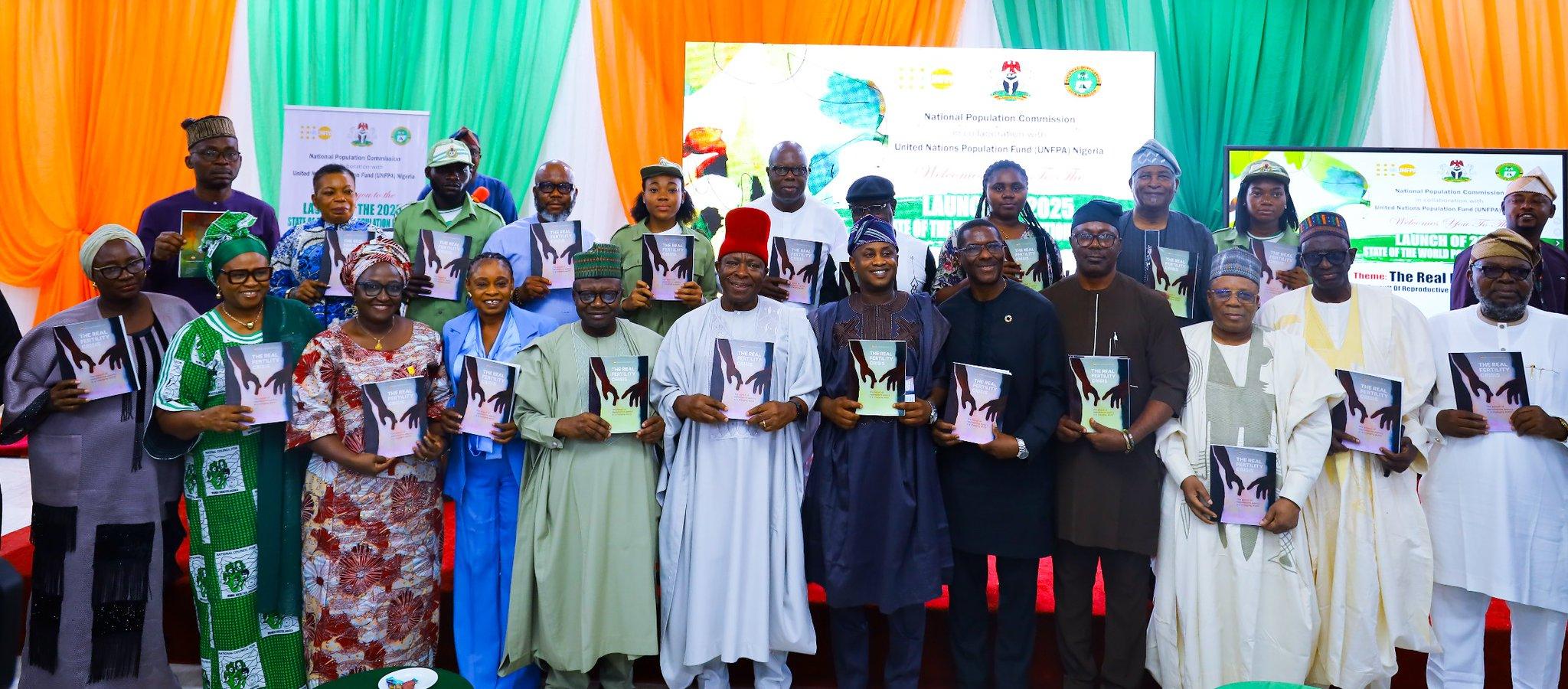
Nigeria has joined the rest of the world to officially launch the 2025 State of the World Population Report, raising concerns over declining global fertility rates and warning of a possible population collapse if urgent action is not taken.
The launch event, held in Abuja, was organised by Nigeria’s National Population Commission (NPC) in collaboration with the United Nations Population Fund (UNFPA).
The report sheds light on Nigeria’s reproductive health challenges, particularly around access and rights.
According to the UNFPA Country Representative, Mr Koessan Kuawu, the root of Nigeria’s fertility crisis lies not merely in cultural preferences but in the systemic failure to respect, protect, and fulfil individual reproductive rights.
The NPC, in collaboration with the @UNFPANigeria officially launched the 2025 State of World Population (SWOP) Report today. The event, held in Abuja, focused on the theme, “The Real Fertility Crisis: The Pursuit of Reproductive Health Agency in a Changing World,” pic.twitter.com/qJVoVXiXTA
— National Population Commission (@natpopcom) June 17, 2025
“The Nigerian fertility crisis is not normal; it is a failure to respect, protect, and fulfil individual reproductive rights,” Kuawu said.
The report reveals that Nigeria’s fertility rate currently stands at 4.3 births per woman, significantly above the global average.
A joint UNFPA-Google survey highlighted that 30% of Nigerian men and 21% of women prefer to have four or more children, but are hindered by health, economic, and social barriers.
Chairman of the NPC, Mr Nasir Isa Kwarra, stressed the need to tackle structural inequalities and unmet reproductive health needs that influence fertility decisions.
“Population issues must not be reduced to numbers alone, but viewed through the lived experiences and rights of individuals—particularly women and young people,” Kwarra stated.
He referenced findings from the 2023–2024 Nigeria Demographic and Health Survey (NDHS), which show a modest drop in the Total Fertility Rate (TFR) from 5.3 to 4.8 children per woman.

Despite this decline, significant challenges remain. The report notes a 21% unmet need for family planning and high adolescent fertility rates, with 15% of girls aged 15–19 already pregnant or mothers.
Kwarra called on stakeholders to collaborate in addressing these issues:
“This shift is not only about protecting human rights but also about smart development,” he added.
Chairman of the Senate Committee on Population, Senator Victor Umeh, cautioned against using legislation to regulate birth rates. He instead advocated for education and awareness, especially for young girls.
Read Also: Nigeria Reaffirms Leadership in Public Health Reforms
“Countries like China have attempted this approach, and it has not been particularly effective,” he said.
Umeh called for comprehensive sex education to help girls understand their reproductive cycles and take control of their fertility.
The senator also commended President Bola Tinubu for setting up a high-level committee to oversee the National Population and Housing Census, urging a technology-driven process to ensure accuracy and credibility.
Chairman of the House of Representatives Committee on Population, Mr Femi Onarinde, reiterated the legislature’s commitment to supporting reproductive health policies and the NPC’s activities.
The launch event brought together corps members, youth groups, the National Council of Women Societies (NCWS), market women associations, civil society organisations, and senior government officials.
With Nigeria’s population currently estimated at over 226 million and projected to reach nearly 400 million by 2050, the country faces both serious challenges and unique opportunities in harnessing its demographic potential for national development.