


The Nigerian government is working towards removing all obstacles to seamless digital payments and e-commerce across the country.
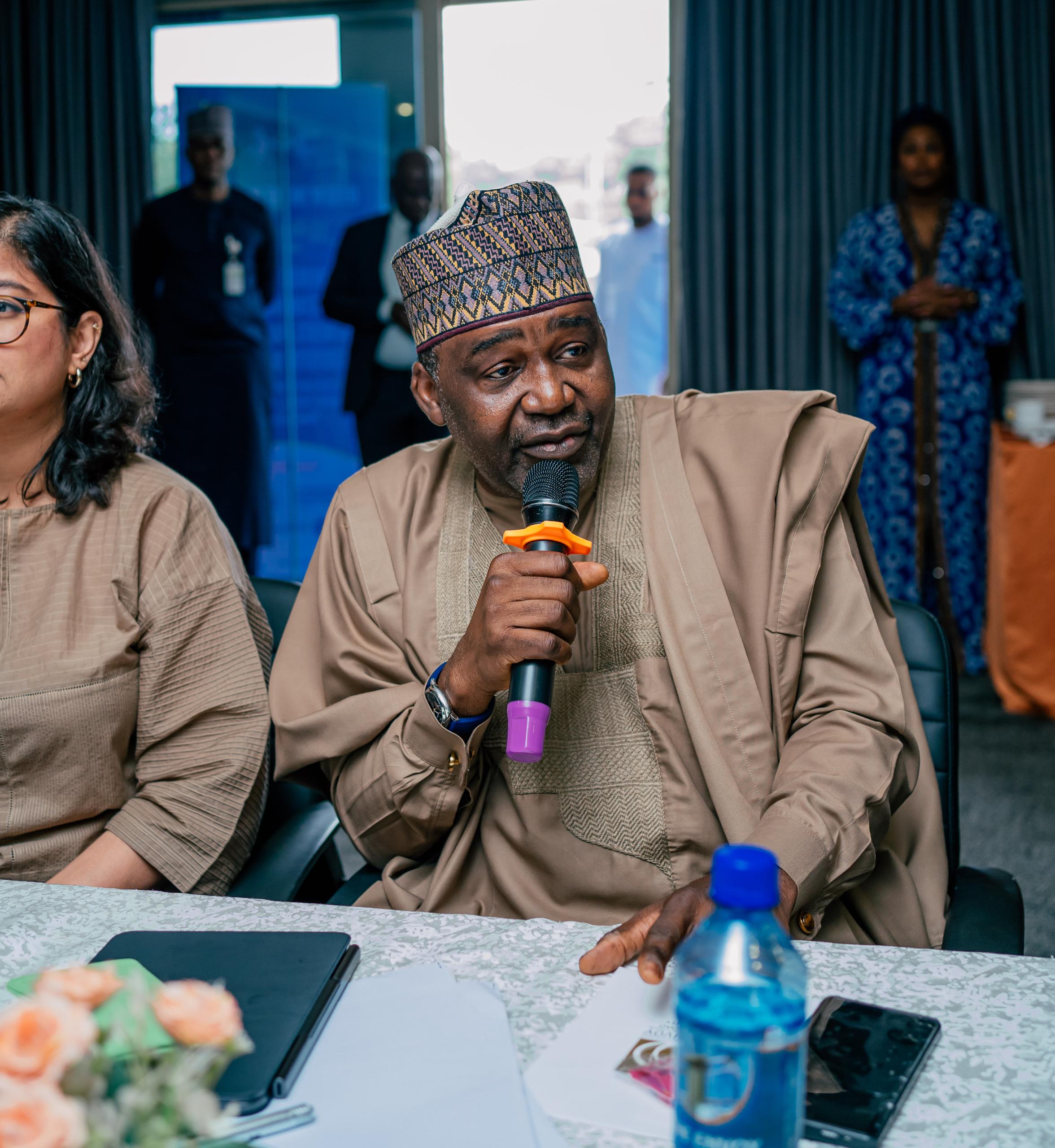
Deputy Chief of Staff to the Vice President, Ibrahim Hassan-Hadejia, disclosed this in Abuja during a stakeholders roundtable.
The effort being spearheaded by the Office of the Vice President through the Ministry of Industry, Trade and Investment, and development partners is to ensure citizens seamlessly transfer money using their mobile phones and other devices.
The Deputy Chief of Staff reiterated the resolve by the administration of President Bola Tinubu to drive financial inclusion, using different strategies for different digital payment infrastructures that essentially reach the last mile and serve the financially excluded.
He said there are very few countries in the West that have the kind of ease of payment and banking that is available in Nigeria.
“It doesn’t happen anywhere in the world, and by the time we begin to address these issues, we can use that reach to enter into the e-commerce stage. And like I said, from our own perspective, we are also worried about the inherent exclusion, so that eligible Nigerians, no matter where they are, can have access to quality, simple financial services that are beyond educational and poverty levels.
“From the Office of the Vice President’s perspective, we look at digital payment and identity as really the last stumbling block in opening up e-commerce in Nigeria.
“Yes, there is e-commerce going on, but I think the biggest impediments surround the ease of payment, the identity issue and several things we are pushing, which are all interlinked.
“We are driving financial inclusion in the Office of the Vice President, which has to do with the strategy for different digital payment infrastructure that would essentially reach the last mile and serve the financially excluded.
“So, resolving these will amount to killing several birds with one stone. We have been to India and seen what robust PPI can do to e-commerce, and not just e-commerce but trade generally,” Hadejia said.
Hassan-Hadeja assured that by the time the government is able to make payment seamless, cell phone users would be able to receive and make payments easily.
“You have a situation where, in a few years, the amount or volume of transactions from digital platforms is in excess of the traditional credit card. So, you have the likes of Wizard and MasterCard taking an interest, jumping into this space.
“And, of course, to also identify why the African Free Continental Trade Agreement has simply refused to gain the traction that it should have several years after it was established.
“We can also point to the fact that the issues have to do potentially with the cross-border payment and the identity issue. We are hoping that discussions like this will offer solutions,” he added.

He further noted that the roundtable would enable the government to gather enough information and data to make a case from its perspective in regulation and infrastructure, including enacting laws to ensure that most of the issues that have been stagnating e-commerce are addressed.
The Principal Research Fellow, International Economic Development Group, Dr Max Mendez-Parra, ODI Global, said the organisation had been working with the African Continental Free Trade Secretariat and other African countries on digital trade on a wide range of coordination of the negotiations of the digital trade protocol.
Mendez-Parra explained that the implementation of the AFCTA is transformative for the African economy, especially in the Nigerian economy, adding that the ODI is assisting the government and AFCTA Secretariat in Accra on different aspects associated with the AFCTA.
“In particular, we are supporting the negotiations and implementation of the investment protocol and the digital trade protocol as well. So, we have been working with the AFCTA. And this is what has brought us to Nigeria.
“Already, this is our fourth year that we have been here, and we are teaming up with the Office of the Vice President to basically enhance different aspects associated with the implementation of the Digital Trade Protocol in Nigeria,” he stated.
Also, the Minister of Industry, Trade and Investment, Dr Jumoke Oduwole, said the ministry and the AfCFTA secretariat in Accra had come up with an initiative called the AfCFTA DG pass, which is a means to operationalise the digital identities.
Oduwole, who was represented by her special adviser, Patience Okala, explained that the initiative is still at its infant stage, expressing hope that the conversations at the roundtable, as well as the concerns that are raised, could feed into the process.
For his part, Mallam Salisu Dasuki Nakande, Special Assistant (SA) to the President on ICT Policy, said the project came to light two years ago, with the support of the Vice President, Senator Kashim Shettima.
“And this year is more importantly about the conversation across the payment, which we are doing in alignment with the Federal Ministry of Industry, Trade and Investment. We believe that as much as Nigerians want to trade, they need to be able to make payments seamlessly across the board, and there is a lot of economy to tap into there,” he said.