


The Nigerian government says it is moving to strengthen online safety through a proposed Online Harm Protection Bill.
The bill aims to create a national legal framework for digital security, safeguard citizens, and preserve democratic integrity.
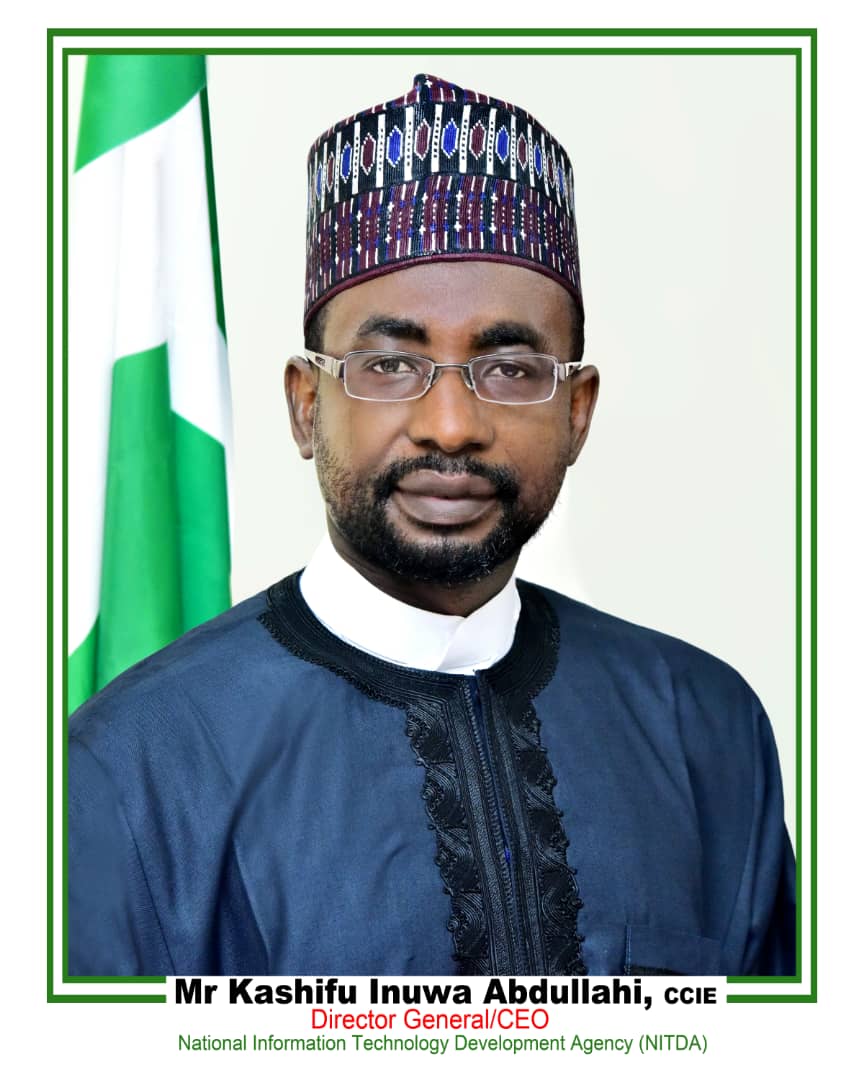
According to the Director General of the National Information Technology Development Agency (NITDA), Dr Kashifu Inuwa Abdullahi, the bill has become essential as crisis management shifts into a fully digital era where misinformation spreads faster than verified facts and where public trust is increasingly shaped online in real time.
Speaking in Abuja at a National Symposium on Digital Innovations in Crisis Communication organised by the Centre for Crisis Communication, Dr Abdullahi warned that crisis management has entered a new era where the real contest is over truth, trust and public confidence, all unfolding online in real time.
He noted that false information spreads six times faster than the truth, travels deeper and lasts longer because it is often sensational and engineered to trigger emotional reactions.
He explained that emerging technologies such as artificial intelligence, data systems and social media platforms are designed to amplify novelty, making misinformation more viral than verified facts.
According to him, technology itself is not the enemy. Rather, it is neutral, but bad actors weaponise it during elections, economic instability, social movements and protests, exploiting vulnerabilities to mislead the public, manipulate emotions and trigger harmful consequences within minutes.
He referenced the 2013 incident in which Syrian hackers posted a false tweet claiming explosions at the White House, leading to an automated market sell-off and wiping out over 140 billion U.S. dollars within minutes.
He said the incident shows how fragile crises have become in the digital era.
He added that during elections across the world, including in Africa, digital platforms are used to manipulate public opinion, influence outcomes, and deepen divisions. What began as tools for connection have now become engines of political polarisation and mistrust.
Dr Abdullahi highlighted a paradox of modern life. While citizens demand privacy, they unknowingly surrender vast amounts of personal data to big tech platforms, which now hold more private information than many governments. These companies, he warned, possess disproportionate influence over what people see, learn, believe, buy and even who they trust. In some cases, he said, tech CEOs wield more real-time influence than presidents of sovereign nations.
He stressed that Nigeria must develop strong safeguards and smart regulatory systems that protect democracy, uphold privacy and maintain public trust without suppressing innovation or shutting down the internet.
He recalled that after the 2021 Twitter ban, Nigeria did not create new laws but compelled big tech companies to comply with existing regulations. They were required to register locally, activate content-removal processes, file tax returns, provide transparency reports and take responsibility for harmful content. This approach, he said, produced the current Code of Practice and created formal communication channels between government, service providers and digital platforms.
He revealed that within the past year alone, platforms such as Google, LinkedIn and TikTok deactivated over 28 million accounts involved in impersonation, social engineering and harmful propaganda. More than 58 million harmful contents were removed, while about 420,000 were reinstated after review, showing both the scale of abuse and the value of accountability and appeals.
Dr Abdullahi stated that Nigeria is working on the Online Harm Protection Bill, which aims to create a national legal framework for online safety, protect citizens, preserve democratic integrity and balance freedom of expression with public security.
He emphasised that effective crisis management in the digital age requires modern tools, collaboration and independent oversight. He called on institutions such as the Centre for Crisis Communication to function as neutral platforms connecting government, civil society and big tech to build trust, credibility and resilience.
He concluded that the future of crisis management lies in real-time detection, fact-checking, AI-powered moderation and cultural intelligence, noting that some harmful content now spreads and causes damage within minutes, not hours or days.