

As global cooperation deepens and international institutions work to strengthen credibility, China’s Global Governance Initiative (GGI) has emerged as a bold attempt to reshape international cooperation.
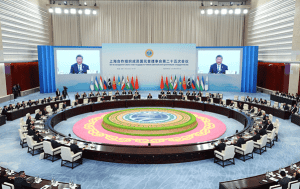
Unveiled by President Xi Jinping during the 25th Heads of State Council Summit of the Shanghai Cooperation Organisation (SCO) in Tianjin, the GGI promises a more equitable, inclusive, and action-oriented framework for global governance.
The initiative champions sovereign equality, adherence to international law, multilateralism, and a people-centred approach for tangible results over political intentions.
The initiative moves to reinforce the United Nations Charter and seeks to empower every nation, particularly those in the Global South.
In the midst of this, Nigeria seeks to leverage the GGI in areas of mutual benefit, especially in the face of global headwinds.
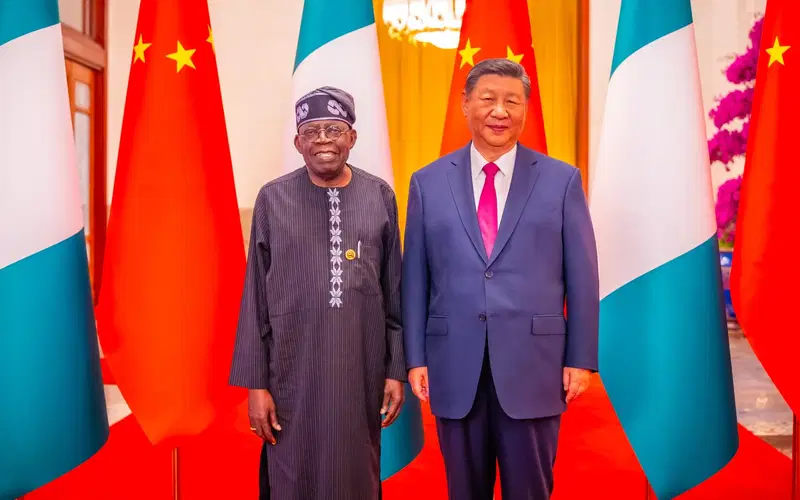
To promote Nigeria’s interest, President Bola Ahmed Tinubu led a high-profile participation at the 9th Forum on China-Africa Cooperation (FOCAC) in Beijing.
This signalled that Nigeria and China elevated their bilateral relationship to a Comprehensive Strategic Partnership. Analysts are of the view that this is a diplomatic turning point, aligning Nigeria with one of the world’s most consequential global governance proposals.
Foreign Minister Ambassador Yusuf Tuggar, while speaking at a recent forum organised by the Nigerian Institute of International Affairs (NIIA), stressed the importance of strategic autonomy in a multipolar world.
“Nigeria’s foreign policy must be driven by shared interests and mutual purpose. Our strength lies in flexibility, not binary alignments,” Tuggar stated.
He highlighted Nigeria’s population size, economic potential, and contributions to global peacekeeping as factors justifying its elevated status on the world stage.
Experts say Nigeria’s bid for a permanent seat on the United Nations Security Council now seems increasingly feasible under the reformist tone of the GGI.
Economically, the GGI holds promise for Nigeria’s long-standing development goals. China’s commitment to infrastructure, healthcare, and agricultural modernisation aligns with Nigeria’s current needs. Through GGI-aligned projects, Nigeria stands to benefit from increased access to technology transfers, climate-friendly financing, and capacity-building partnerships.
Director of the Chinese Centre in Nigeria, Charles Onunaiju, called the GGI a necessary departure from outdated global norms. “Global governance must no longer be based on who holds the most power, the GGI responds to Africa’s call for peace, development, and cooperation rooted in equity,” he said.
Experts believe that if Nigeria leverages the initiative strategically, it could help in boosting infrastructure development, particularly in transportation and energy, expand healthcare systems through bilateral cooperation and Chinese medical missions and help modernise agricultural practices, supporting food security and rural employment.
By aligning with the GGI, Nigeria and other African nations may foster a stronger collective voice in international institutions, develop new frameworks for South-South cooperation, and provide alternatives to traditional Western development models.
While critics may view the GGI as a strategic extension of China’s geopolitical influence, its principles resonate with growing calls for fairness, representation, and action in global affairs.
For Nigeria, the initiative offers more than just diplomatic alignment; it represents a platform to reshape its global identity, deepen developmental ties, and assert its strategic importance in a rapidly changing world.
As the world navigates an increasingly fragmented geopolitical landscape, Nigeria’s engagement with the Global Governance Initiative may prove to be a pivotal step in redefining not just its foreign policy but also its role in the future of global governance.