

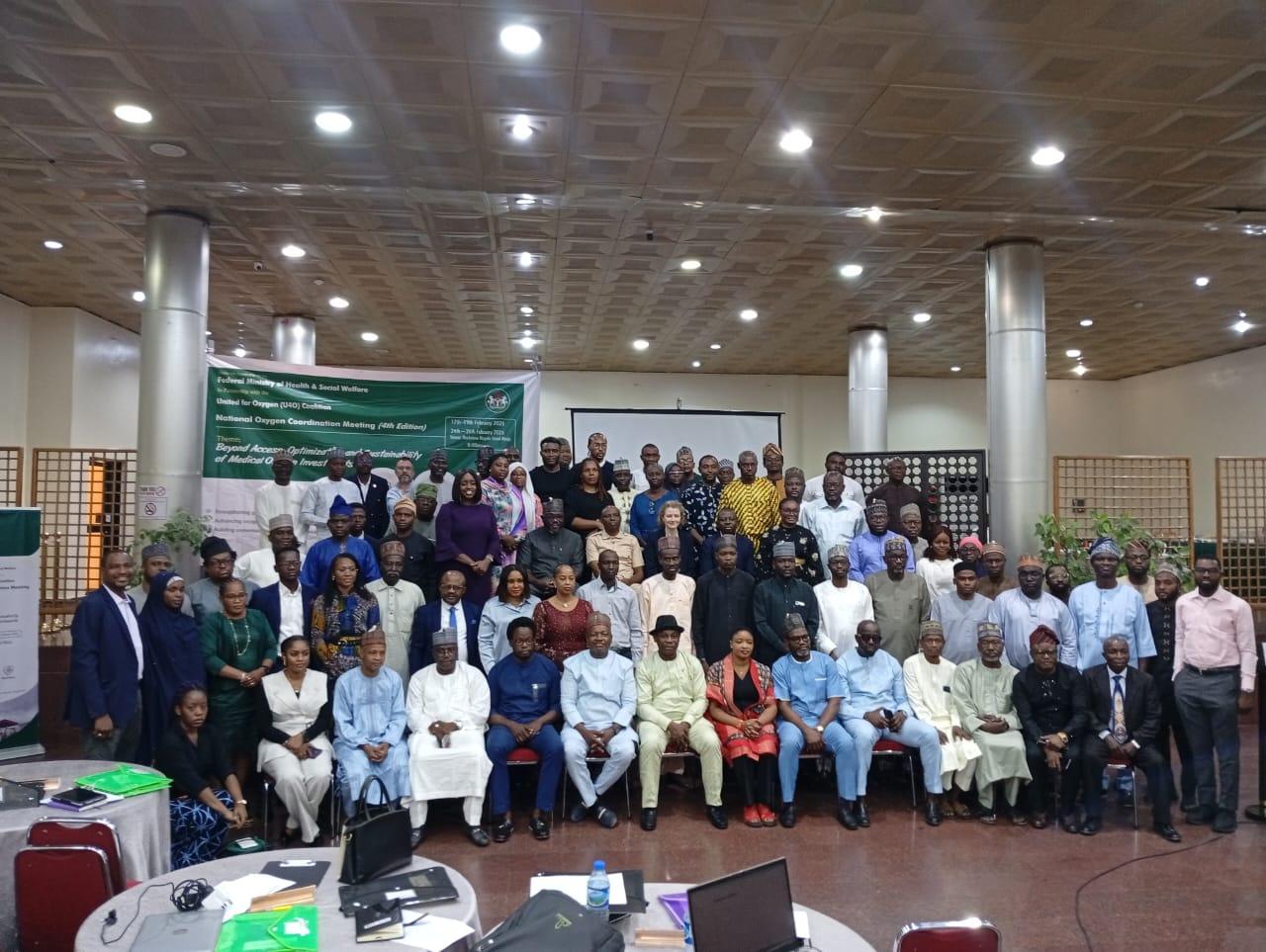
The Nigerian government, in partnership with the United for Oxygen (U4O) Coalition, has called for a nationwide transition from expanding oxygen infrastructure to guaranteeing an uninterrupted medical oxygen supply in health facilities.
Delivering the address of the Permanent Secretary, Daju Kachellom, at the 4th National Oxygen Coordination Meeting in Abuja, the Director of Teaching Hospitals, Dr Okpikpi Okpako, said the country must now prioritise reliability and sustainability in oxygen delivery systems.
He noted that previous interventions concentrated on deploying pressure swing adsorption plants and liquid oxygen optimisation equipment to improve access across hospitals.
However, he warned that infrastructure alone does not translate into impact, stating, “A machine that is not maintained or a system that is not funded is not a solution but a liability in disguise,” adding that “it is no longer enough to have oxygen; we must guarantee oxygen.”
Dr Okpako emphasised that medical oxygen has moved beyond a technical intervention to a top-tier health security priority because of its importance in maternal care, emergency response and pandemic preparedness.
“The presence of commissioners and health executives at the meeting reflects renewed commitment, stressing that oxygen security is critical to quality healthcare and universal health coverage,” he said.
He explained that discussions at the meeting would focus on strengthening accountability between national and sub-national actors, developing innovative financing for sustainability, and building consensus to ensure uninterrupted supply.
“We are not here merely for knowledge exchange; we are here for commitment-making. We are not just buying machines; we are building a resilient ecosystem driven by policy and political will,” he added.
Declaring the conference open, he expressed confidence that the deliberations would produce realistic budgets and stronger partnerships that would improve patient outcomes.
“Let our resolutions be actionable and our outcomes life-saving,” he said.
In his welcome address, the Head of the National Oxygen Desk, Federal Ministry of Health and Social Welfare, Dr Shetak Gilbert, described the meeting as evidence of commitment to improving oxygen delivery nationwide.
He noted that Nigeria had made significant progress over the years and must now focus on sustaining the gains achieved.
“We have come a long way, and what we are striving for is to ensure that we sustain this momentum going forward,” he said, assuring stakeholders of the ministry’s dedication to ensuring affordable oxygen access for Nigerians.
He also acknowledged the support of partners, particularly the Country Coordinating Mechanism, for enabling oxygen piping in dozens of tertiary hospitals, while appealing for expansion to state facilities.
“Without the strong support of the CCM, we would not have achieved piping in 44 tertiary hospitals. We are working very hard to secure piping in major hospitals in the states,” he stated, adding that continued collaboration would help guarantee oxygen availability at low cost.
Health Specialist at UNICEF Nigeria, Dr Fatima Cheshi, emphasised that oxygen interventions must prioritise children, noting that child survival remains central to the organisation’s mandate.
She explained that UNICEF advocates strongly for paediatric inclusion because many severe childhood conditions depend on timely oxygen therapy.
“For those people to become adults, they were once children. We work to ensure that every child lives to their full potential,” she said.
Dr Cheshi added that untreated hypoxia in children can lead to death or lifelong complications, stressing the importance of sustained interventions.
She commended states for growing ownership of projects supported by UNICEF and called for productive engagement during the meeting.
“Sustainability is coming closer and closer, and UNICEF is grateful for this. Let our conversations ensure children are fully included in oxygen planning,” she added.
Senior Programme Manager at the Clinton Health Access Initiative, Lekia Nwindae, described the gathering as a crucial moment for evaluating progress made through collaboration between government and partners.
She said the oxygen programme had evolved significantly through joint efforts and now required careful planning to preserve gains.
“This is a very pivotal moment for us to reflect on what the journey ahead looks like and how we take forward what we have on the ground,” she stated.
Nwindae noted that the coalition approach had strengthened implementation and encouraged continued dialogue among stakeholders.
She expressed optimism about upcoming technical discussions and cooperation. “We really look forward to the conversations this week with colleagues and partners to move the work forward,” she added.
Technical Director of the EPIC Project at FHI 360, Dr Kenny Ewulum, highlighted international support for Nigeria’s oxygen expansion, particularly contributions from the United States Government.
He recalled that interventions intensified during the COVID-19 period, leading to expanded liquid oxygen systems in multiple facilities.
“The U.S. government joined in funding oxygen systems for Nigeria, particularly liquid oxygen expansion, and we have moved to about 13 sites at the moment,” he explained.
He said the project aims to maintain epidemic control while strengthening healthcare systems and expressed confidence that the meeting would deliver concrete outcomes.
“We hope that within these three days we will achieve all the objectives we have set out for ourselves,” he added.