


Nigeria has reaffirmed its determination to end HIV/AIDS as a public health threat, as the country joins the Global community to mark World AIDS Day 2025.
The Minister of State for Health and Social Welfare, Dr. Iziaq Salako said the day provides an important opportunity to honour people living with HIV, remember those lost, and celebrate progress toward eliminating the disease.
Dr. Salako paid tribute to the First Lady, Senator Oluremi Tinubu, describing her as Nigeria’s Chief Public Health Champion.
He acknowledged her longstanding leadership in HIV prevention, from her days as Lagos State First Lady to her current Free to Shine and Renewed Hope initiatives that continue to strengthen community awareness and service delivery.
The Minister highlighted Nigeria’s expanded access to lifesaving antiretroviral therapy, including pediatric formulations, and the inclusion of annual liver and kidney function tests under national health insurance for people living with HIV.
He noted that, “The government is integrating HIV, TB, malaria, nutrition, and RMNCAH services to ensure children and adolescents receive comprehensive care in a single visit.”
Dr. Salako announced that the National Council on Health has approved reducing the consent age for HIV testing from 18 to 14, in line with global best practices.
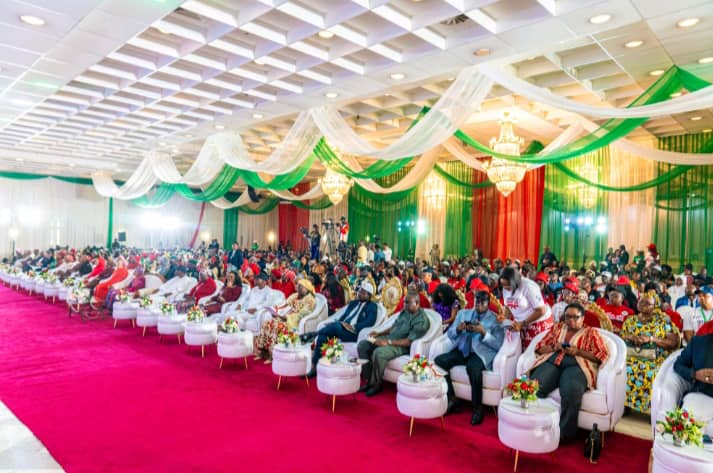
He said that the Council also endorsed the institutionalisation of the National Clinical Mentorship Programme to improve retention in care and prevent loss to follow-up.
While acknowledging persistent gaps such as new infections, stigma, and inequities in access, the Minister said “Nigeria remains firmly on track to eliminate HIV/AIDS before the 2030 global target.”
He called for renewed collective commitment to stand with people living with HIV, eliminate discrimination, and secure a healthier and more equitable future for all Nigerians.
The Director-General of the National Agency for the Control of AIDS (NACA), Dr. Temitope Ilori, reaffirmed the agency’s commitment to sustaining national momentum despite global disruptions such as pandemics, economic shocks and reduced donor funding.
Dr. Ilori highlighted Nigeria’s significant progress toward achieving the global 95-95-95 targets, reporting an impressive 87-98-95 performance rate.
She explained that, “87% of people living with HIV know their status, 98% of those diagnosed are on treatment, and 95% of those on treatment have achieved viral suppression, meaning they cannot transmit the virus.”
The NACA DG said that Nigeria has recorded a 46% decline in new HIV infections over the last decade, with more people receiving and staying in care than ever before.
She highlighted major gains in protecting mothers and children, noting that over five million pregnant women were tested for HIV in 2024, with all who tested positive immediately placed on treatment.
Dr. Ilori acknowledged remaining gaps in antenatal HIV testing and early infant diagnosis but expressed optimism following recent innovations such as long-acting injectable HIV prevention options.
Speaking for the community of people living with HIV, the President of NEPWHAN, Mr. Abdulkadiri Ibrahim, commended the Nigerian Government for approving ₦200 billion for antiretroviral procurement for HIV, TB and malaria.
He said “the intervention came at the right time, helping Nigeria sustain treatment access amid global funding uncertainties.”
Mr. Ibrahim raised concerns over declining donor support, noting that funding cuts from major partners have disrupted key community programmes, including the disengagement of over 1,700 mentor mothers who supported prevention of mother-to-child transmission.
He appealed to the First Lady to intervene and help address gaps at the community level where rising new infections among pregnant women demand urgent action.
The UN Resident Representative in Nigeria, Elsie Attafuah, hailed Nigeria’s progress under the 2025 theme: “Overcoming Disruptions, Sustaining Nigeria’s HIV Response.”
She noted global gains and commended Nigeria for translating statistics into real improvements for families, children, and communities.
Attafuah emphasised four priorities for sustaining progress strengthened domestic financing, protection of human rights, empowered community leadership, and integrated, resilient health systems, and pledged continued UN support.