


The Nigerian government has reaffirmed its unwavering commitment to eliminating paediatric HIV and strengthening Prevention of Mother-to-Child Transmission (PMTCT) services, as part of the national strategy to end HIV/AIDS as a public health threat by 2030.
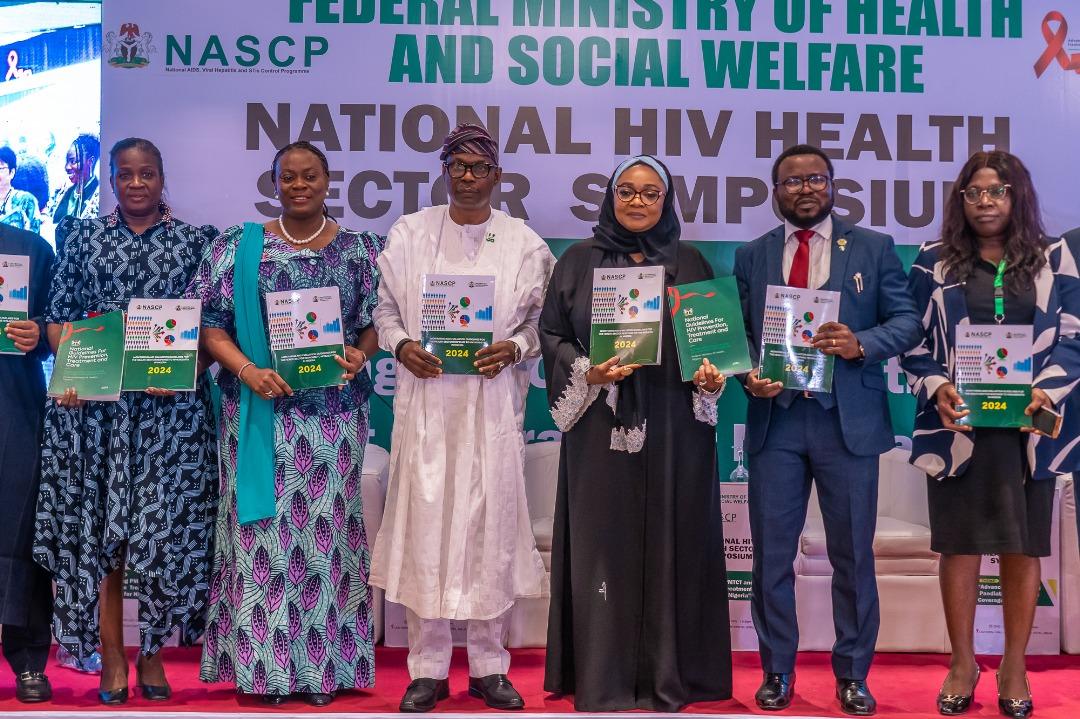
This assurance was given by the Minister of State for Health and Social Welfare, Dr Iziaq Adekunle Salako, during the National HIV Health Sector Symposium held in Abuja.
Delivering his keynote address, Dr Salako described the symposium as a vital platform to assess existing strategies and renew national resolve in addressing paediatric HIV.
He commended the First Lady of Nigeria, Senator Oluremi Tinubu, for her steadfast support through the “Renewed Hope Initiative” and the “Free to Shine” campaign, which he said had significantly bolstered the country’s HIV response, particularly among children.
“Our PMTCT programme is recording notable improvements, with national coverage at 66% and paediatric ART coverage rising from 29% to 74% as of 2024,” the Minister announced.

Despite these gains, he expressed concern that Nigeria still contributes over 9,000 new paediatric HIV infections annually, describing the figure as unacceptable and a clear call to action.
Dr Salako emphasised the urgent need to ensure that all pregnant women living with HIV have timely access to care and antiretroviral therapy to prevent transmission to their babies.
Read Also: Women Affairs Minister Affirms Child Rights Action
He further highlighted the critical importance of early infant diagnosis, community engagement to address stigma, and universal access to paediatric HIV services.
Citing President Bola Tinubu’s leadership, the Minister revealed that in January 2025, Nigeria secured an immediate $200 million allocation for HIV/AIDS, tuberculosis, and malaria programmes in response to recent global funding cuts.
“This demonstrates Nigeria’s resolve to provide sustainable domestic funding for our health programmes,” he added.
Dr Salako outlined a comprehensive strategy to control HIV, encompassing prevention, voluntary medical male circumcision, behavioural change communication, and free antiretroviral treatment for 1.7 million Nigerians.
Encouragingly, he noted a steady decline in new infections and mother-to-child transmissions over the past two years.
He reiterated that the State of Emergency on PMTCT remains active until no Nigerian child is born with HIV.
Calling for intensified collaboration, he urged stakeholders to strengthen partnerships, share best practices, and explore innovative solutions to realise the goal of an AIDS-free generation.
The symposium, organised by the National AIDS and STIs Control Programme (NASCAP), convened policymakers, researchers, programme implementers, healthcare professionals, and civil society organisations, all united in the fight against HIV/AIDS.