


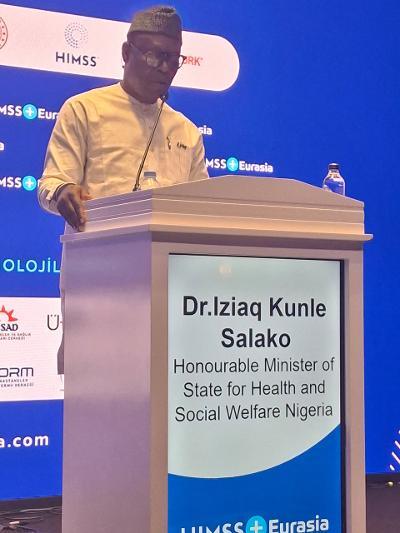
Nigeria has reiterated its commitment to building a resilient, technology-driven health system as Minister of State for Health and Social Welfare, Dr Iziaq Adekunle Salako, addressed global health leaders at the 2025 HIMSS Eurasia HealthTech Conference and Exhibition held in Antalya, Turkey.
Delivering his opening speech, Dr Salako expressed profound appreciation to the Government of Turkey and the HIMSS Eurasia organisers for convening a platform that brings together innovators, policymakers, and development partners shaping the future of digital healthcare
He noted that this year’s programme reflects the sweeping transformation occurring across global health systems from digital hospitals and smart facilities to robotics, artificial intelligence, genomic technology, and advanced data applications, stressing that these developments align strongly with Nigeria’s own health sector priorities under the Health Sector Renewal Investment Initiative.
The minister observed that the global health landscape is changing rapidly as populations grow, diseases evolve, and citizens increasingly demand accessible, personalised, and high-quality care.
“Digital transformation is no longer optional but essential, and Nigeria is fully embracing this new reality.”
Dr Salako highlighted the leadership of President Bola Ahmed Tinubu, under whom the government is pursuing a health sector agenda anchored on four pillars: better governance, quality service delivery, unlocking the healthcare value chain, and strengthening health security.
“Digital health remains central to achieving these goals through improved primary care delivery, enhanced public health surveillance and seamless integration across the system.”
Read Also: WHO Warns Africa On Rising Non-Communicable Diseases
He announced that Nigeria is investing in interoperable digital systems, strengthening health data governance, and supporting innovations that improve access, especially for underserved and rural communities.
“Partnerships with the private sector, start-ups, and international collaborators are critical to sustaining progress.”

Speaking on key national reforms, the minister revealed that the Nigeria Digital in Health Initiative (NDHI) is driving the development of the National Digital Health Architecture (NDHA), a unified blueprint designed to eliminate fragmentation and guide all actors within the digital health ecosystem.
“Foundational systems such as the Health Information Exchange, shared health records, and national registries are being built to ensure accurate identity, workforce, and service delivery data.”
Dr Salako described the HIMSS Eurasia platform as a catalyst for strengthening bilateral partnerships, accessing scalable innovations, and connecting Nigeria with global experts, investors, and technology leaders.
He commended the strong participation of African nations, which he said demonstrates a shared ambition to leapfrog legacy systems and embrace modern, data-driven healthcare solutions.
“As countries adopt AI, robotics and advanced data analytics, the minister underscored the need for equity, security and sustainability.” He stressed that technology must close gaps rather than widen them and that affordability, local relevance, and the protection of national data sovereignty remain critical for Nigeria, Africa, and other developing nations.
Dr. Salako reaffirmed that global health is interconnected and that collaborative platforms such as HIMSS Eurasia play a vital role in building healthier and more inclusive societies. He urged stakeholders to continue deploying digital technologies to promote healthy lives and well-being for all people across all ages.