

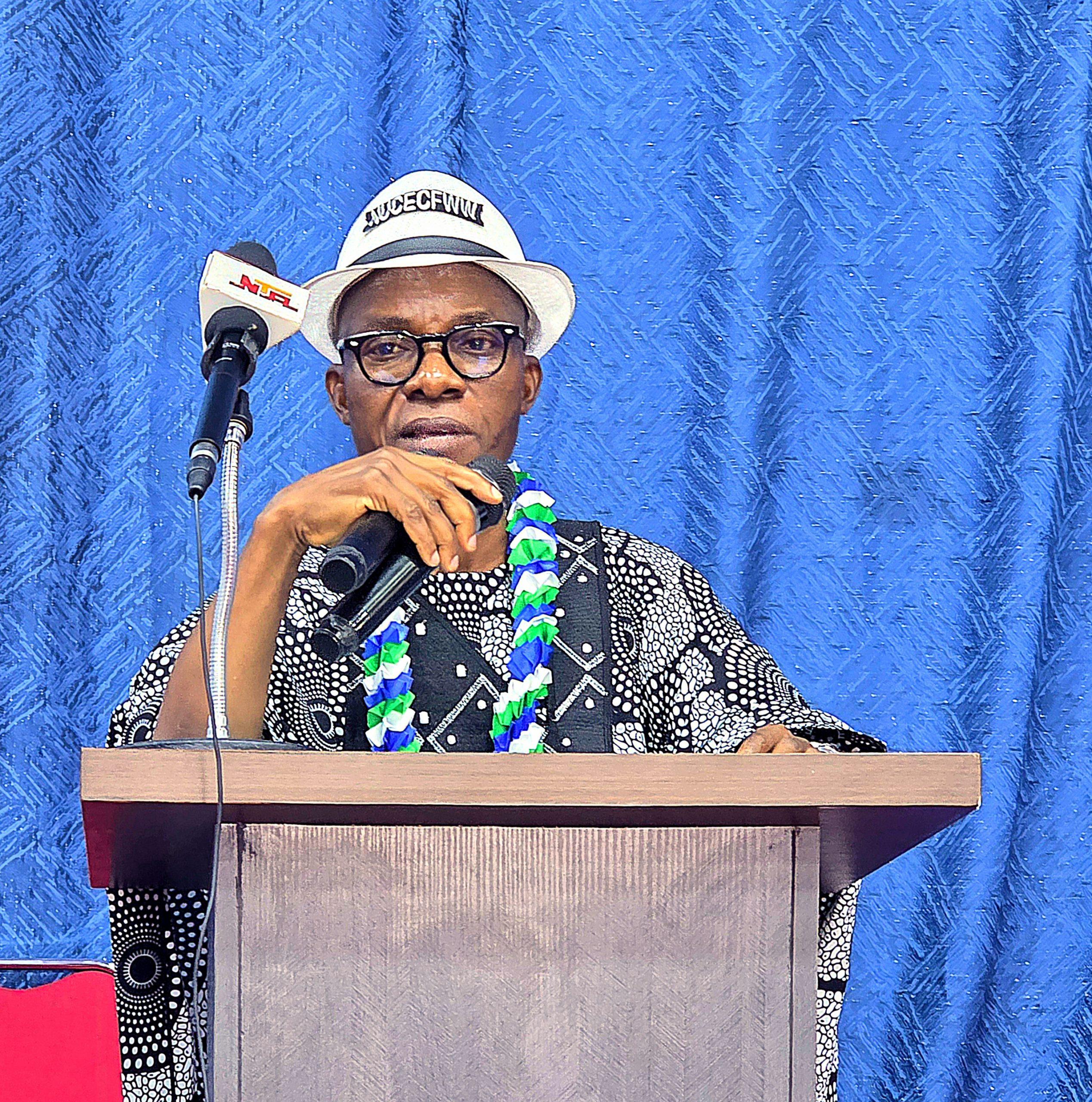
The Minister of Labour and Employment, Dr Muhammadu Dingyadi, has reaffirmed the Federal Government’s commitment to social dialogue and inclusive development in Nigeria’s industrial relations space.
The minister was speaking at the 7th National Quadrennial Delegates Conference of the National Union of Civil Engineering Construction, Furniture and Wood Workers (NUCECFWW) held in Abuja.
Represented by the Director of Trade Union Services and Industrial Relations, Amos Falonipe, Dingyadi said the theme of the conference, “Building Trade Unions’ Future through Strategic Organising and Investments”, is both timely and visionary.
He noted that “the construction industry remained one of the most vital engines of Nigeria’s economic growth and a pillar in the labour architecture, from the scaffolds of high-rise buildings to the craftsmanship of furniture and economic development.”
Dingyadi added that as the construction landscape evolves with new technologies, contract models, and labour dynamics, unions must adapt by expanding membership to include informal and migrant workers, investing in schemes, and partnering with government and the private sector on workforce development.
“My Ministry is committed to supporting unions through policy reforms, capacity-building programmes, and access to labour market data. We are also working to strengthen the Labour Market Information System (LMIS) to help unions plan more effectively, amongst other lofty initiatives.
“Let me also reaffirm the Federal Government’s commitment to social dialogue and inclusive development in our industrial relations space.
“We recognise trade unions as strategic partners in achieving decent work, industrial peace, and economic resilience. Our collaboration must be rooted in mutual respect, transparency, and shared purpose.”
Declaring the conference open, the minister stressed that the government would continue to engage unions on issues such as the review of labour laws, implementation of occupational safety standards, promotion of gender equity and youth employment, and support for union-led investment initiatives.
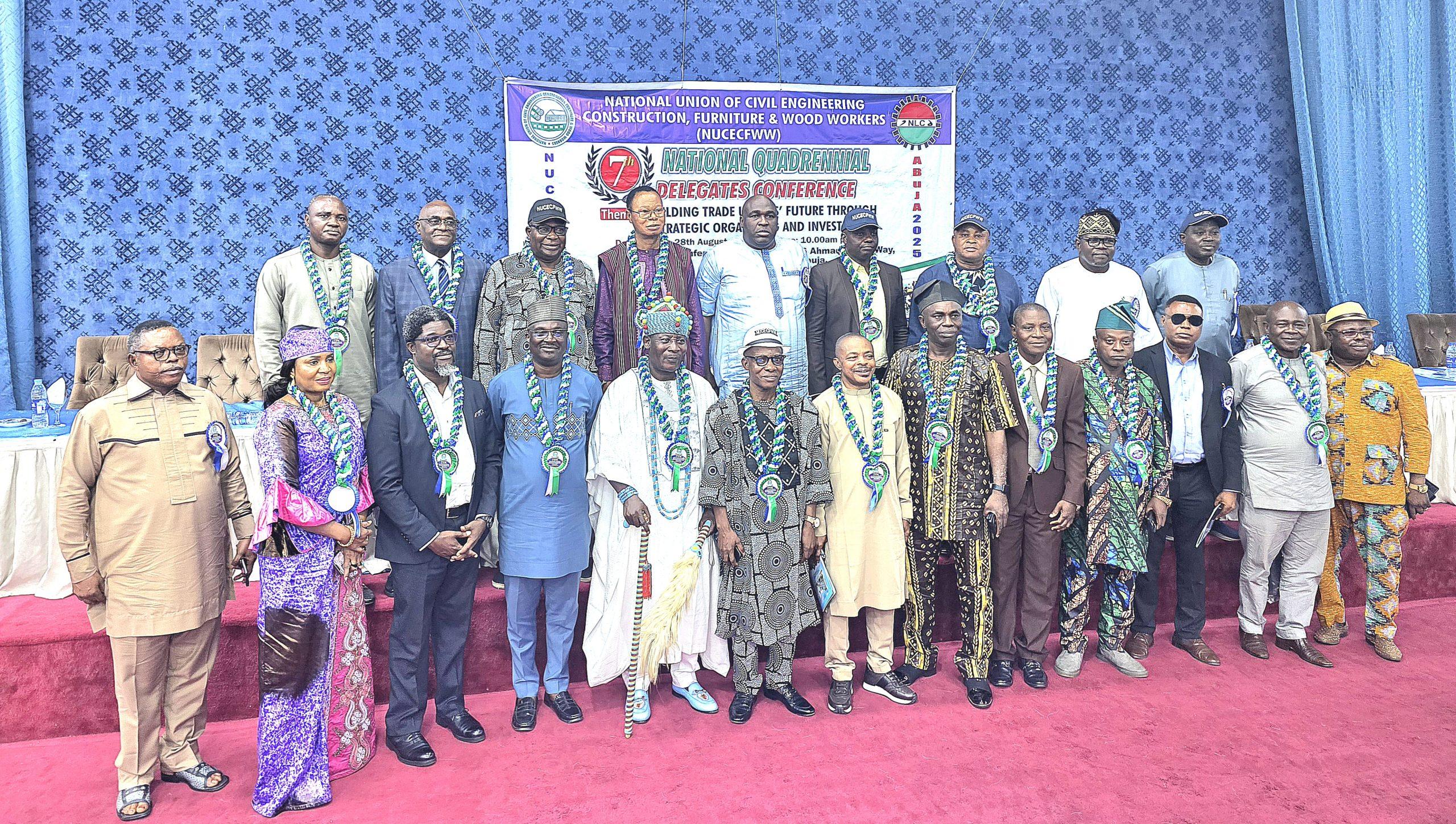
He further commended NUCECFWW as an active participant and watchdog in negotiating fair wages and safe working conditions for workers, ensuring compliance with labour laws and occupational safety standards.
Stronger Unions
In his remarks, the President of the Nigeria Labour Congress (NLC), Comrade Joe Ajaero, emphasised the need to build stronger unions through deliberate organising and sustainable investments.
Ajaero said, “In a time like this, our survival should not be by accident. It has to be by deliberate organising and by wise and long-term investments that secure the union’s independence and capacity to continue the struggle.
“The road is not smooth, and the one ahead is even rougher. We must not be deterred, for history has never given the working class victories without struggles.
“The future will not be handed to us as comrades. We must build it with our own heads and hands. In the midst of the present economic hardship, we must take action to save ourselves from hunger and starvation.”
Responsive Leadership
Ajaero lauded Imo State Governor Hope Uzodinma for approving a new minimum wage of N104,000 for workers, saying the action reflects responsive leadership in the face of current economic realities.
He commended the development as “commendable and worth emulating” by other states of the federation.
“So many people were asking me, Is this real? I said this is a report from Imo State so far. I have reached out to him. Although he told me about it before, now. It is real. That is the highest, and to a very large extent, it is commendable,” the NLC President affirmed.
He urged the other governments to take a cue, saying, “If the states have the capacity to pay N100,000 and above, and considering that Imo State is not the highest in terms of revenue, it then means others are encouraged to do more,” he said.
According to Ajaero, the principle of minimum wage is that it represents the least that workers should earn, while states with capacity are encouraged to surpass it. “That is the whole essence of the underlying issue of minimum wage. Minimum wage is the least; states can do better. I think this is an initiative that other governors are supposed to follow,” he stressed.
Innovate and Expand
Also speaking, the President of NUCECFWW, Comrade Stephen Okoro, reflected that the last four years have been turbulent and critical for both employers and employees.
“Trade unions have historically played a vital role in protecting workers’ rights, securing fair wages and improving workplace conditions of service.”
Okoro explained that “the twin economic policies on the flat fuel subsidy withdrawal and floating of the naira… have led to closure of some existing industries, loss of jobs and unbearable hunger across the land; where do we go from here?”
He further noted that “the theme of this conference became expedient based on the dangers industrial unions are facing when it comes to building trade unions’ future in these hard times.”
Okoro, however, urged unions to innovate and expand their reach.
“It became imperative for the union to organise and expand its reach by engaging workers both in formal and informal sectors to secure the union’s future by adopting innovative methods, digital tools, among others,” he said.
He also emphasised the need for sustainable financial models, stressing that unions must “invest in education, training for members, establish union-owned ventures and so on…”
The conference, attended by top labour leaders, reaffirmed the centrality of unions in defending workers’ rights, securing fair pay, and ensuring safe and decent work conditions in Nigeria’s construction and allied industries.