


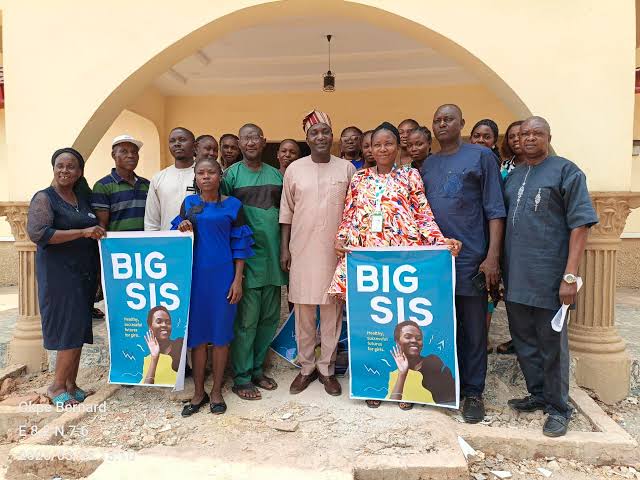
In a move to bridge the gap in adolescent sexual and reproductive health (ASRH), the Federal Government of Nigeria, in partnership with West & Central Africa Health Options Ltd/GTE (WCAHealth) through the ACCESS Programme, has commenced a simultaneous three-state training of community mentors known as “Big Sisters.”
The initiative, which has commenced in Enugu, Benue, and Taraba States, is a core component of the Access to Comprehensive Care & Essential Support Services (ACCESS) Programme.
Championed by the National Primary Health Care Development Agency (NPHCDA) under the Sector-Wide Approach (SWAp), the project is being technically implemented by West & Central Africa Health Options Ltd/GTE (WCAHealth) in collaboration with state health authorities.
In Enugu State, the training inaugurated at the De-Martins Mirage Hotel in Nsukka, drew high-level government representation, signalling a strong political will to address the structural and cultural barriers affecting young girls in the region.
Enugu State Commissioner for Health, Prof. George Ugwu, lauded the “Big Sisters” model as a vital tool for reducing maternal mortality. He emphasised that the health of adolescent girls is a foundational pillar for a healthier society.
Professor Ugwu urged the 20 newly selected mentors from the state to act as effective conduits of information. He noted that their role is to engage “Little Sisters” (adolescent girls) in their respective wards using structured sessions and reliable referral systems.
The Commissioner pointed to the ongoing construction of Type 2 Primary Health Centres across all wards in Enugu as a testament to Governor Peter Mbah’s commitment to accessible healthcare.
The “Big Sisters” initiative operates on a two-tier mentorship model. The “Big Sisters” are trusted community women—mothers, neighbours, and peers—who are trained to provide accurate health information and facilitate referrals to youth-friendly Primary Health Care (PHC) facilities.
These mentors are tasked with organising adolescent girls into cohorts, creating safe spaces for discussions on menstrual health, consent, and relationships. This community-embedded approach ensures that health services extend far beyond hospital walls.
According to WCAHealth, the rationale behind the model is the prevailing silence surrounding reproductive health in many rural communities. This silence often leaves young girls without guidance, making them vulnerable to misinformation and poor health outcomes.
By shifting harmful social norms at the grassroots level, the ACCESS Programme seeks to foster positive health-seeking behaviour. The goal is to ensure that every adolescent girl can make informed decisions about her well-being without the fear of stigma.
The simultaneous roll-out across the three states (March 24–30, 2026) demonstrates a scaled-up commitment to adolescent health at the sub-national level. It marks a significant milestone in Nigeria’s efforts to meet global targets for newborn and maternal health.
Stakeholders at the training included officials from the State Ministry of Health, the State Primary Health Care Development Agency (SPHCDA), and local government representatives, ensuring that the programme is fully integrated into existing government health structures.
As the training concludes, these 20 Big Sisters will be deployed immediately to their various wards. Their mission is to ensure that the next generation of Nigerian women is informed, empowered, and supported by a healthcare system that truly reaches the last mile.