

The Nigerian government has opened discussions with the International Monetary Fund (IMF) to strengthen Nigeria’s fiscal resilience and develop a transparent price modulation framework to help stabilise domestic markets against global energy shocks.
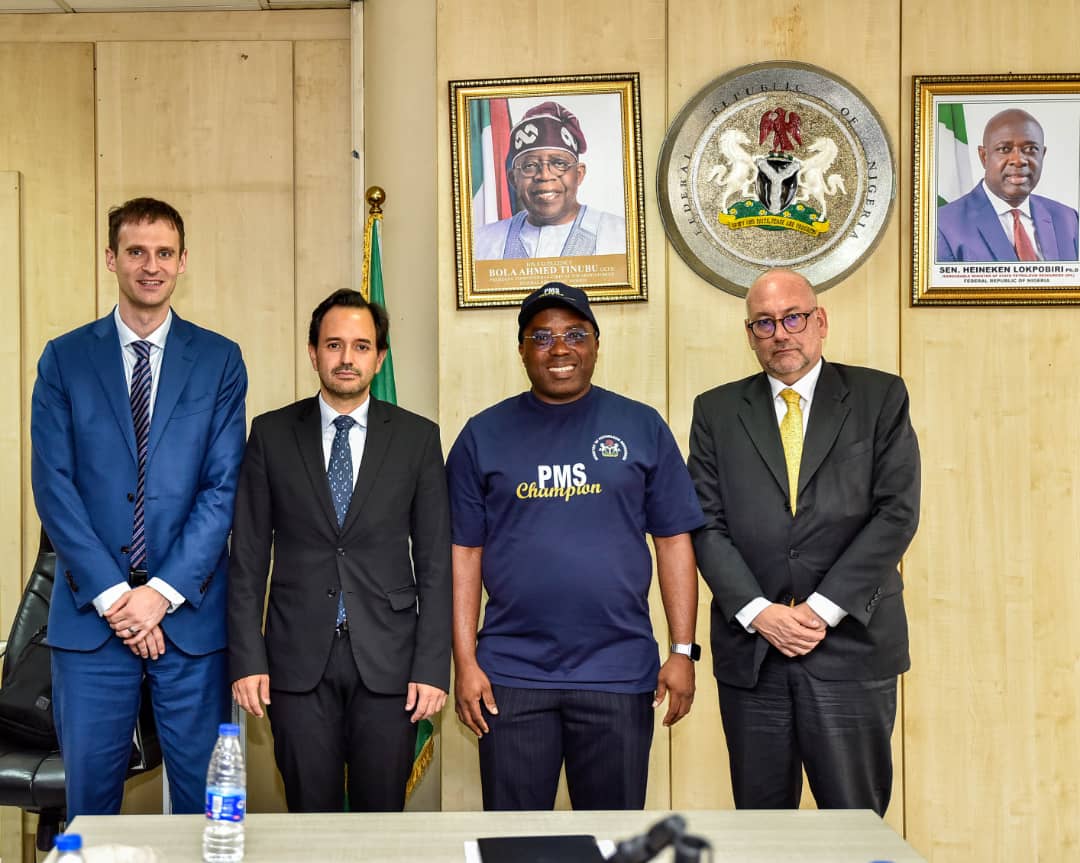
The Permanent Secretary of the Ministry of Petroleum Resources, Dr. Emeka Vitalis Obi, disclosed this in Abuja, Nigeria’s capital, during a joint engagement between the Ministry, its regulatory agencies, the Nigerian Upstream Petroleum Regulatory Commission (NUPRC), the Nigerian Midstream and Downstream Petroleum Regulatory Authority (NMDPRA), and the IMF Fiscal Affairs Department (FAD) Technical Assistance Mission on Climate Policy.
Dr Obi said the initiative aligns with President Bola Tinubu’s economic reforms aimed at ensuring fiscal stability, transparency, and energy transition.
He explained that the Nigerian Government is seeking continued technical assistance from the IMF to design a robust and transparent price modulation mechanism that can cushion the impact of price fluctuations and sustain fiscal discipline.
According to him, “Nigeria’s engagement with the IMF is part of broader efforts to build resilience within our fiscal and energy management systems. A transparent price modulation mechanism will protect the economy from extreme global volatility while maintaining fiscal responsibility.”

Fuel Subsidy Removal a Step Toward Stability
Dr Obi reiterated that the removal of the general fuel subsidy was a bold but necessary policy decision that has begun redirecting public expenditure towards critical infrastructure, social welfare, and sustainable energy projects.
He said the government remains focused on reducing methane emissions and ending routine gas flaring through programmes such as the Nigeria Gas Flare Commercialisation Programme (NGFCP) and emerging carbon credit frameworks, which encourage gas utilisation in power generation, fertiliser production, and Compressed Natural Gas (CNG) initiatives.
“These measures directly support Nigeria’s Nationally Determined Contributions (NDCs) under the Paris Agreement and align the petroleum sector with global environmental, social, and governance best practices,” he added.
IMF Commends Nigeria’s Reform Efforts
The leader of the IMF Technical Team, Mr Diego Mesa, lauded the Ministry for its proactive reforms and policy direction, describing Nigeria’s energy and fiscal agenda as “forward-looking and comprehensive.”
He noted that the IMF mission, invited by the Federal Ministry of Finance, forms part of broader engagements on fiscal reforms, sustainable development, and climate policy. “Our discussions with the Ministry of Petroleum Resources will focus on fiscal frameworks for fossil fuels, carbon taxation, and sustainable transition pathways,” he said.
Regulators Reaffirm Commitment to Sustainability
The Director of Planning, NUPRC, Mr Abdul-Afeez Balogun, said the Commission is prioritising the elimination of gas flaring and reduction of methane emissions as mandated under the Petroleum Industry Act (PIA) 2021.
Also, the Director of Planning, NMDPRA, Mr Ayodeji O.O., noted that the Authority is refining tariff methodologies for pipeline storage and gas processing to guarantee fair investor returns while protecting consumer interests.
The engagement, attended by directors of technical departments in the Ministry, senior officials of the NUPRC and NMDPRA, and the IMF delegation, ended with a resolution to strengthen collaboration towards advancing Nigeria’s fiscal and climate resilience agenda.