


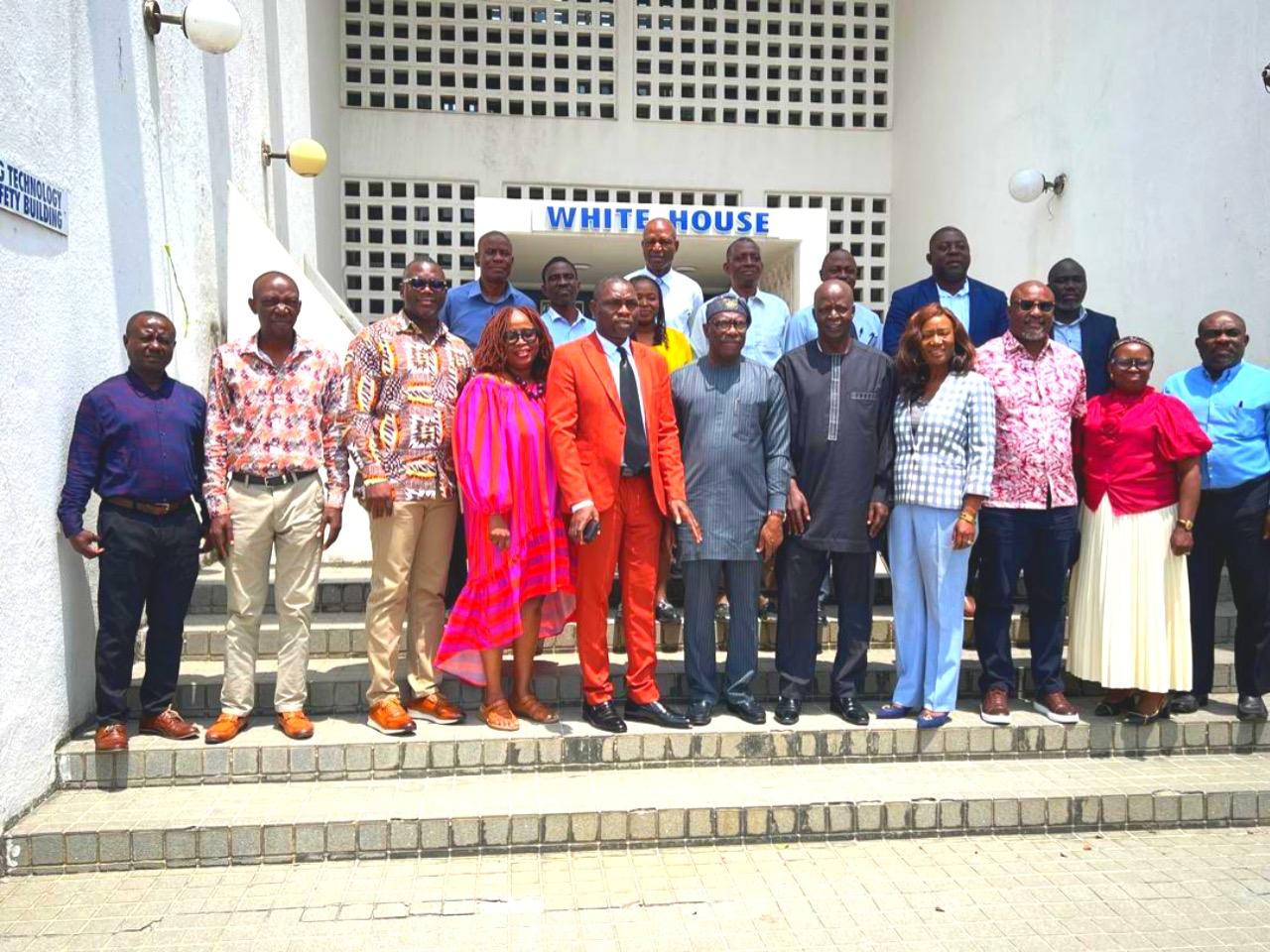
The Institute of Oceanography and Marine Research (NIOMR) has hosted officials from the Liberian National Fisheries and Aquaculture Authority during their visit to Lagos, South-West Nigeria.
The team is in Nigeria to understudy the fisheries management system, learn the intricacies of research development, and forge collaboration towards enhancing opportunities in the maritime ecosystem.
The Executive Director of NIOMR, Professor Sule Abiodun, said that the collaboration is aimed at galvanising trade interchange, extension services, research, and capacity building.
Abiodun explained that the visit is also to monitor Nigeria’s oceans and the potential species in its waters.
He said, “The Liberian team came to see and study the way we monitor our oceans and how we carry out our research. More importantly, they are interested in our research vessels and want us to bring them down to Liberia so that we can cruise together and look at all the depths where they can get those species that are related to those we have in the country, such as the grunts, croaker, red snapper, barracuda, among others.”
We took them through the whole process, all the departments that we have here in NIOMR, from aquaculture, biotechnology, safety, marine, and geology departments and we also engaged them on how we can support them, train their officials in artisanal development, as well as how we can also go to Liberia and develop their capture fisheries.
“When I took them to the species that we have , types of shrimps and the areas we can get them, for example, the red shrimps can be found between 21 and 35 metres in this place, and they also have them around 45 metres in Liberia.
“So, they were interested in us coming to Liberia to actually carry out the mapping system for them, and immediately, they wanted to draft what is called an MoU, so that we can both sign through the Ministry of Marine and Blue Economy.”
He applauded the strides of the Minister of Marine and Blue Economy, Mr. Gboyega Oyetola, for creating an environment that allows for such joint efforts to further develop the aquaculture space and support neighbouring countries in developing fisheries management systems, as well as nautical schools, fisheries academies, among others.
Impactful Partnership
Speaking on the impact of such partnerships among African countries, Abiodun explained that it would enhance policy planning and implementation, and bolster the process of studying migration patterns, habitat, among other areas.
He maintained that, besides other engagements, Liberia is willing to activate capacity building, and Nigeria is ready to offer support.
“They want to see a fisheries management system because that department in Liberia is just coming up. So, what we are going to do with them is to develop theirs based on our existing policies.
“Our scientists are ready because there are two things in place now: it is either we go to Liberia after signing the MoU with the Ministry of Marine and Blue Economy, or they bring the first set of people that we are going to train here and that forms the policy itself. So, once they start, we start.”
Rebranding Programmes
Liberia’s team lead, Mr. Seikula Vannie, said that the country is trying to rebrand and restructure its fisheries programme, and is hoping to tap into collaborations with partners and friendly nations in the region to learn more and observe their achievements.
Vannie, who stressed that the delegation is expected to visit Zambia and Ghana in continuation of its tour, maintained that Nigeria has a track record in fisheries management and has a lot to offer the continent to further develop the space.
According to Vannie, “We sought Nigeria out because of its achievements in fisheries management, and we think we can learn a lot from them , especially when it comes to shrimps, tuna fisheries, industrial fisheries, and in the area of aquaculture, catfish production, and how they leverage technology in fish production.
We have come to learn, to see all that they are doing differently from what we are doing, and see how we can make ours better.
“My biggest disappointment is not knowing Nigeria has a research vessel. A few years back, Liberia was trying to conduct a fisheries stock assessment and went running around to Morocco, Guinea, Senegal.
“we combed through the Francophone countries , not knowing that Nigeria had a good advantage because they speak English and could have helped us conduct our research.
“Today, we know that, and that is one of our takeaways from this engagement.”
He said the country is looking forward to building a stronger relationship with Nigeria, tapping into Nigeria’s biggest programmes in aquaculture, marine fisheries, fish processing, and post-harvest management, and exploring how Nigeria can also tap into Liberia’s fisheries and open more investment opportunities.